A Fish That Seems Unfinished
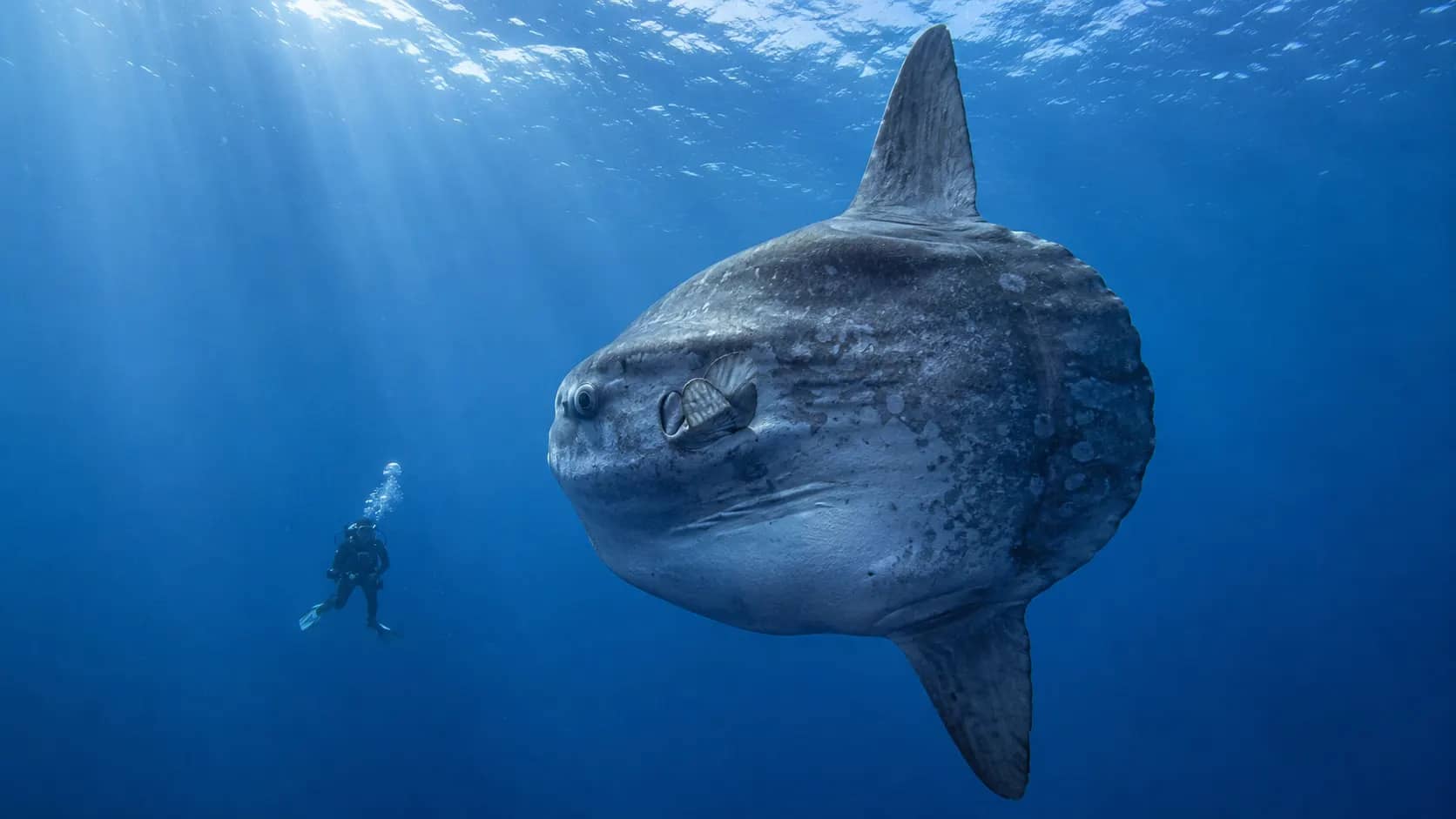
The first time you see an ocean sunfish, your brain may need a moment to understand it. The body is tall, round and flat. Two enormous fins point above and below it, while the back appears to end suddenly.
It looks as though a normal fish lost its tail.
Yet the ocean sunfish, also called Mola mola, is not damaged or unfinished. Its strange appearance comes from a body design unlike almost anything else in the sea. It is also one of the heaviest bony fishes in the world.
Where Did Its Tail Go?
Most fish push themselves forward with a broad tail. The ocean sunfish does not have that familiar tail fin. Instead, its blunt rear end carries a rounded structure called the clavus.
Young sunfish begin life with a more recognizable tail. During development, that tail is absorbed and the clavus takes its place. It works more like a rudder than an engine, helping the animal control its direction.
That is the main reason an adult sunfish looks as if someone stopped drawing halfway through.
How Does It Swim?
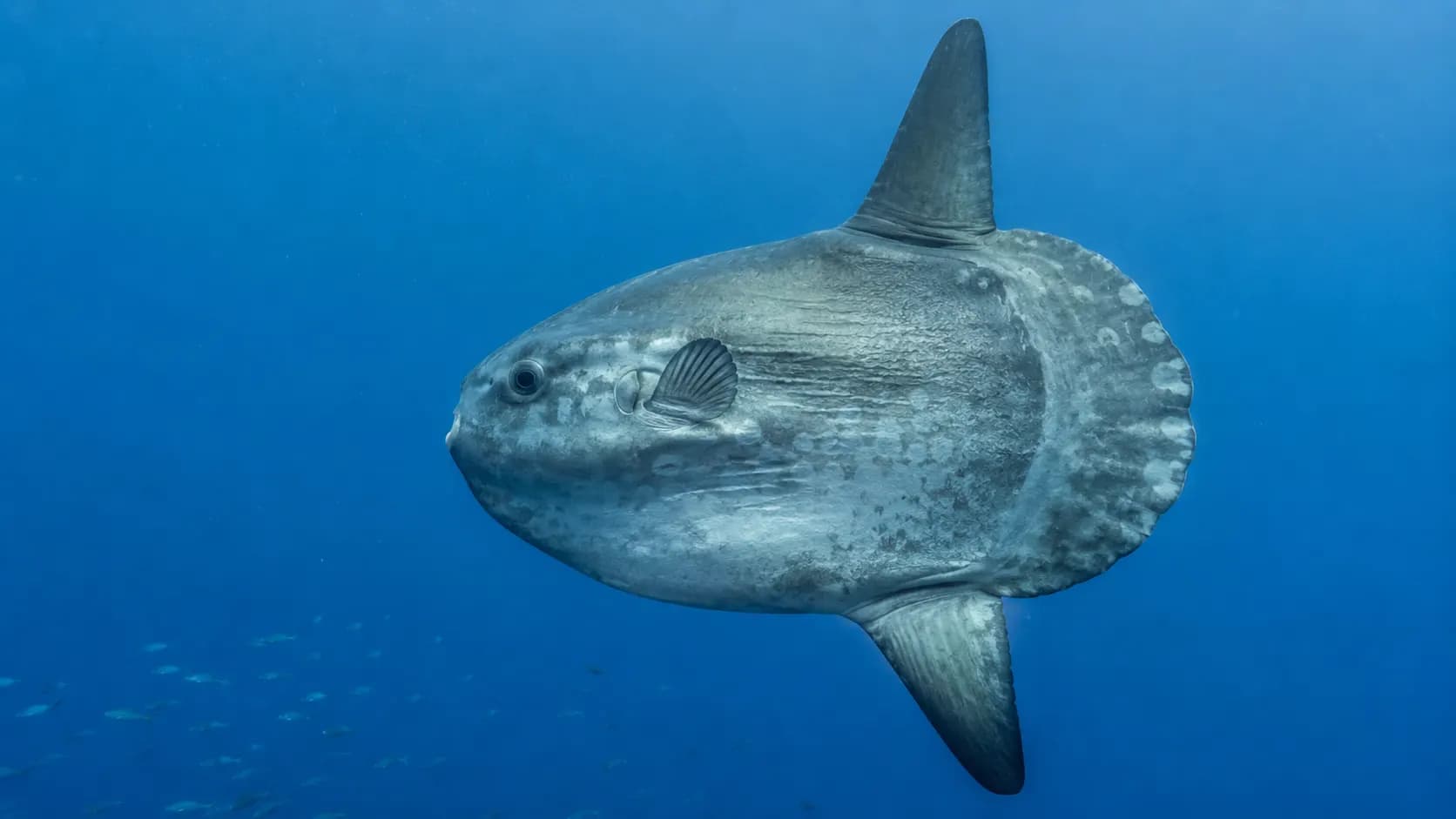
A fish without a strong tail may seem helpless, but that idea is wrong. The ocean sunfish moves by sweeping its large dorsal and anal fins from side to side. These are the tall fins above and below its body.
The motion can look like flapping rather than normal fish swimming. Research shows that sunfish are active swimmers, not lifeless animals drifting wherever the current carries them. Their fins produce lift and forward movement in a way that is sometimes compared with underwater wings.
Its small side fins look almost decorative beside its huge body, while the main fins perform most of the work. Strange does not always mean ineffective.
How Can It Grow So Large?
Adult ocean sunfish can become remarkably heavy. They travel through open water and dive into deeper areas to find food.
Jellyfish and other soft marine animals form an important part of the adult diet, although sunfish also eat other small sea creatures. Their teeth are joined into a beak like structure. Rather than chewing normally, they may suck food in and push it out repeatedly until it breaks into manageable pieces.

Keep reading
What Is El Niño and How Does It Change Weather Around the World?
A meal of jellyfish may not sound filling, but the ocean can contain enormous numbers of soft bodied animals. Many small meals can support a very large fish.
Why Does It Lie Sideways at the Surface?
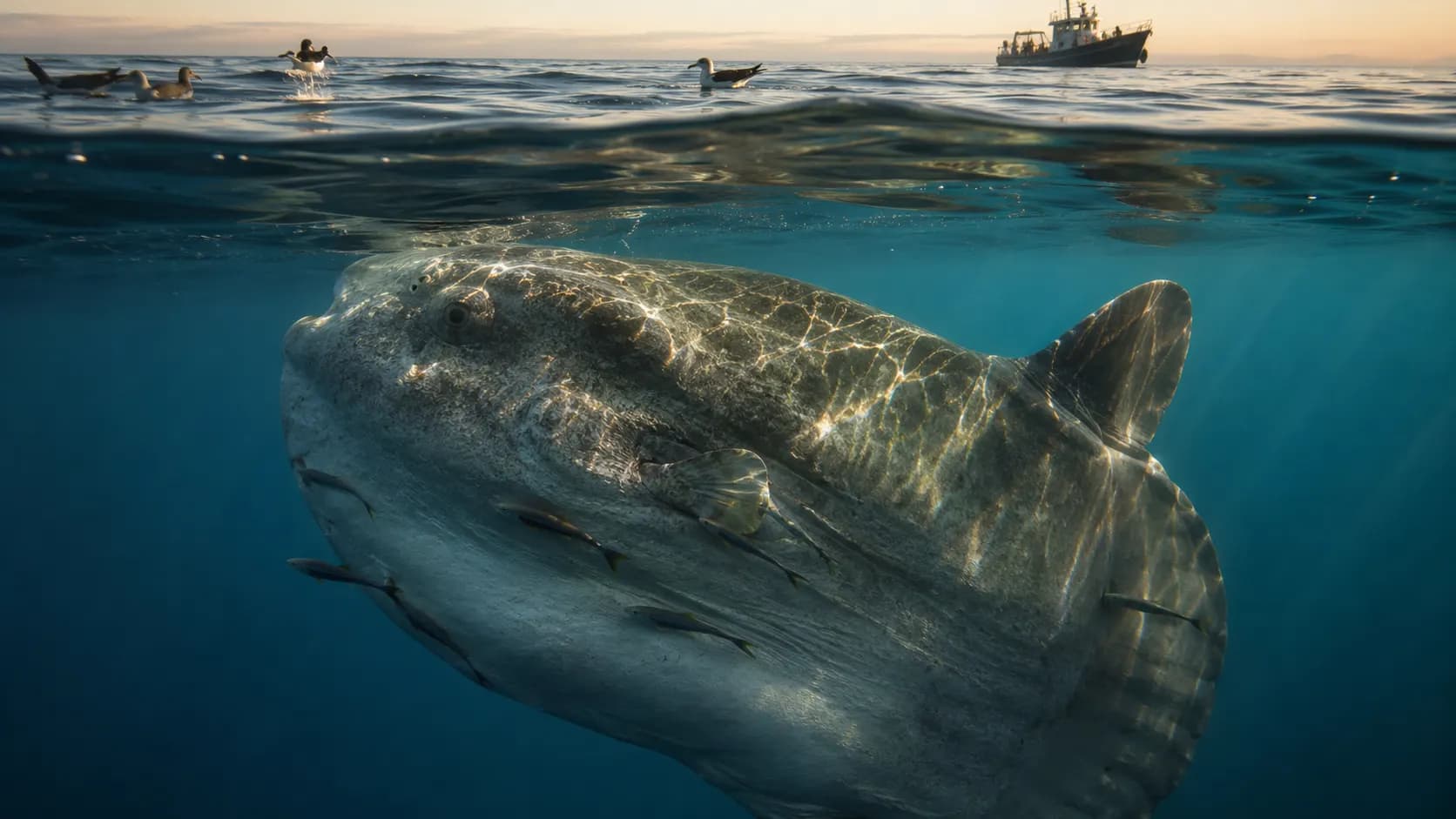
People sometimes see a sunfish floating on one side near the surface. From a boat, it may appear sick or dead.
Often, it may be warming itself after swimming through colder, deeper water. This surface behavior helped inspire the name sunfish. Smaller fish and seabirds may also remove parasites from its skin while it remains near the surface.
Scientists are still studying this behavior. Some research has found evidence that warming may explain surface visits, while other studies have not found the same connection in every region. The answer may depend on where the fish lives, what it has been doing and the surrounding water temperature.
The ocean sunfish continues to keep a few secrets.
Is the Ocean Sunfish Dangerous?
Its size can be intimidating, especially when its tall fin is briefly mistaken for a shark. However, ocean sunfish do not hunt people and are not known for aggressive encounters with swimmers.
Divers sometimes meet them at close range. The fish may appear calm, curious or completely uninterested. That does not mean anyone should grab it or block its path.
It is still a large wild animal. Giving it space protects both the swimmer and the fish.
Reference notes
Sources and further reading
Our editorial promise
Prepared with clarity and care.
This guide completed our editorial review before publishing. If something needs attention, report a correction or contact the publisher.
About this article
- Published:
- Last updated:
- Author:
- Ceyora Editorial Team
- Review status:
- Editorially reviewed
- Sources:
- 4
- Corrections:
- Report an issue