
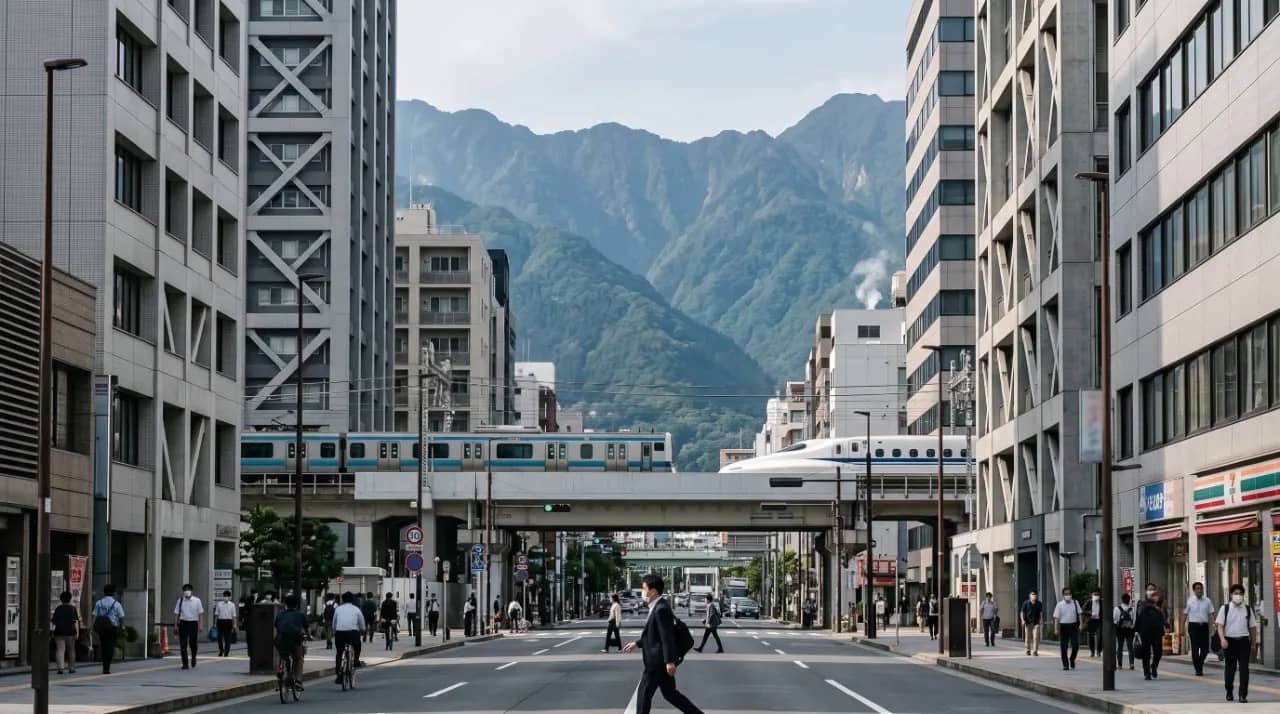
If you’ve ever spent time in Japan, you may have felt it: a faint sway in a hotel room, glasses softly rattling in a cupboard or a hanging sign moving for no obvious reason. People nearby may barely look up. For many residents, occasional shaking is something they have learned to recognise and prepare for.
That calm is not indifference. Japan sits above one of the most geologically active and complicated plate boundary systems on Earth. Its frequent earthquakes are not random bad luck. They are a consequence of where the islands formed and how the surrounding tectonic plates continue to move.
Japan Sits in One of Earth’s Most Active Seismic Regions
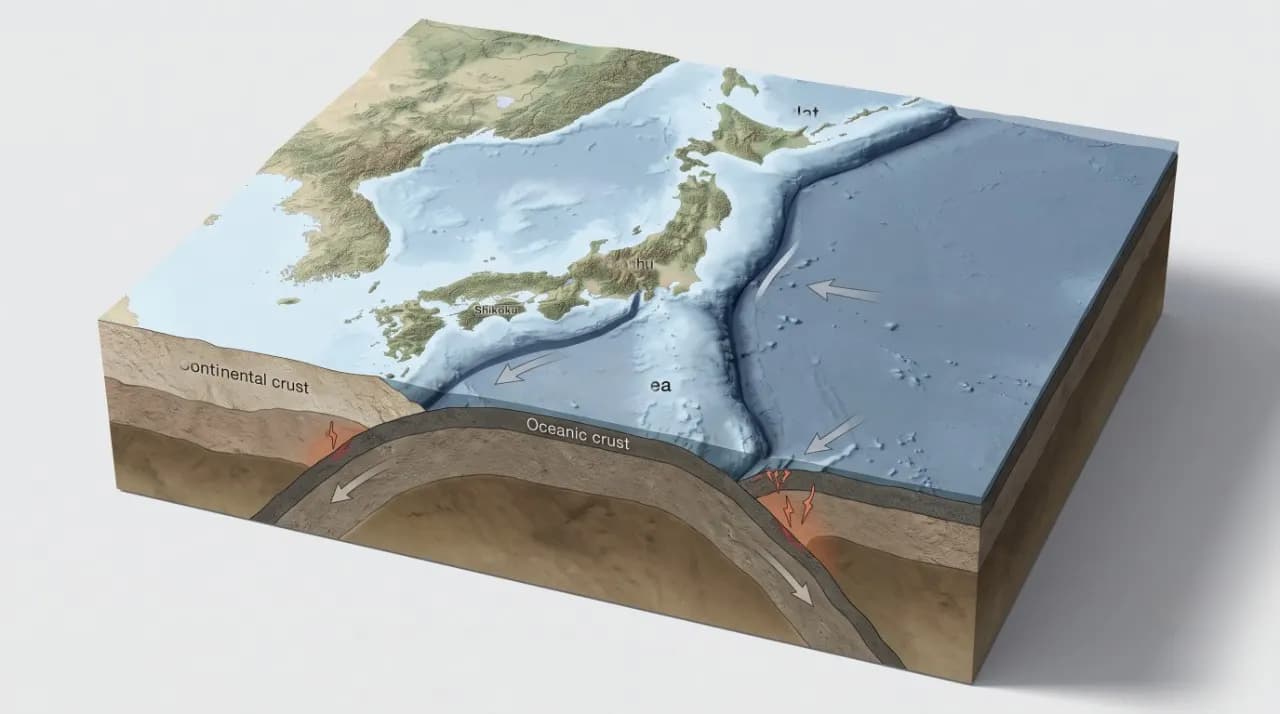
Earth’s outer shell is not one continuous piece. It is divided into enormous slabs of rock called tectonic plates, which move slowly over time. Japan lies close to several places where these plates converge beside deep ocean trenches.
This region forms part of the broad belt of earthquake and volcanic activity around the Pacific Ocean commonly called the Pacific Ring of Fire. Japan’s position within that belt places populated islands close to active subduction zones and crustal faults.
The Main Plates Around Japan
The Pacific Plate approaches Japan from the east, while the Philippine Sea Plate moves toward parts of central and southwestern Japan from the south. These oceanic plates descend beneath the crustal blocks supporting the Japanese islands.
Simplified maps may label the overriding plates as parts of the North American and Eurasian plates. More detailed geological models sometimes use smaller blocks such as the Okhotsk and Amur microplates. Scientists may draw the fine boundaries differently, but the broad picture is clear: Japan sits where several moving pieces of Earth’s crust interact.
What Happens When One Plate Moves Beneath Another?
When a dense oceanic plate meets another plate, it may bend downward and sink beneath it. This process is called subduction. The descending plate slowly moves back into Earth’s interior.
The movement is not always smooth. Rough sections of the plate boundary can become locked by friction while the plates continue trying to move. The surrounding rock bends, and strain quietly builds year after year.
Why the Ground Suddenly Shakes
Eventually, the accumulated stress may overcome the friction holding the fault in place. The rocks slip suddenly, releasing stored energy as seismic waves. What took years or decades to build can be released in seconds.
The ground shakes as those waves travel outward. Aftershocks may follow while nearby faults and rock layers adjust to the new distribution of stress.
Why Japan Experiences Different Types of Earthquakes
Japan’s crowded tectonic setting produces several kinds of earthquakes. Their depth, location and fault movement help determine how widely the shaking is felt and what additional hazards may follow.
Powerful Offshore Megathrust Earthquakes
The largest earthquakes can occur along the boundary where an oceanic plate is being pushed beneath another plate. These megathrust earthquakes may rupture a vast area below the seabed and cause strong shaking across a wide region.
The magnitude 9.0 Great East Japan Earthquake of March 11, 2011, occurred along the plate boundary off northeastern Japan. It produced destructive shaking and a catastrophic tsunami.
Earthquakes Inside the Descending Plates
Earthquakes can also begin inside a plate after it has started sinking. The descending slab bends, deforms and changes as it travels deeper beneath Japan, allowing faults within the plate to rupture tens or even hundreds of kilometres below the surface.
Shallow Earthquakes Beneath Japanese Cities
Other earthquakes occur on faults within the shallow crust beneath the islands. These events may be smaller than offshore megathrust earthquakes, but proximity matters. A shallow earthquake close to a city can create intense local shaking and serious damage.
Why Some Japanese Earthquakes Cause Tsunamis
A common misconception is that every undersea earthquake creates a tsunami. It does not. A damaging tsunami generally requires an earthquake or another event to displace a large volume of water.
Significant vertical movement of the seabed can lift or lower the water above it. That disturbance then travels outward as a series of waves. An earthquake dominated by sideways movement may shake strongly without producing a major tsunami.
Does Japan Really Have More Earthquakes Than Everywhere Else?

Keep reading
What Is a Tornado and Why Can It Turn Dangerous in Minutes?
Japan genuinely experiences unusually high seismic activity, but it is not the only earthquake-prone country. Indonesia, the Philippines, New Zealand, Chile, Mexico and other countries around the Pacific also face frequent earthquakes.
Japan stands out because several active plate boundaries surround a densely populated and highly developed island nation. Its extensive monitoring network also records many earthquakes that people never feel.
Can Scientists Predict Japan’s Next Major Earthquake?
This is where hope can run ahead of science. It helps to separate long-term hazard estimates, monitoring, early warning and exact prediction.
Long-term hazard estimates identify regions where strong earthquakes are more likely over years or decades. They are useful for planning, but they are not countdown clocks.
Monitoring means observing earthquakes and crustal movement with instruments as activity develops.
Early warning detects an earthquake that has already started and sends an alert before stronger seismic waves reach some locations.
Exact prediction would identify the time, location and magnitude in advance. Current science cannot do this reliably.
Japan’s earthquake early-warning system may provide several seconds or, in some cases, a few tens of seconds before stronger shaking arrives. Places close to the earthquake source may receive little warning or none at all.
How Japan Prepares for Constant Earthquake Risk
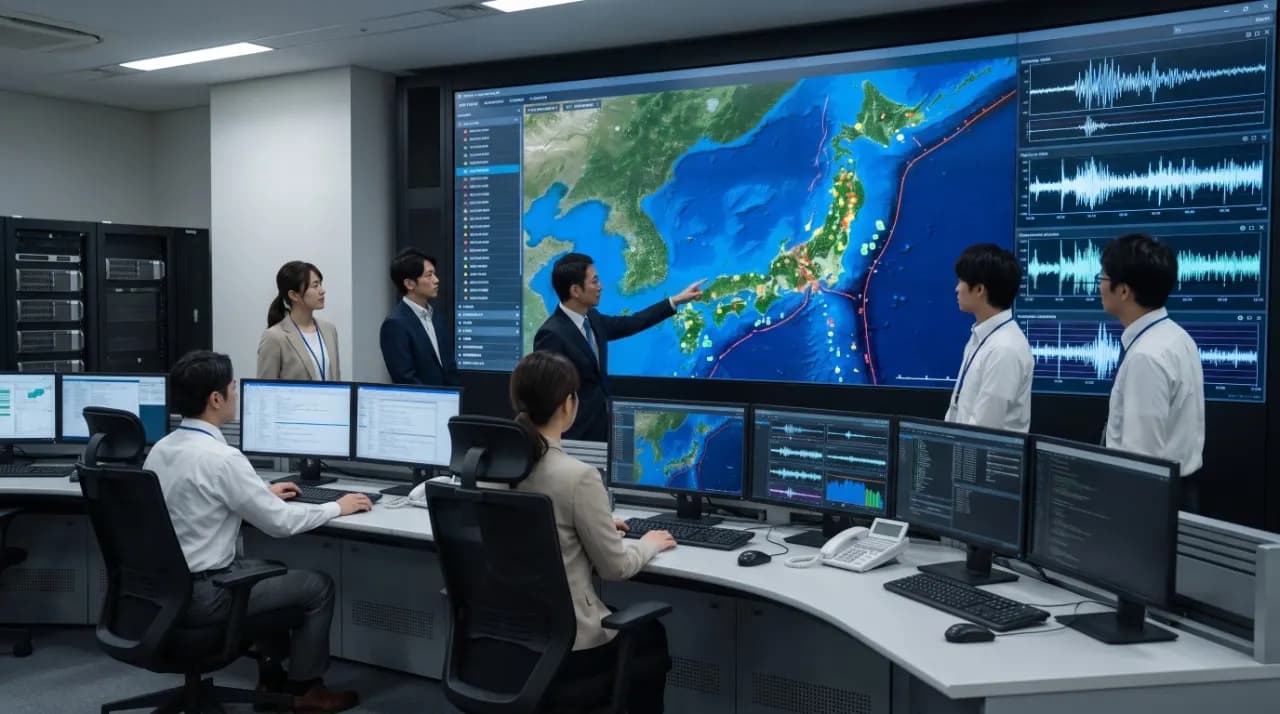
Japan’s approach combines rapid monitoring, stronger construction, automated safety systems and regular public training. No single measure can stop an earthquake, but these layers can reduce injuries, damage and disruption.
A Nationwide Monitoring Network
The Japan Meteorological Agency monitors seismic and volcanic activity around the clock. Its systems use JMA instruments together with data from local governments and the National Research Institute for Earth Science and Disaster Resilience.
After an earthquake, JMA rapidly publishes information about its location, magnitude and observed shaking. It also estimates tsunami potential and issues regional warnings or advisories when dangerous waves are expected.
Earthquake Early Warnings
Earthquakes release different seismic waves. Faster waves can be detected before the stronger shaking arrives farther away. JMA analyses the first signals and sends warnings through television, radio, mobile systems and other services.
Those few seconds can allow people to move away from windows, protect their heads or pause dangerous work. Automated systems may also slow trains, control elevators or begin safety procedures.
Buildings Designed to Move Without Collapsing
Japan has strengthened seismic building requirements and continues encouraging the assessment and retrofitting of older structures. Engineers may use reinforced frames, braces, energy-absorbing dampers and base-isolation systems to manage movement.
No building is completely earthquake-proof. The aim is to reduce the chance of sudden collapse, protect occupants and preserve essential functions where possible.
Drills and Disaster Education
Preparation is also cultural. Schools, workplaces and communities practise protective actions and evacuation procedures. People are encouraged to secure furniture, learn local routes and keep essential supplies available in case electricity, transport or communications are disrupted.
Why Preparation Cannot Remove Every Risk
How an earthquake unfolds depends on more than magnitude. Depth, distance, local soil, building quality and shaking duration all matter. Fires, liquefaction, landslides and tsunamis may create different emergencies from one neighbourhood to another.
Preparation stacks the odds in people’s favour, but it cannot guarantee safety. Older buildings may remain vulnerable, warnings may arrive late and an extreme event can exceed what infrastructure was designed to handle.
What Residents and Visitors Should Know
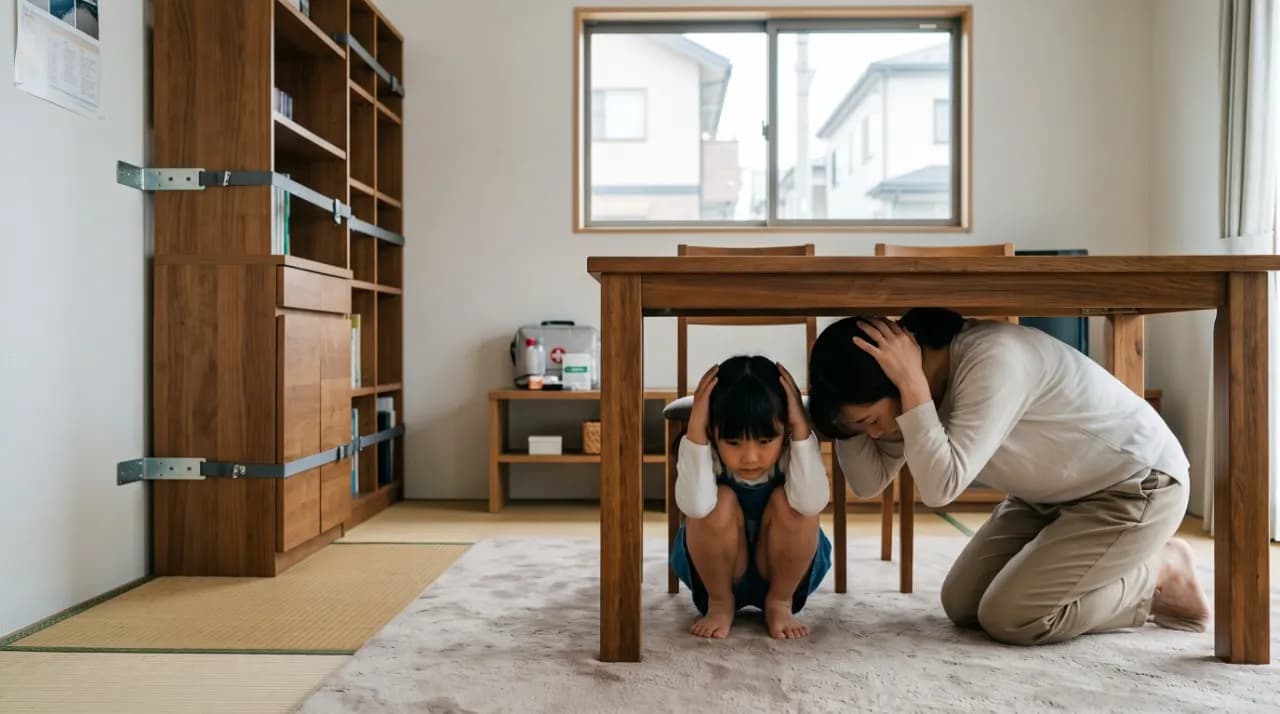
Drop to your hands and knees, take cover beneath sturdy furniture when available and hold on during strong shaking.
Stay away from windows, shelves and unsecured objects that could fall or break.
Do not rush outside while glass, signs, roof tiles or other debris may be falling.
Near the coast, move toward higher ground after strong or prolonged shaking and follow tsunami warnings.
Use information from JMA, local authorities and emergency services rather than rumours.
Learn local evacuation routes, secure heavy furniture and keep basic emergency supplies available.
Key Takeaways
Japan sits near several active tectonic plate boundaries and deep ocean trenches.
Subduction creates frequent earthquakes and contributes to volcanic activity.
Earthquakes can occur offshore, inside descending plates or on shallow faults beneath the islands.
Scientists cannot reliably predict the exact time, place and magnitude of the next major earthquake.
Monitoring, engineering, early warnings and regular preparation can greatly reduce avoidable harm.
Japan Has Learned to Live on Moving Ground
Japan shakes frequently for a straightforward reason: it occupies one of the most geologically active places on Earth, surrounded by plates that have been moving and colliding for millions of years. The frequency is not random. It is geography.
Reference notes
Sources and further reading
- Jma Go Jp (opens in a new tab)https://www.jma.go.jp/jma/en/Activities/earthquake.html
- Jma Go Jp (opens in a new tab)https://www.jma.go.jp/jma/en/Activities/eew.html
- Jma Go Jp (opens in a new tab)https://www.jma.go.jp/jma/en/Activities/eew2.html
Show all 9 sources
- Data Jma Go Jp (opens in a new tab)https://www.data.jma.go.jp/eqev/data/en/tsunami/tsunami_warning.html
- Usgs (opens in a new tab)https://www.usgs.gov/publications/seismicity-earth-1900-2012-philippine-sea-plate-and-vicinity
- Usgs (opens in a new tab)https://www.usgs.gov/faqs/can-you-predict-earthquakes
- Usgs (opens in a new tab)https://www.usgs.gov/faqs/what-should-i-do-during-earthquake
- Mlit Go Jp (opens in a new tab)https://www.mlit.go.jp/jutakukentiku/house/jutakukentiku_house_fr_000043.html
- Bousai Go Jp (opens in a new tab)https://www.bousai.go.jp/jishin/nankai/rinji/nankai_e_learning_en/
Our editorial promise
Prepared with clarity and care.
This guide completed our editorial review before publishing. If something needs attention, report a correction or contact the publisher.
About this article
- Published:
- Last updated:
- Author:
- Ceyora Editorial Team
- Review status:
- Editorially reviewed
- Sources:
- 9
- Corrections:
- Report an issue