
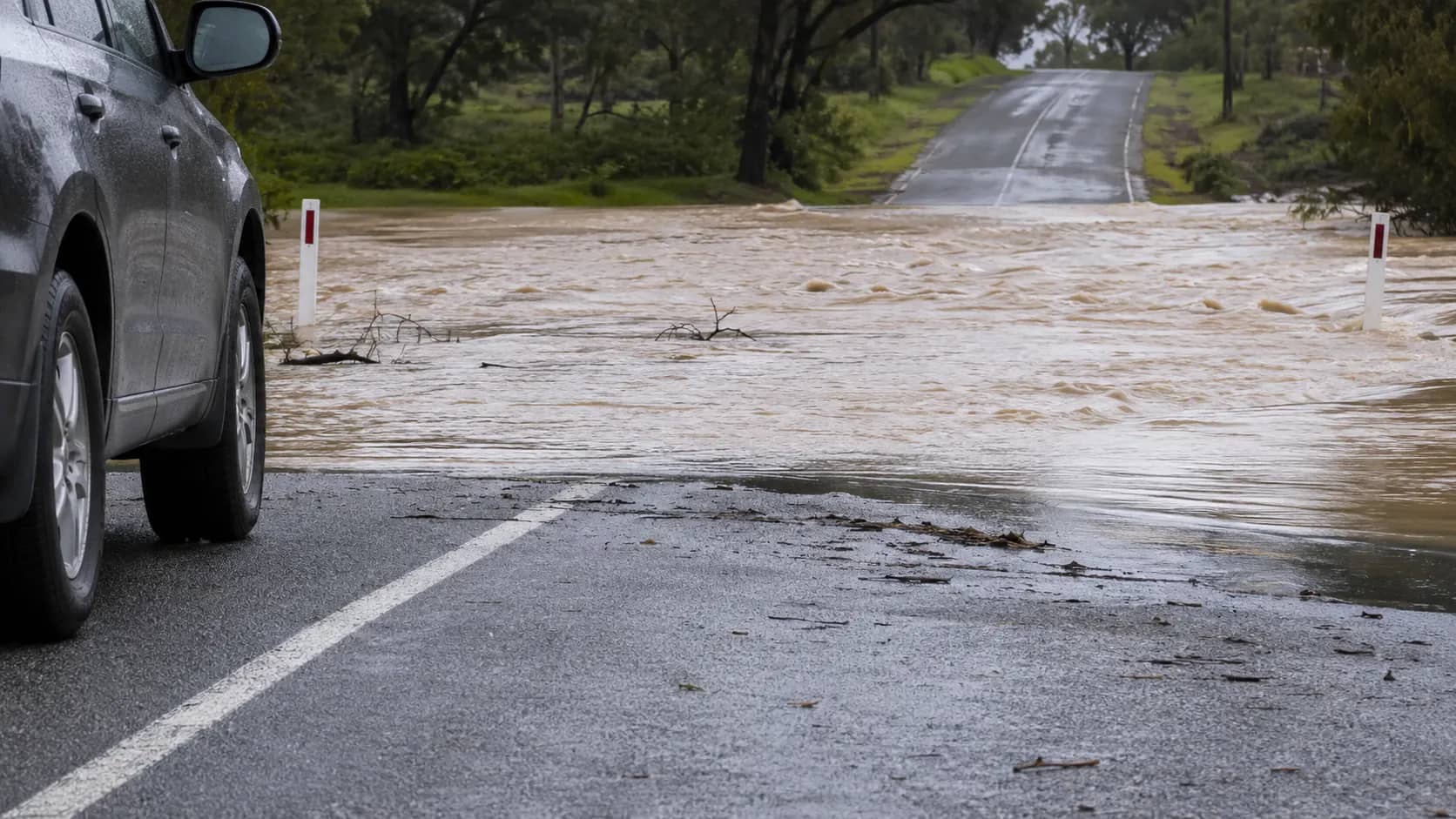
A road disappears under a sheet of water. It looks shallow, and the other side seems close enough to reach. That quick calculation “I can cross this” is one of the most dangerous mistakes people make during a flood.
The surface cannot show you the three facts that matter most: the true depth, the strength of the current and whether the road still exists underneath. Floodwater may also contain sewage, chemicals, sharp debris or live electrical hazards.
Why Floodwater Can Look Calm but Hide Serious Danger
Murky water hides changes in depth, potholes, open drains, broken bridges and missing sections of road. A smooth-looking surface may still sit above a strong current, particularly where water is being forced through a narrow street, bridge opening or underpass.
Conditions can also change faster than expected. Rain may be falling upstream rather than where you are standing, and a sudden release from a drainage channel, river or damaged structure can raise the water quickly.
How Little Water Can Become Dangerous?
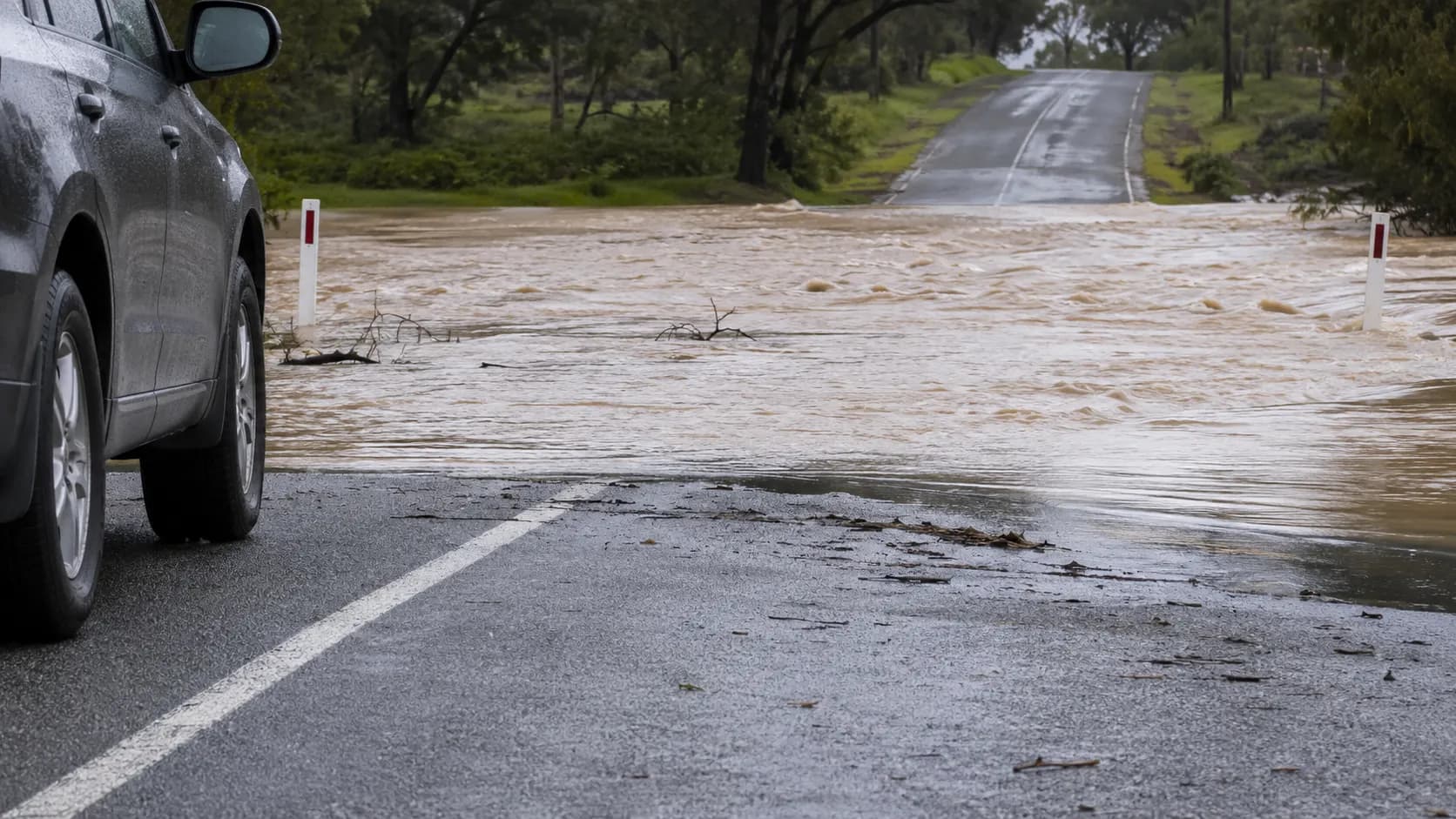
The National Weather Service warns that about 6 inches, or 15 centimetres, of moving water can knock a person off their feet. Once someone falls, the current can carry them toward deeper water, debris or drainage structures.
Vehicles are not reliable shelters. Around 12 inches, or 30 centimetres, of moving water can float a car or small SUV, while approximately 18 inches, or 46 centimetres, can carry away larger vehicles. The exact outcome depends on the vehicle, current, and road conditions, which is why we don't recommend testing the water yourself.
A flooded road may also have collapsed below the surface. Driving around a barricade means taking a route authorities have already deemed unsafe, often with no way to see whether the pavement has washed away.
What May Be Hidden in Floodwater?
The CDC advises people to stay out of floodwater because its contents cannot be identified by appearance. Water moving through homes, farms, roads and industrial areas collects hazards along the way.
Human and animal waste containing disease-causing germs
Fuel, household chemicals, pesticides and industrial contaminants
Broken glass, metal, timber, vehicles and other sharp debris
Downed power lines or flooded electrical equipment
Displaced rodents, snakes, insects and other animals
Contact can lead to cuts, wound infections, skin rashes or gastrointestinal illness. Electricity is especially dangerous because energised water does not look different from safe water. Stay away from floodwater near power lines, damaged buildings or electrical systems.
What Causes Flooding?
Flooding occurs when water covers land that is normally dry. Heavy or prolonged rain may overwhelm soil, rivers and drains. River floods can develop after rain falls far upstream, while coastal floods may be driven by storm surge, waves and unusually high water.
Flash floods develop rapidly after heavy rain, dam failure or another sudden release of water. Cities can flood with less rainfall because roads, roofs and other hard surfaces prevent water from soaking into the ground and send runoff quickly toward drains and low areas.
Flood Watch and Flood Warning Are Not the Same

Keep reading
Should You Eat Less Protein for Healthy Aging?
Terminology varies between countries, so follow the definitions used by your local meteorological service. Under the US National Weather Service system, a flood watch means conditions are favourable for flooding, but the event is not yet certain or imminent. Use that time to prepare.
A flood warning means dangerous flooding is occurring, imminent or highly likely. A flash-flood warning requires urgent action because water can rise quickly. Move away from low ground and follow evacuation instructions immediately.
What to Do Before and During a Flood
Know whether your home, workplace and usual routes are in flood-prone areas.
Identify higher ground and more than one evacuation route.
Keep medicines, drinking water, lights, charged power banks and essential documents ready.
Monitor official forecasts, warnings and evacuation messages.
Leave early when authorities advise evacuation instead of waiting for water to reach the building.
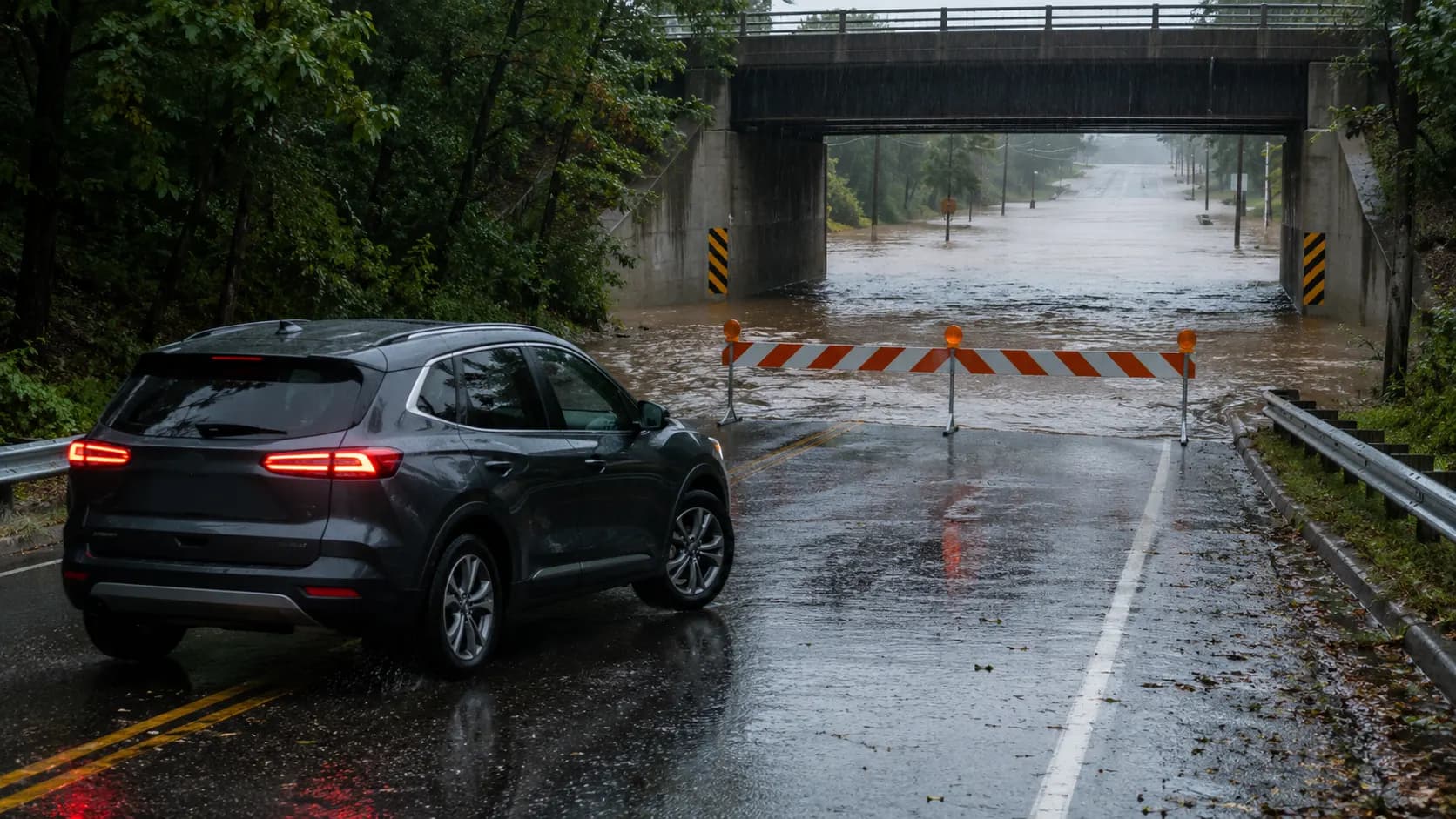
Never walk, swim or drive through floodwater, and never go around a road barrier.
Avoid basements, tunnels, underpasses and other spaces that can fill rapidly.
If rising water traps you, move to the highest safe level available and contact local emergency services. Do not enter a closed attic unless you have a safe route to the roof, because rising water can trap you inside.
Do not touch electrical equipment while standing in water. If you hear buzzing, crackling or popping, see sparks, or notice submerged outlets and wires, leave the area and contact the electricity provider or emergency authorities.
What to Do After Contact With Floodwater
Treat floodwater as contaminated. Wash exposed skin with soap and clean water as soon as possible. Wash contaminated clothing separately with detergent before wearing it again.
Clean small wounds promptly and keep them covered. Seek medical advice for deep punctures, heavily contaminated wounds, animal bites, worsening redness, swelling, pain, fever or drainage. A healthcare professional can also check whether tetanus vaccination is needed.
Returning Home and Cleaning Up Safely
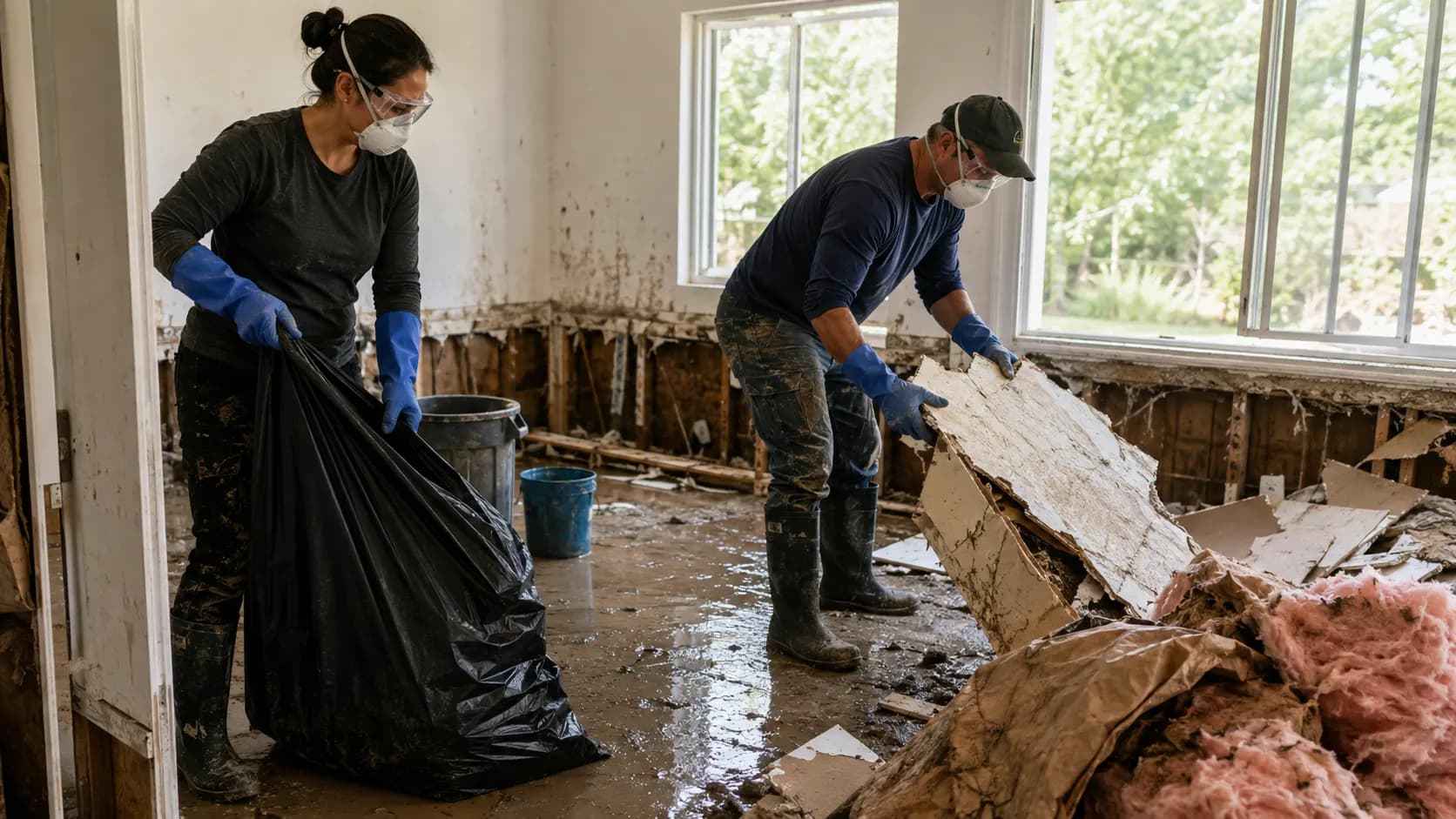
Return only when local authorities say it is safe. Do not enter a visibly damaged building until it has been assessed, and do not switch on wet electrical systems. Floodwater can weaken floors, walls and foundations even after it recedes.
Wear suitable boots, gloves and eye protection when contact with contaminated surfaces is unavoidable. Dry the building and its contents as quickly as possible. EPA and CDC guidance recommends beginning within 24–48 hours where practical because mould can grow on wet materials.
People with asthma, serious allergies, weakened immune systems or other health concerns may need to avoid mould cleanup and seek professional advice. Large areas of contamination, sewage exposure or structural damage may require trained contractors.
When Flood Exposure Needs Medical Attention
Seek urgent medical help after an electrical injury, near drowning, breathing difficulty, confusion or loss of consciousness. Medical assessment is also appropriate for persistent vomiting or diarrhoea, fever after contaminated-water exposure, worsening wounds or breathing problems during mould cleanup.
The Safest Rule Is the Simplest
Floodwater does not need to look violent to be deadly. Its greatest dangers depth, current, missing pavement, contamination and electricity are often invisible.
Reference notes
Sources and further reading
- Weather (opens in a new tab)https://www.weather.gov/safety/flood-during
- Weather (opens in a new tab)https://www.weather.gov/nerfc/ffg
- Forecast Weather (opens in a new tab)https://forecast.weather.gov/glossary.php?word=flood+watch
- Forecast Weather (opens in a new tab)https://forecast.weather.gov/glossary.php?word=flood+warning
- CDC (opens in a new tab)https://www.cdc.gov/floods/safety/floodwater-after-a-disaster-or-emergency-safety.html
- CDC (opens in a new tab)https://www.cdc.gov/floods/safety/reentering-your-flooded-home-safety.html
- CDC (opens in a new tab)https://www.cdc.gov/natural-disasters/safety/index.html
- EPA (opens in a new tab)https://nepis.epa.gov/Exe/ZyPURL.cgi?Dockey=P1019OUZ.txt
Our editorial promise
Prepared with clarity and care.
This guide completed our editorial review before publishing. If something needs attention, report a correction or contact the publisher.
About this article
- Published:
- Last updated:
- Author:
- Ceyora Editorial Team
- Review status:
- Editorially reviewed
- Sources:
- 8
- Corrections:
- Report an issue