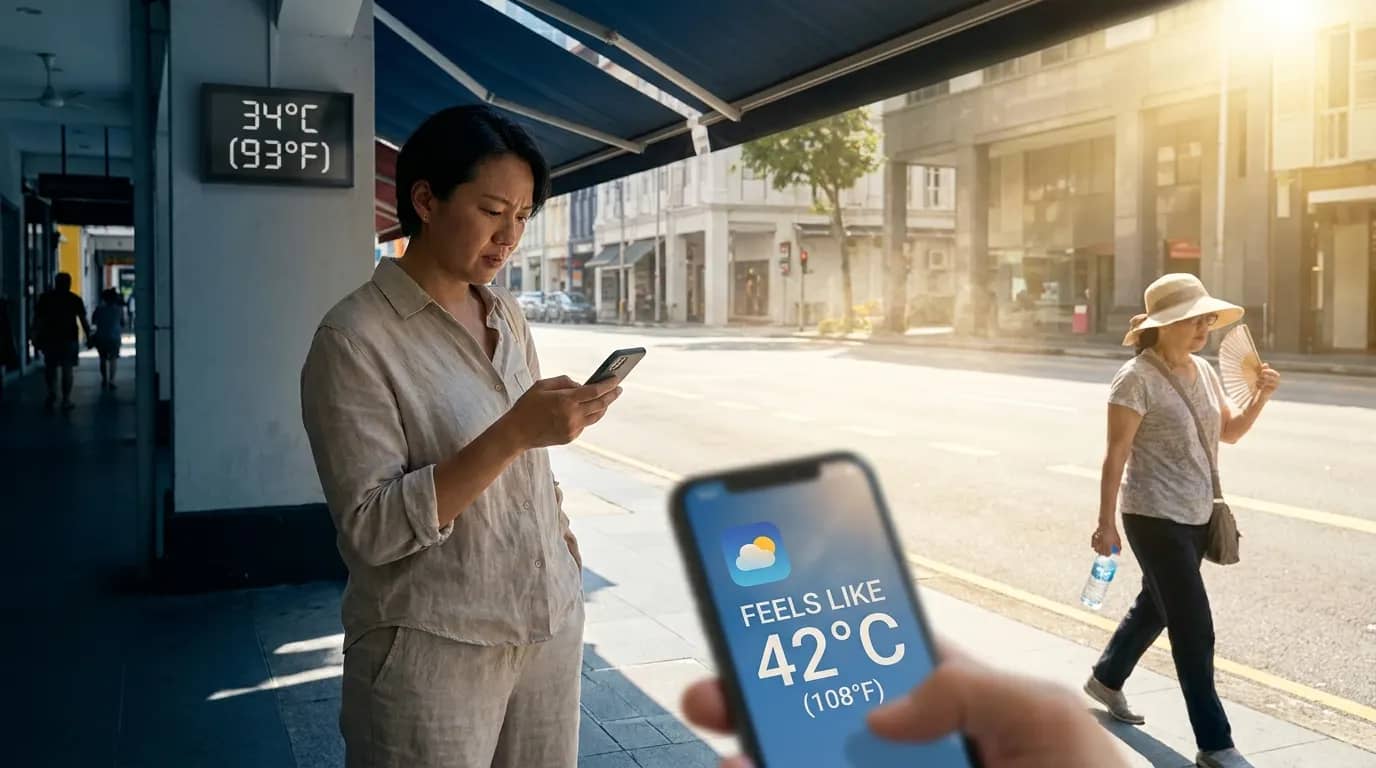
Your weather app shows 35°C but also says “feels like 43°C.” Both numbers matter. The first is measured air temperature. The second, often the heat index, estimates how hot conditions may feel once humidity is considered.
That higher number is more than a comfort rating. Heat and humidity together can slow the evaporation of sweat, making it harder for the body to release heat and increasing the risk of heat exhaustion or heat stroke.
What Is the Heat Index?
The heat index, sometimes called apparent temperature, combines air temperature and relative humidity to estimate how hot conditions feel to the human body. It is not a second thermometer reading, and it does not mean the air has physically reached the higher number.
For example, the National Weather Service chart shows that 32°C, or 90°F, with 70% relative humidity produces a heat index of about 41°C, or 106°F. That higher figure represents the extra strain of humid conditions.
Why Humidity Makes Heat Feel Worse
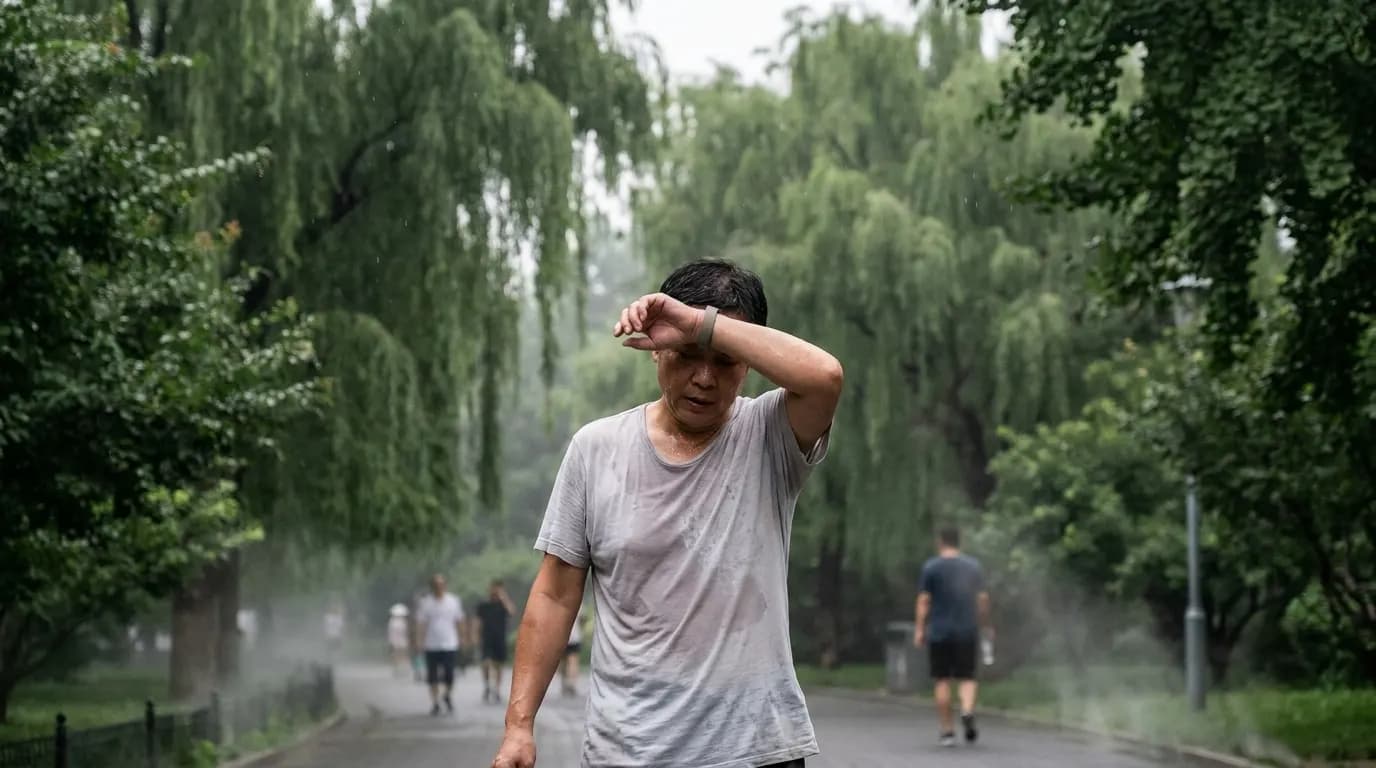
Sweating cools the body only when it evaporates. As sweat changes from liquid to vapour, it carries heat away from the skin. Humid air already contains more moisture, which slows evaporation.
This is why a humid day can feel more oppressive than a hotter but drier one. You may sweat heavily without receiving the same cooling benefit. Humidity does not raise the thermometer reading; it changes how efficiently the body manages heat.
Dry heat is not harmless. Very high temperatures can still overwhelm the body, especially in direct sun or during intense activity.
How Is the Heat Index Calculated?
Weather services calculate the heat index mainly from air temperature and relative humidity using a formula or chart. Forecasts and weather apps usually display it automatically.
The same air temperature can produce different feels-like readings as humidity changes.
When Does the Heat Index Become Dangerous?

There is no heat-index number that is safe for every person and activity. Duration, sunlight, workload, clothing, acclimatization and health all matter. A shaded walk is not the same exposure as running or roofing in afternoon sun.
The National Weather Service uses broad guidance categories. At 27–32°C, or 80–90°F, fatigue may occur with prolonged activity. At 32–41°C, or 90–105°F, heat cramps and heat exhaustion become possible. At 41–54°C, or 105–129°F, they become more likely and heat stroke is possible. At 54°C, or 130°F, and above, heat stroke becomes increasingly likely.
These are general US guidance ranges, not worldwide personal safety limits. Illness can occur at lower readings during strenuous or prolonged exposure.
The Limitation Most People Miss
Standard heat-index values assume shade and light wind. The National Weather Service says full sunshine can raise apparent heat by as much as 15°F, roughly 8°C. Someone working, exercising or travelling in direct sun may face more strain than the forecast suggests.
The heat index also leaves out workload, heavy clothing, radiant heat from roads or machinery, limited airflow and exposure time.
When WBGT May Be More Useful

Keep reading
Why Spain Is Facing Another Dangerous Heatwave in 2026
For demanding sport or outdoor work, wet-bulb globe temperature, or WBGT, may be more useful. OSHA explains that WBGT accounts for temperature, humidity, radiant heat and wind, while the ordinary heat index does not.
Why Acclimatization Matters
Repeated exposure to hot conditions can produce useful adaptations, including more efficient sweating and improved circulation. This is called acclimatization.
CDC and NIOSH recommend that workers increase heat exposure gradually over 7–14 days. Adaptation lowers risk but cannot make extreme conditions safe.
Who May Be More Vulnerable?
Anyone can develop heat illness. Risk may be higher for older adults, young children, pregnant people, outdoor workers, athletes, people with certain chronic conditions and those who are not accustomed to heat.
Some medicines may affect hydration or temperature control. Never change medication without professional advice.
How to Protect Yourself When the Heat Index Is High

Use the heat index as an early planning signal. Check the hourly forecast, local warnings and the conditions of the activity you intend to do.
Move demanding outdoor work or exercise to a cooler time when practical.
Take regular breaks in shade or a cooled indoor space.
Drink water regularly unless you have medical fluid restrictions.
Wear lightweight, loose-fitting clothing.
Reduce your pace and shorten exposure when conditions feel harder than expected.
Check on people who may need help staying cool.
Never leave children, vulnerable adults or pets in a parked vehicle.
For example, when an afternoon run coincides with a heat index above 40°C, moving it to early morning, shortening the route and choosing shade may be wiser than keeping the usual pace.
Warning Signs of Heat Exhaustion
Heat exhaustion follows excessive loss of water and salt, usually through heavy sweating. Symptoms may include headache, nausea, dizziness, weakness, irritability, thirst, heavy sweating and reduced urine output.
Move the person to a cooler place, remove unnecessary outer clothing and begin cooling. Seek medical care if symptoms are severe, worsen or do not improve.
Know the Signs of Heat Stroke
Heat stroke is the most serious heat-related illness. Warning signs may include confusion, slurred speech, poor coordination, collapse, loss of consciousness, seizures, very high body temperature, hot dry skin or profuse sweating.
Common Heat-Index Myths
Myth: The heat index is the temperature in the sun. Reality: it is calculated for shaded, light-wind conditions.
Myth: Humidity raises the measured temperature. Reality: it mainly reduces sweat evaporation.
Myth: Water makes every outdoor activity safe. Reality: shade, rest, workload, clothing and cooling also matter.
Myth: Below an alert threshold is safe for everyone. Reality: strenuous activity and personal vulnerability can raise risk earlier.
The Most Useful Way to Read the Heat Index
Air temperature tells you how hot the air is. The heat index estimates how that heat may affect the body once humidity is included. Neither number is a personal safety guarantee.
Reference notes
Sources and further reading
- Weather (opens in a new tab)https://www.weather.gov/safety/heat-index
- Weather (opens in a new tab)https://www.weather.gov/ddc/heat_index
- Osha (opens in a new tab)https://www.osha.gov/heat-exposure/hazards
- CDC (opens in a new tab)https://www.cdc.gov/niosh/heat-stress/recommendations/acclimatization.html
- CDC (opens in a new tab)https://www.cdc.gov/niosh/heat-stress/about/illnesses.html
- CDC (opens in a new tab)https://www.cdc.gov/heat-health/risk-factors/index.html
- CDC (opens in a new tab)https://www.cdc.gov/yellow-book/hcp/environmental-hazards-risks/heat-and-cold-illness-in-travelers.html
Our editorial promise
Prepared with clarity and care.
This guide completed our editorial review before publishing. If something needs attention, report a correction or contact the publisher.
About this article
- Published:
- Last updated:
- Author:
- Ceyora Editorial Team
- Review status:
- Editorially reviewed
- Sources:
- 7
- Corrections:
- Report an issue