Why Do Dead Whales Sometimes Explode?
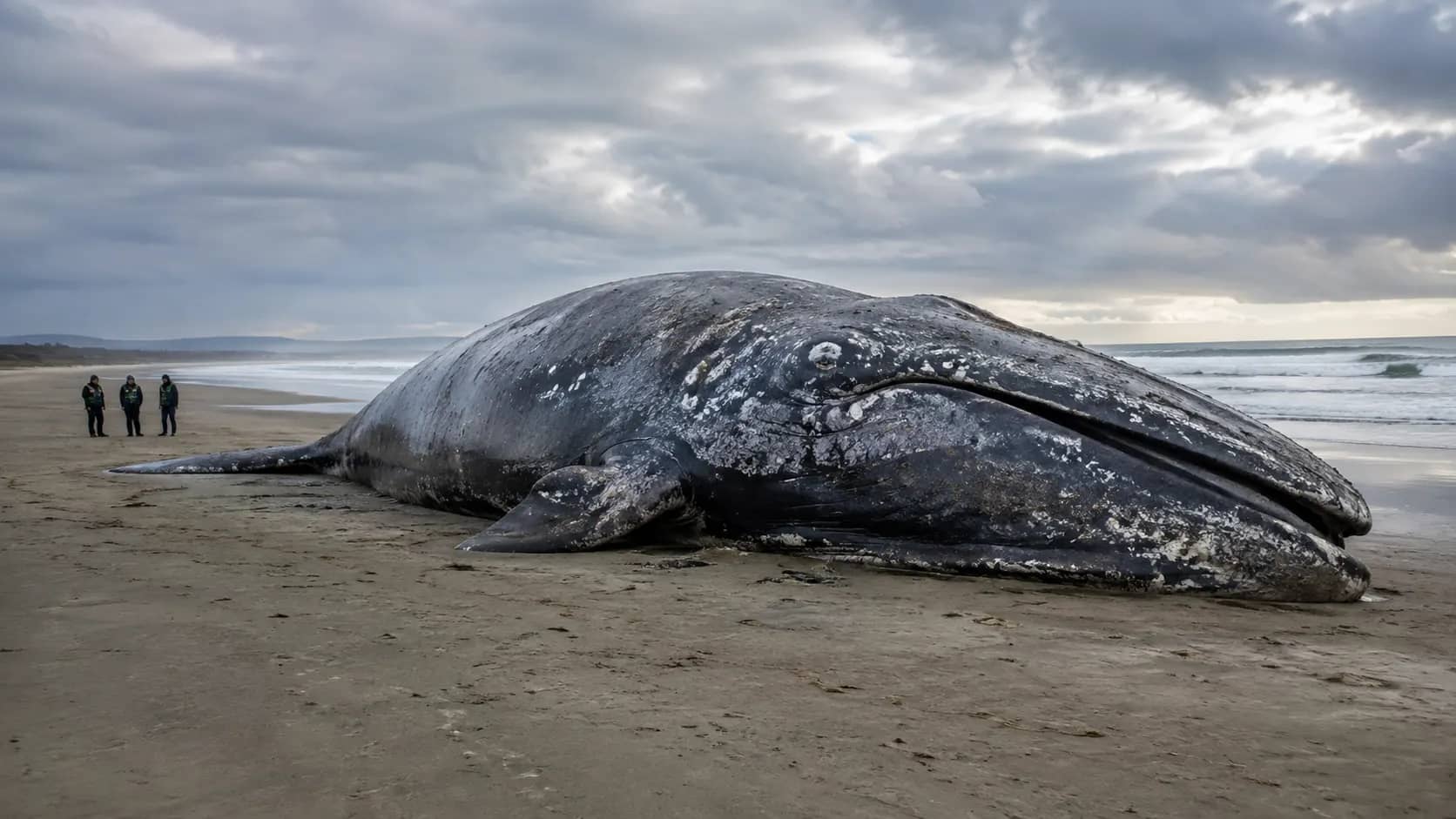
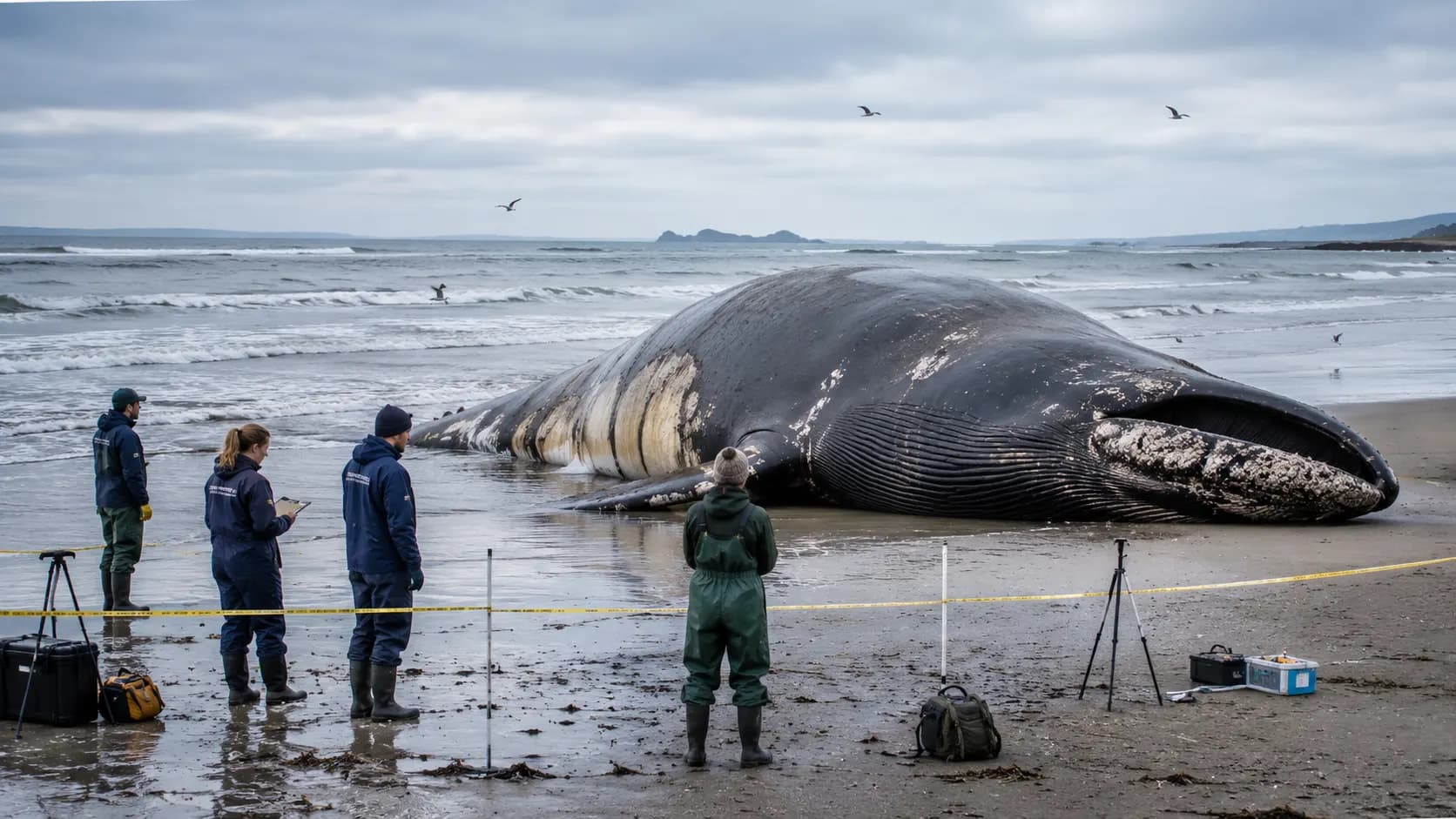
A dead whale lying on a beach already attracts attention because of its enormous size. Then its body begins to swell. In rare cases, the carcass can suddenly rupture and release gas, fluids and decomposing tissue.
It looks extraordinary, but the basic reason is surprisingly familiar. Decomposition produces gas.
What makes a whale different is the scale of the body and the amount of pressure that can build inside it.
What Happens Inside a Whale After It Dies?
After death, the whale's cells begin breaking down and microorganisms continue acting inside the body. Bacterial decomposition can produce gases, particularly inside the abdomen. Researchers studying dead cetaceans have found that this gas can become significant enough to make some carcasses bloat and even cause whales that initially sank to float back toward the surface.
Picture what happens to a smaller dead animal as it decomposes. Its abdomen may become swollen before the body gradually breaks apart.
A whale goes through the same biological process, only on an enormous scale.
Why Does the Body Become So Bloated?
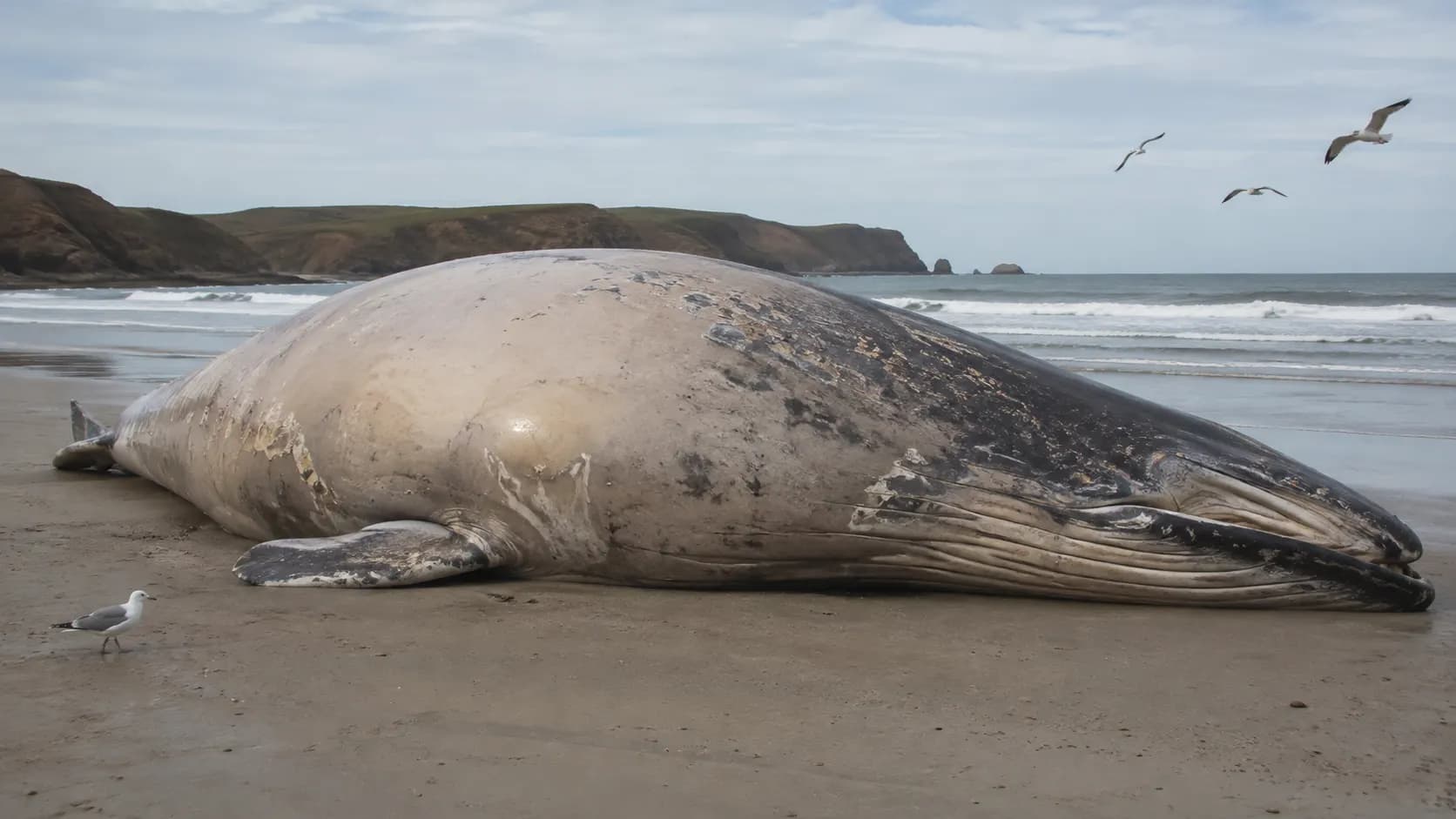
A whale's body can hold a huge amount of decomposing tissue. If gas forms faster than it can escape, pressure increases inside the carcass.
Temperature can influence this process. Warmer conditions generally encourage faster microbial activity and gas production, while cold water can slow decomposition. Water pressure also affects whether gases expand enough to make a submerged carcass buoyant.
This explains why one dead whale might remain relatively unchanged for a while, while another becomes visibly swollen.
A bloated whale does not necessarily mean an explosion is about to happen. The body may slowly release gas, break apart, be opened by scavengers or simply continue decomposing.
What Actually Makes a Dead Whale Explode?
The word explode makes it sound as if something inside the whale catches fire. That is not what is happening.
The danger comes from pressure.
Professional guidance for cetacean postmortem examinations warns that decomposing carcasses can contain substantial internal pressure. Opening a heavily bloated carcass can cause a sudden and violent release of gas and bodily fluids.
Keep reading
The Greenland Shark That May Live for 400 Years
Sometimes the weakening body eventually ruptures naturally. In other situations, cutting or handling the carcass can suddenly give the trapped pressure a way out.
Think of an overinflated container whose walls are becoming weaker. The comparison is not perfect, but it helps explain why the release can be abrupt rather than gradual.
Do All Dead Whales Explode?
No.
Most whale carcasses will never produce the dramatic event seen in viral videos.
Some whales sink and decompose on the seafloor. Others float, wash ashore, break apart or are eaten by scavengers. Researchers have found that temperature, water depth, pressure, body condition and the activity of microorganisms all influence what happens after death.
The word sometimes in this question matters.
Explosion is possible, particularly with a badly bloated carcass, but it is not the normal ending for every dead whale.
What Happens to a Whale Carcass Afterward?
Authorities have several options depending on where the whale is found.
A carcass may be allowed to decompose naturally in a remote location. In other cases, trained teams may bury it, move it or use another approved disposal method. Moving a large whale can require heavy machinery and careful planning because the carcass itself can be unstable and potentially hazardous.
When a whale remains in nature, its death also becomes part of the ecosystem. Scavengers, insects and microorganisms use the carcass as a major source of nutrients.
Reference notes
Sources and further reading
- Frontiersin (opens in a new tab)https://www.frontiersin.org/journals/marine-science/articles/10.3389/fmars.2020.00333/full
- NOAA (opens in a new tab)https://www.fisheries.noaa.gov/national/marine-life-distress/how-experts-properly-dispose-dead-marine-mammals
- NOAA (opens in a new tab)https://www.fisheries.noaa.gov/national/marine-life-distress/frequent-questions-necropsies-animal-autopsies-marine-mammals
- NOAA (opens in a new tab)https://www.fisheries.noaa.gov/feature-story/whale-story-necropsy-reveals-health-species-and-ocean
- Nationalgeographic (opens in a new tab)https://www.nationalgeographic.com/animals/article/exploding-blue-whales
Our editorial promise
Prepared with clarity and care.
This guide completed our editorial review before publishing. If something needs attention, report a correction or contact the publisher.
About this article
- Published:
- Last updated:
- Author:
- Ceyora Editorial Team
- Review status:
- Editorially reviewed
- Sources:
- 5
- Corrections:
- Report an issue