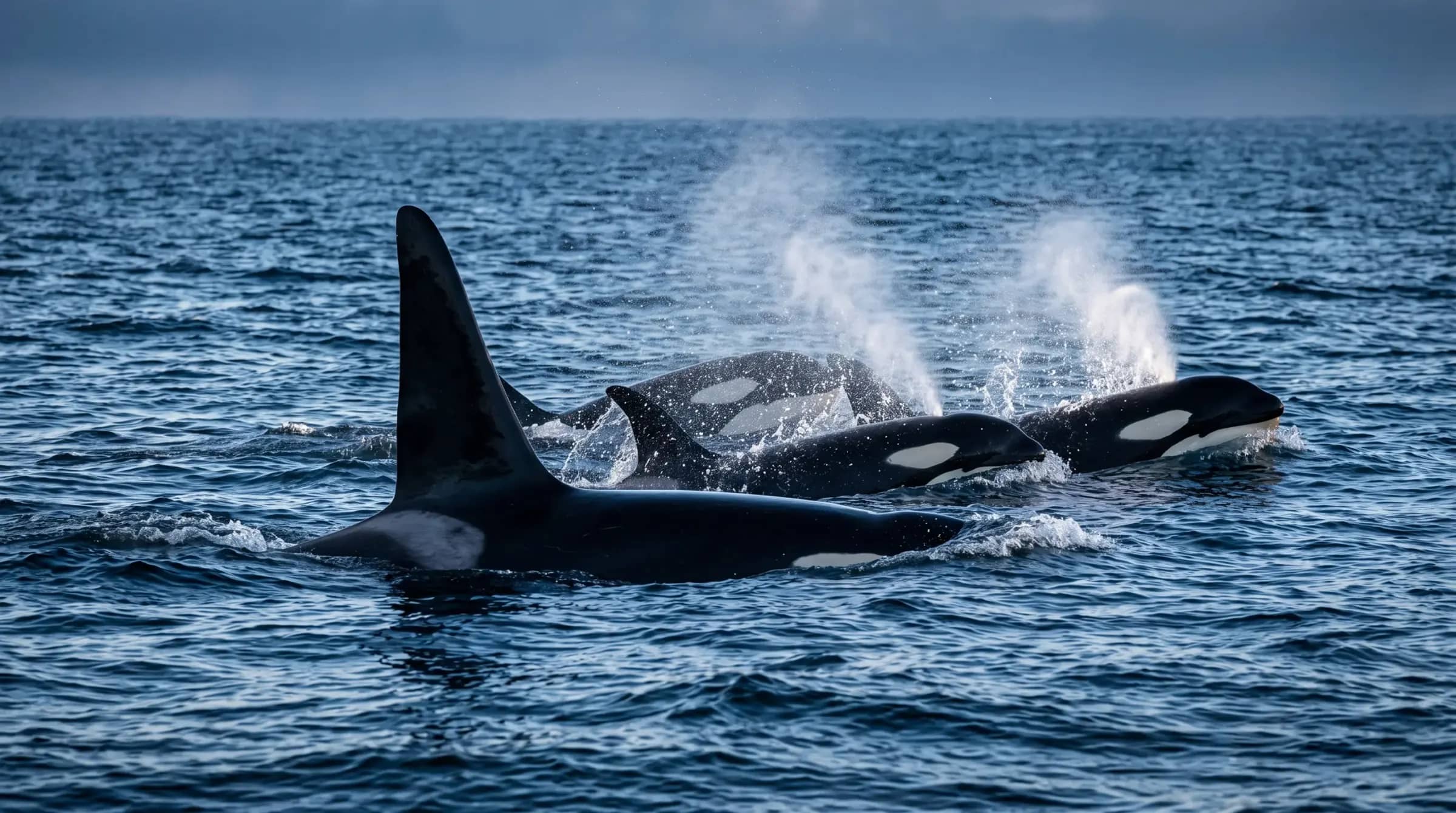
The name lands like a warning: killer whale. It suggests a black-and-white predator built to threaten anything that enters the sea. Orcas are certainly formidable hunters, but the name has encouraged a misleading idea about what they are dangerous to and what they are not.
The simplest correction is this: an orca’s hunting reputation comes from its ability to kill other marine animals, including whales. It does not describe a normal habit of hunting people.
Why Are Orcas Called Killer Whales?
The common explanation is that early sailors saw orcas hunting large whales and described them as whale killers. Over time, the words were reversed into “killer whale.” The exact linguistic history is not perfectly documented, but the name clearly became associated with their extraordinary ability to bring down large marine prey.
That distinction matters. The name describes what some orca populations can do to seals, dolphins or whales; it is not evidence that humans are a preferred prey species.
Orcas Are Dolphins but Dolphins Are Toothed Whales
Orcas belong to Delphinidae, the oceanic dolphin family, and they are its largest members. Calling them dolphins is biologically correct. Saying they are “not whales at all,” however, goes too far. Dolphins are part of the toothed-whale group of cetaceans, which also includes sperm whales, porpoises and beaked whales.
In everyday language, “whale” is often reserved for larger species, while “dolphin” suggests a smaller animal with a beak. Nature does not follow that neat naming system. An orca is both a dolphin and a toothed whale.
Different Orcas Hunt Different Prey
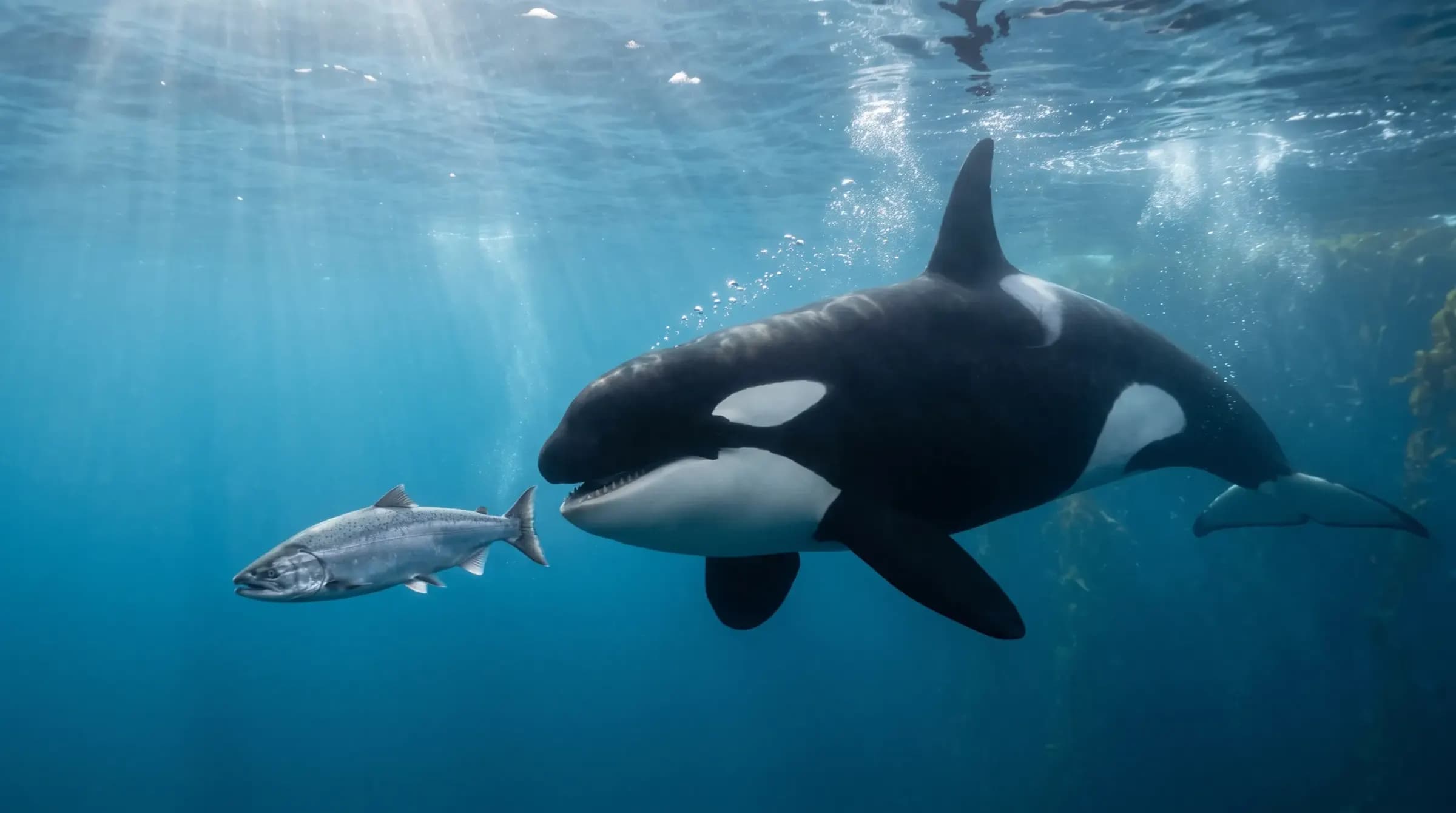
There is no single orca menu. Different populations often specialise so strongly that two groups sharing the same waters may ignore one another’s preferred food.
Fish-Eating Orcas
Resident orcas in the northeastern Pacific mainly eat fish. Southern Residents are especially dependent on salmon, with Chinook salmon forming an important part of their diet. A nearby seal may be potential prey to another type of orca, yet these fish specialists usually remain committed to what their families have learned to hunt.
Mammal-Hunting and Shark-Eating Orcas
Bigg’s, or transient, orcas hunt marine mammals such as seals, sea lions, porpoises and other whales. Offshore orcas are known for eating sharks and other fish. Shark skin can wear down their teeth, and some orcas have been observed using precise methods that exploit a shark’s temporary immobility when turned upside down.
How Orcas Learn and Why Family Culture Matters
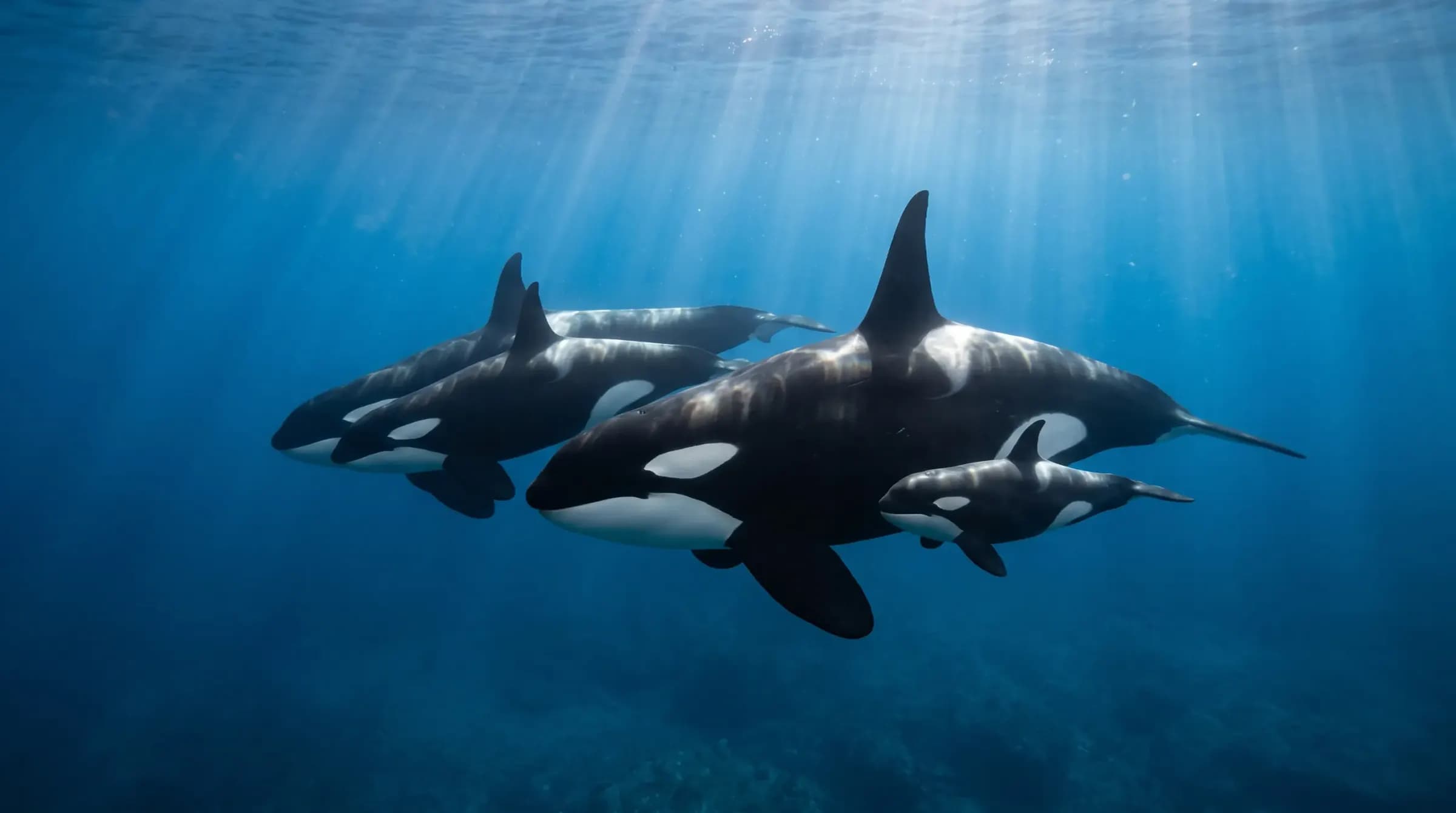
Orca hunting is not only instinct. Young animals watch, imitate and practise the methods used by their relatives. In different regions, pods have learned to make waves that wash seals from ice, cooperate around schools of fish or briefly move onto shorelines to capture prey.
Scientists use the word culture because these behaviours are learned and passed between generations. Calls also differ among populations and family groups. NOAA describes some pulsed calls as learned family badges that help keep pod members together.
Keep reading
Are Kangaroos Dangerous? The Truth About Their Powerful Attacks
Many orca societies are matrilineal. Sons and daughters may remain closely associated with their mothers, and older females can carry valuable knowledge about prey, travel routes and survival during difficult years. Family is not a decorative part of orca life; it is how practical information survives.
Are Orcas Dangerous to Humans?
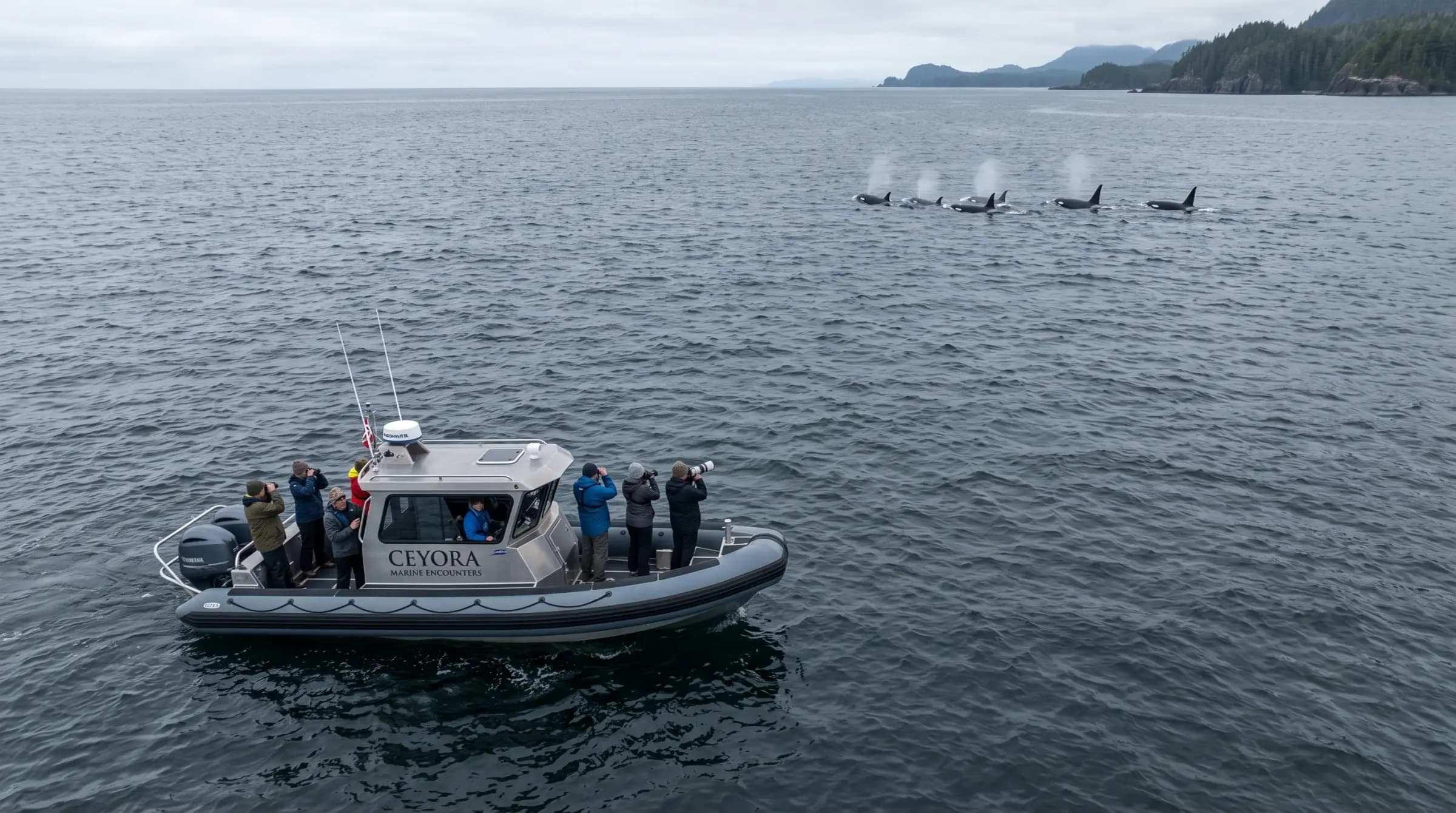
Orcas are physically capable of seriously injuring a person. They are large, fast and intelligent predators. Yet documented attacks by free-ranging orcas are extraordinarily uncommon. A published review found no documented human fatalities caused by wild orcas and only one direct attack in the records it assessed.
That rarity does not make close contact sensible. A curious movement, sudden dive or tail strike from an animal of this size could be dangerous without being predatory. Never swim toward orcas, attempt to touch or feed them, block their path or chase them for a photograph. Follow local approach distance and boating rules.
What About Orcas in Captivity?
Human deaths and serious injuries have occurred during close contact with captive orcas. After a trainer was killed in Florida in 2010, the US Occupational Safety and Health Administration treated unprotected contact with killer whales as a recognised workplace hazard. Captive incidents should not be used to claim that wild orcas normally hunt people, but they do show why physical power and unpredictable behaviour must be respected.
Why Do Some Orcas Interact With Boats?
Since 2020, a small number of Iberian orcas have repeatedly interacted with sailing boats off Spain and Portugal, often targeting rudders. The behaviour has damaged vessels and created real safety problems for crews, but its cause remains unsettled. Play, curiosity and socially learned behaviour are among the ideas researchers have considered.
It is more accurate to call these events interactions than proof of predatory attacks on humans. Spanish authorities reported in 2026 that interactions had decreased overall during summer 2025, although they rose slightly along parts of the northern coast. Sailors in affected waters should follow current official navigation guidance rather than improvising.
Are All Orcas the Same Species?
Scientists recognise distinct ecotypes that differ in diet, appearance, calls, genetics and behaviour. Research published in 2024 proposed that resident and Bigg’s orcas in the eastern North Pacific should be treated as separate species.
The current Society for Marine Mammalogy list, updated in 2026, takes a more cautious position. It keeps them within Orcinus orca but provisionally recognises resident and Bigg’s orcas as separate subspecies. The evidence for big differences is strong; the remaining debate is about the correct taxonomic rank.
What Threatens Orcas?
The answer depends on the population. Some orcas are doing well, while others face serious decline. For the endangered Southern Residents, NOAA identifies three central threats: limited prey, contaminants and disturbance from vessels and underwater noise.
Noise matters because orcas rely on sound to communicate, navigate and find food. Long-lived pollutants can build up in their bodies, while the loss of preferred prey can leave a specialised population with few alternatives. Entanglement, ship strikes and habitat change can add further pressure elsewhere.
The Name Tells Only Part of the Story
“Killer whale” captures one real feature of the animal: some orcas can kill formidable prey. It hides nearly everything else the dolphin ancestry, close family bonds, learned dialects, specialised diets and traditions passed from mother to calf.
Reference notes
Sources and further reading
- NOAA (opens in a new tab)https://www.fisheries.noaa.gov/species/killer-whale
- NOAA (opens in a new tab)https://www.fisheries.noaa.gov/species/killer-whale/science
- NOAA (opens in a new tab)https://www.fisheries.noaa.gov/feature-story/11-cool-facts-about-whales-dolphins-and-porpoises
- NOAA (opens in a new tab)https://www.fisheries.noaa.gov/feature-story/comparing-killer-whale-cuisine
- Marinemammalscience (opens in a new tab)https://marinemammalscience.org/science-and-publications/list-marine-mammal-species-subspecies/
- Miteco Gob Es (opens in a new tab)https://www.miteco.gob.es/es/prensa/ultimas-noticias/2026/marzo/-disminuyen-en-espana-las-interacciones-con-orcas--excepto-en-el.html
- NOAA (opens in a new tab)https://www.fisheries.noaa.gov/west-coast/endangered-species-conservation/saving-southern-resident-killer-whales
- Journals Sagepub (opens in a new tab)https://journals.sagepub.com/doi/10.1016/j.wem.2014.09.024
- Osha (opens in a new tab)https://www.osha.gov/laws-regs/standardinterpretations/2012-07-11
Our editorial promise
Prepared with clarity and care.
This guide completed our editorial review before publishing. If something needs attention, report a correction or contact the publisher.
About this article
- Published:
- Last updated:
- Author:
- Ceyora Editorial Team
- Review status:
- Editorially reviewed
- Sources:
- 9
- Corrections:
- Report an issue