An Animal That Can Outlive Centuries of History
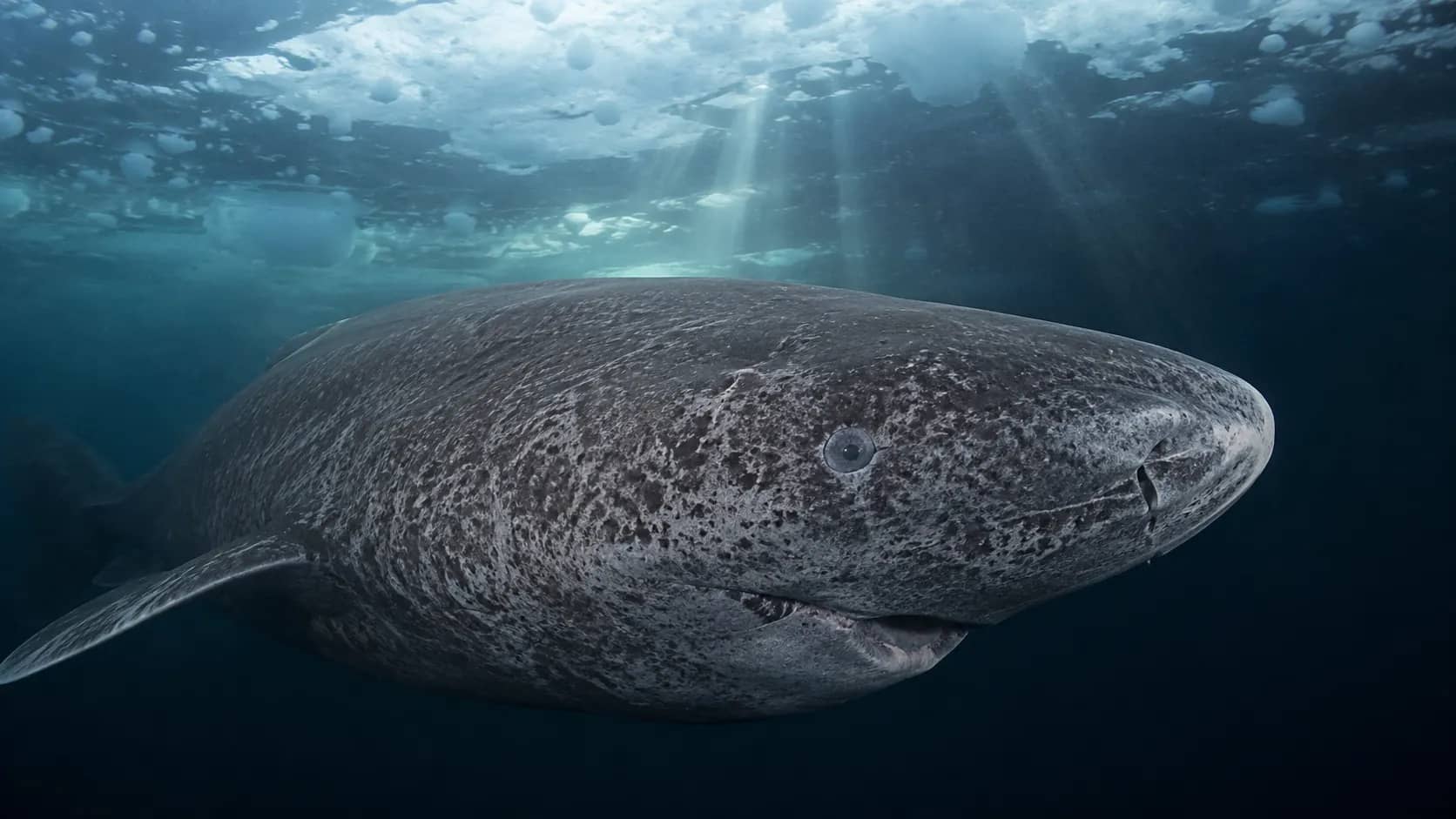
Imagine an animal swimming through the ocean before photography, electric lights and modern cars existed. It sounds like a creature from a legend, yet the Greenland shark may live long enough to experience several centuries of human history.
This large, slow moving shark lives in the cold waters of the Arctic and North Atlantic. Its body is heavy, its movements are unhurried, and much of its life happens far below the surface. It is not its appearance that makes it extraordinary. It is its age.
A Lifespan That Is Hard to Imagine
A century is an extraordinary lifetime for a person. For a Greenland shark, reaching 100 years may not even mean becoming fully mature.
In a major 2016 study, researchers examined 28 female Greenland sharks using radiocarbon dating. Their findings suggested that the species can live for at least 272 years.
The largest animal measured about five meters and was estimated to be 392 years old, with an uncertainty of around 120 years. This means its actual age may have fallen somewhere between approximately 272 and 512 years.
The famous claim that Greenland sharks can live for 400 years is therefore an estimate, not a confirmed birthday. Even the lowest end of the range is remarkable. It still places the Greenland shark ahead of every other known vertebrate for lifespan.
How Scientists Found Its Age
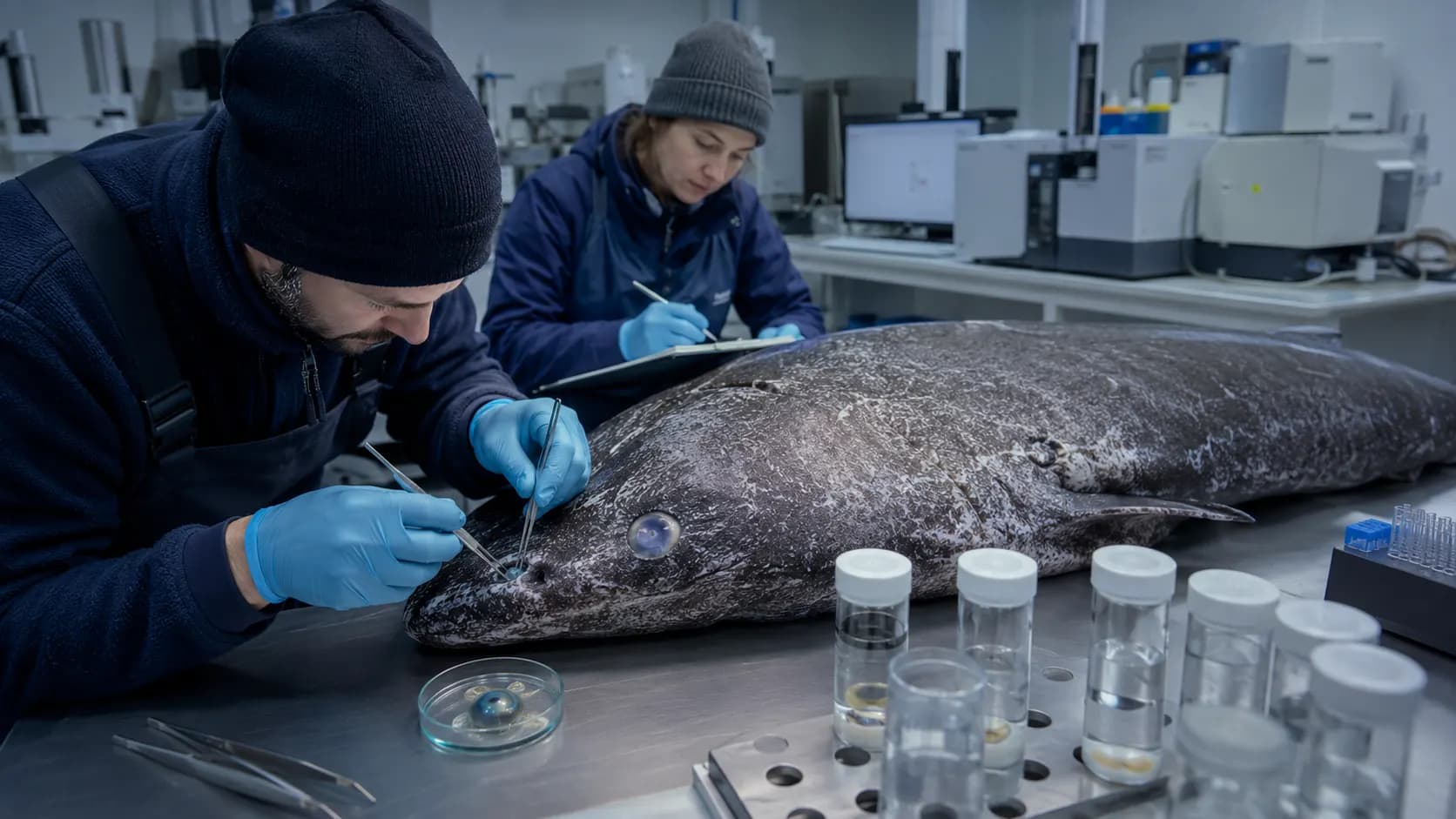
Scientists often estimate the age of fish by examining growth bands in hard body parts, rather like counting rings inside a tree.
That method does not work well with Greenland sharks. Sharks do not have hard bones, and this species has soft vertebrae that do not form clear yearly growth bands.
The answer was hidden inside its eyes.
Proteins at the center of a shark’s eye lens form before birth and remain largely unchanged throughout its life. Researchers measured radiocarbon inside this material to estimate when each shark was born.
Atmospheric carbon changed noticeably after nuclear weapons testing during the middle of the twentieth century. This created a useful time marker that helped researchers distinguish younger sharks from animals born much earlier.
Keep reading
Why Can a Dead Whale Suddenly Burst Open?
It is a strange thought. A small part of the eye can preserve a chemical clue for hundreds of years.
Why Does It Live for Such a Long Time?
Scientists do not yet have one complete answer. It's cold habitat and slow metabolism are believed to be important parts of the story.
Greenland sharks grow by less than one centimeter each year. They move slowly, survive in Arctic water throughout the year and can travel more than two kilometers beneath the ocean surface.
Researchers have measured their unusually low metabolic rate, but many questions remain about how their organs and cells continue functioning across several centuries.
Their slow growth means that life develops at a pace that is difficult for humans to imagine. The 2016 study estimated that females may not reach sexual maturity until at least 156 years of age.
A shark born when someone’s great grandparents were children might only become capable of reproducing many decades later.
A Living Connection to the Past
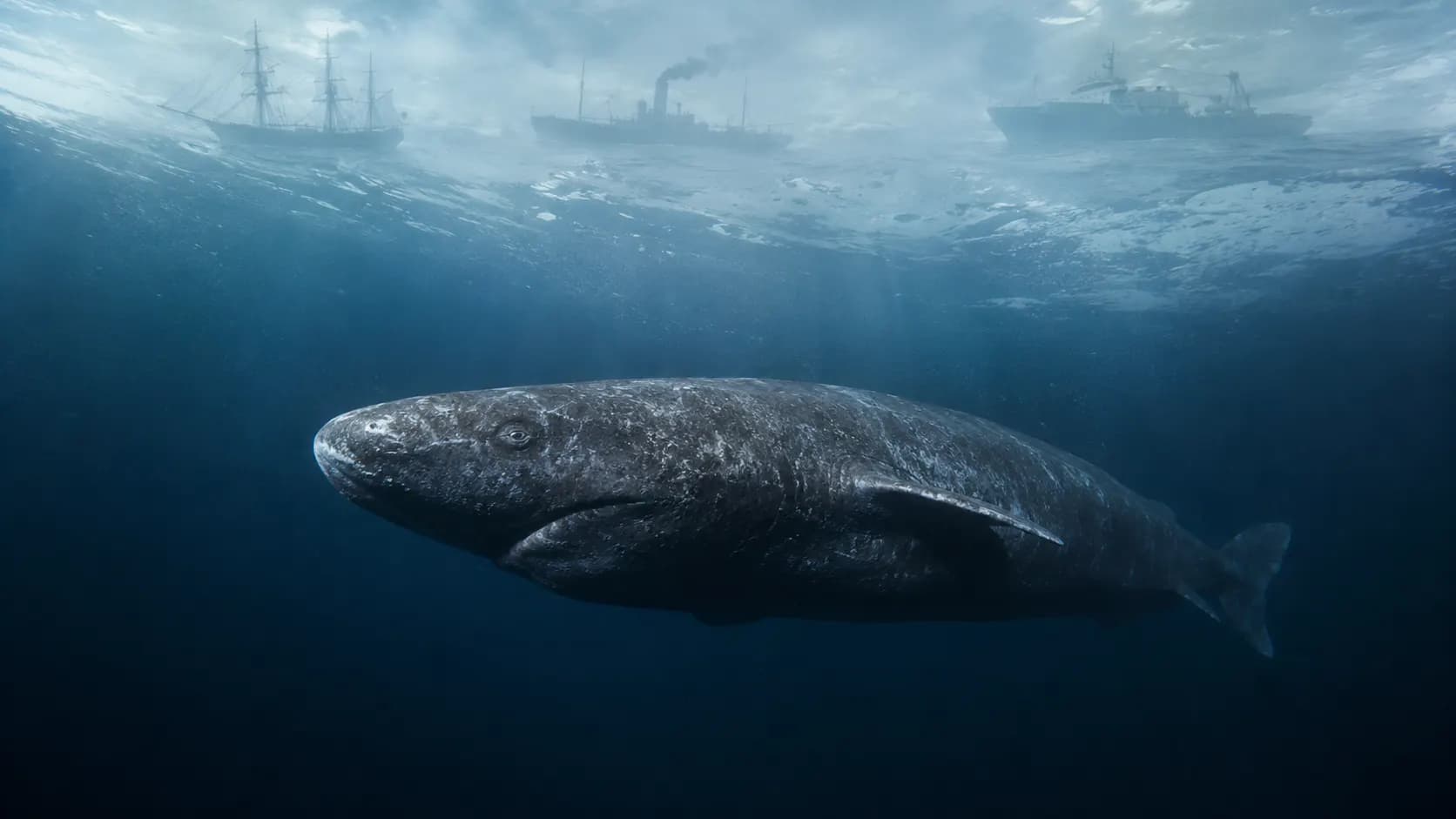
We cannot know how a Greenland shark experiences time or whether it remembers places across centuries.
Still, its age creates a powerful picture. A Greenland shark alive today may have entered the ocean before photography became part of human life. Cities expanded, technology changed and generations of people came and went while the shark continued moving through cold, dark water.
It feels less like an ordinary fish and more like a living connection to another period of history.
Reference notes
Sources and further reading
Our editorial promise
Prepared with clarity and care.
This guide completed our editorial review before publishing. If something needs attention, report a correction or contact the publisher.
About this article
- Published:
- Last updated:
- Author:
- Ceyora Editorial Team
- Review status:
- Editorially reviewed
- Sources:
- 4
- Corrections:
- Report an issue