An Evening When the Sky Changes Twice
August 12, 2026 could become one of those evenings people remember for years. First, the Moon will move across the Sun and turn it into a narrow glowing shape. A few hours later, the Perseid meteor shower will reach its peak, sending bright streaks across a dark sky.
Seeing either event would be worth stepping outside for. Having both arrive on the same date makes the night unusual.
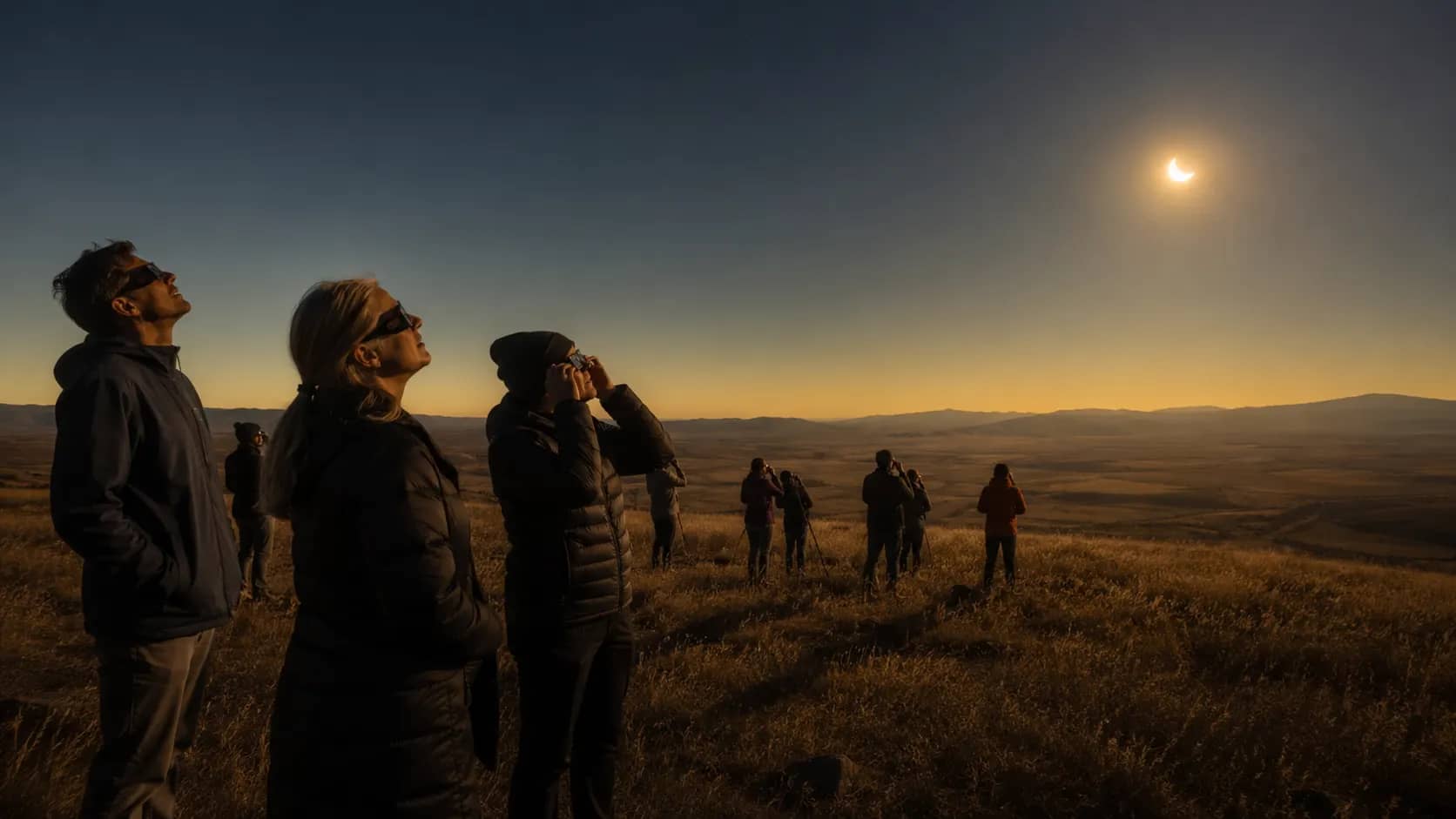
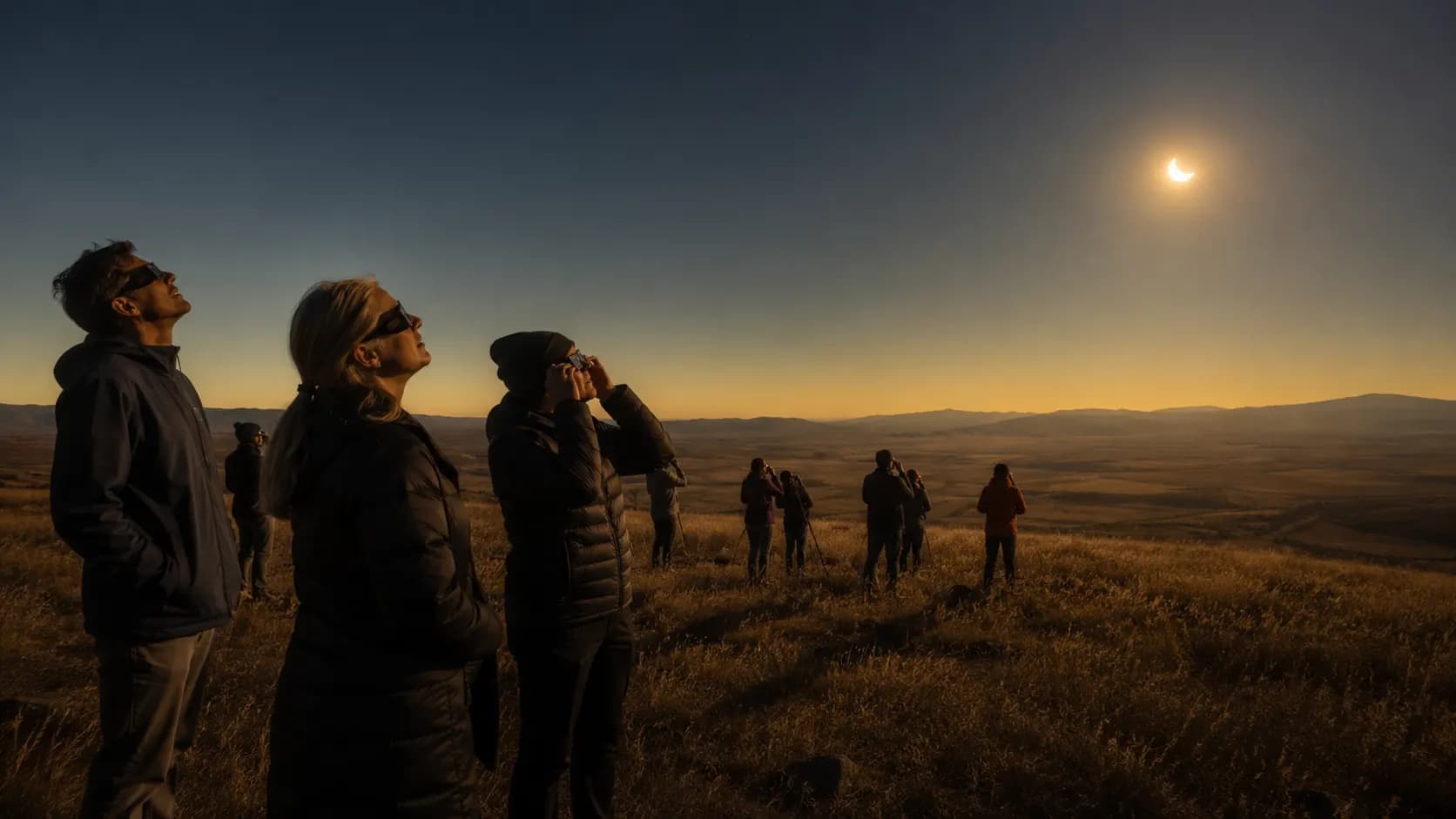
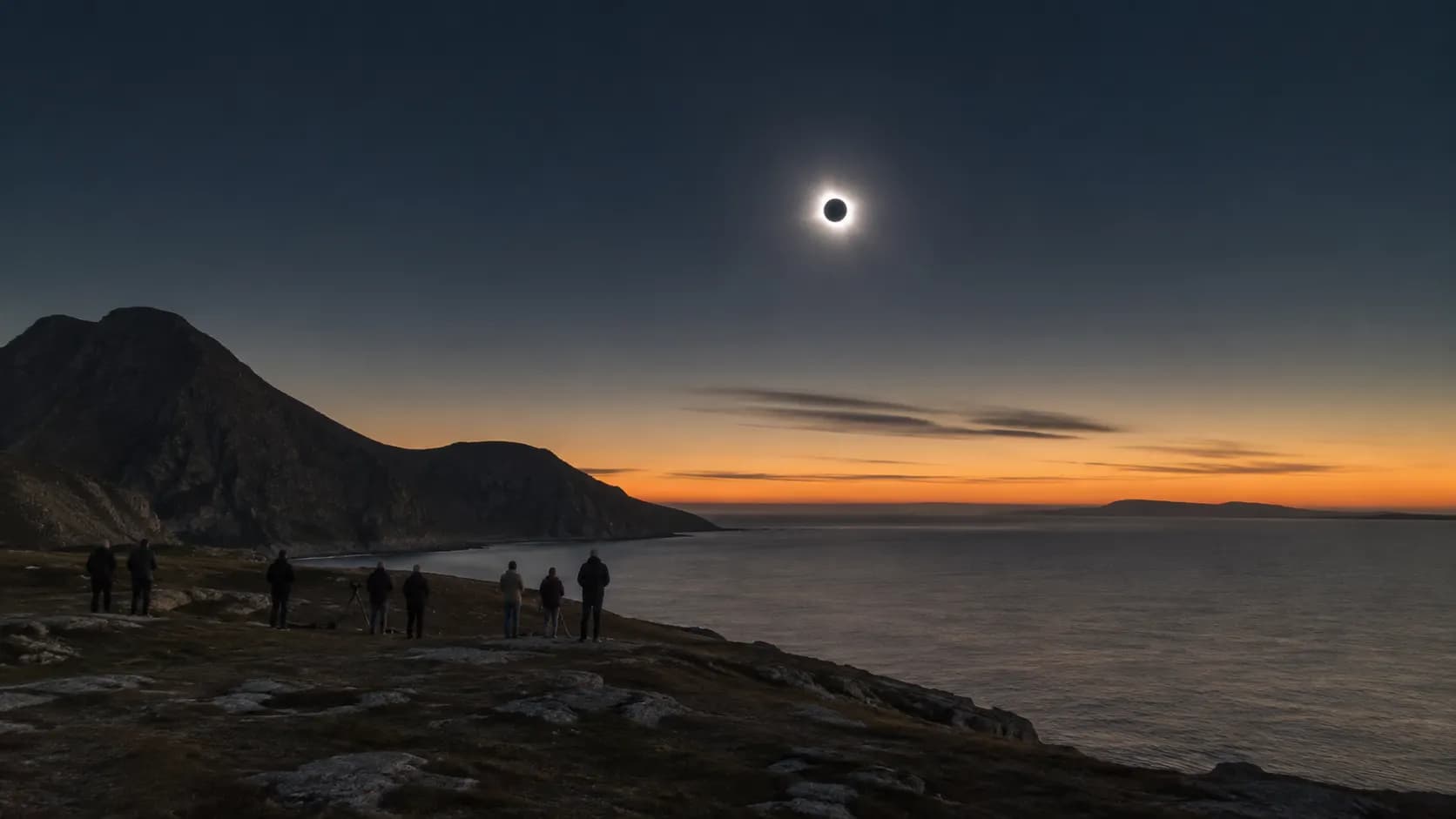
The solar eclipse will be total along a narrow path crossing Greenland, Iceland, northern Spain and a small part of Portugal. Across much of Europe, viewers will see a partial eclipse. In parts of northwestern Europe, around 90 percent of the Sun may be covered, leaving only a bright curved sliver. The Sun will also be low in the western sky, which could create a dramatic view near the horizon.
What the Eclipse May Look Like
A partial solar eclipse does not suddenly switch daylight off. The change happens slowly. At first, the Sun may look as though a small bite has been taken from one edge. The missing section grows as the Moon moves farther across it.
Near the maximum, daylight may feel dimmer and the surroundings can take on an unusual colour. Shadows may sharpen, while small gaps between tree leaves can project tiny crescent shapes onto the ground.
For many viewers in northwestern Europe, the eclipse will happen during the early evening and reach its greatest point shortly after 7 pm local time. Exact timing depends on location. Clouds near the western horizon may decide whether the view is clear or hidden.
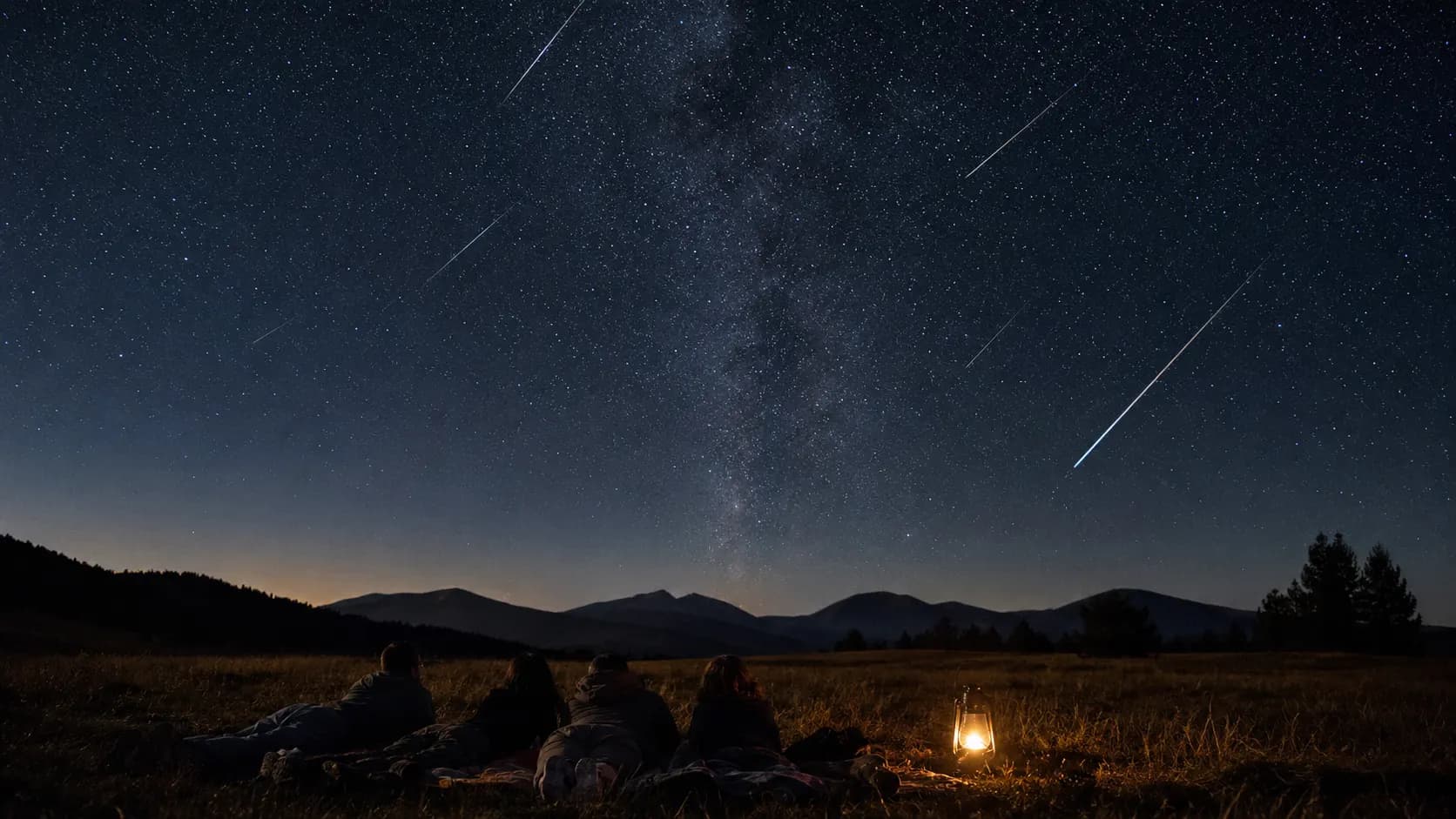
After darkness arrives, attention shifts to the Perseid meteor shower. The Perseids appear each year when Earth passes through dusty material left by Comet 109P Swift Tuttle. Tiny particles enter the atmosphere at high speed, heat up and create the flashes often called shooting stars.
Keep reading
What Makes the August 12, 2026 Solar Eclipse So Special?
The 2026 peak is expected on the night of August 12 into the morning of August 13. The Moon will be new, meaning bright moonlight should not wash out fainter meteors. The International Meteor Organization describes the conditions as excellent for visual observing.
Under a very dark, clear sky, the Perseids can produce around 50 to 100 meteors an hour. That is an ideal rate, not a promise. Streetlights, clouds, buildings and trees can reduce the number. Someone watching from a bright garden may see only a few, while a darker rural location could offer a much richer display.
How to Watch Both Events
Choose a place with a clear western view for the eclipse. Check the forecast and arrive early enough to find an open horizon. Buildings, hills and trees may block the Sun because it will be low.
For the meteor shower, move away from strong lights and allow your eyes about 20 minutes to adjust. A telescope is not needed. Your eyes can take in a larger part of the sky. Lie back somewhere safe, dim your phone and look generally upward instead of focusing on one point.
Reference notes
Sources and further reading
Our editorial promise
Prepared with clarity and care.
This guide completed our editorial review before publishing. If something needs attention, report a correction or contact the publisher.
About this article
- Published:
- Last updated:
- Author:
- Ceyora Editorial Team
- Review status:
- Editorially reviewed
- Sources:
- 5
- Corrections:
- Report an issue