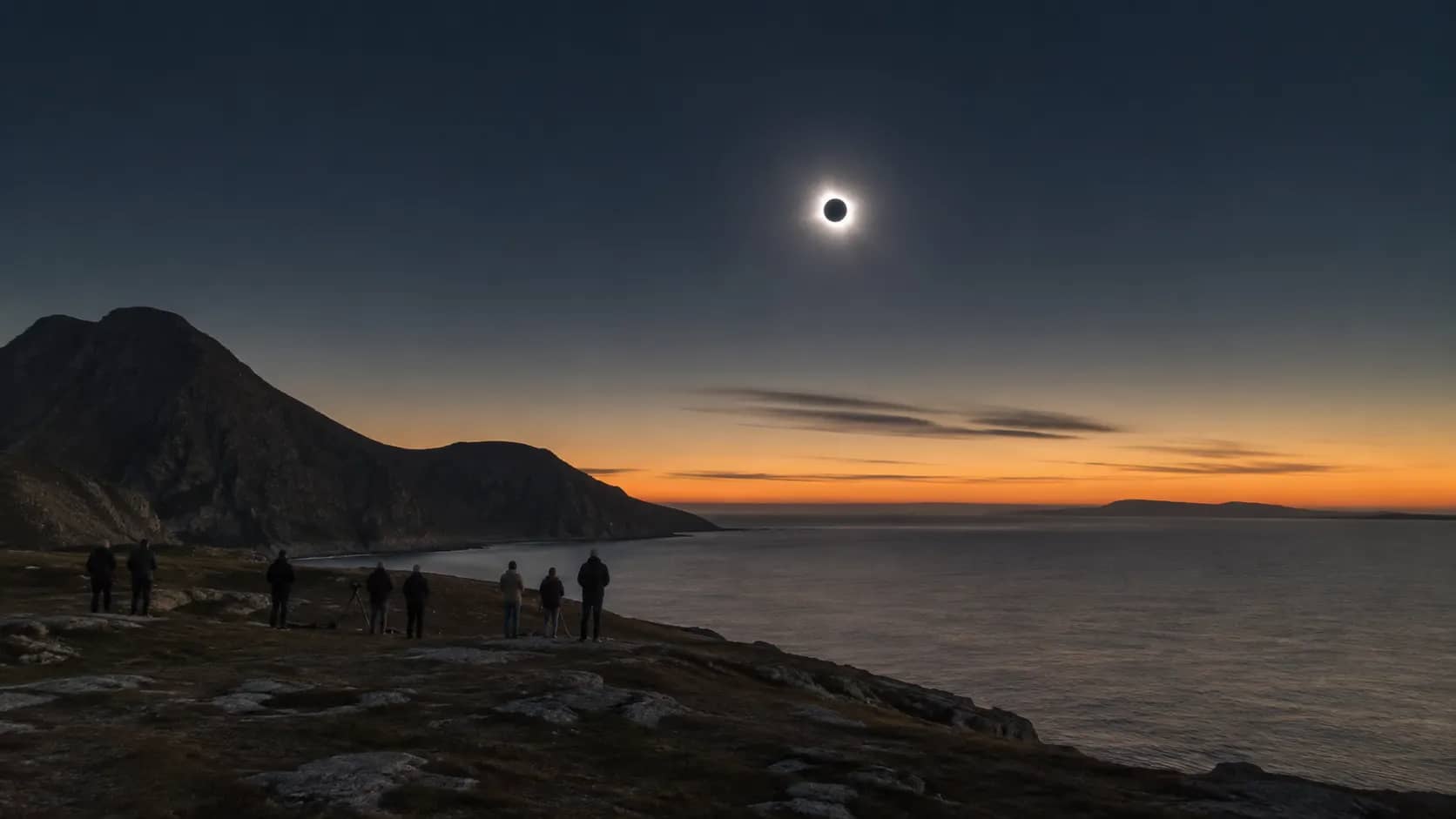
On August 12, 2026, daylight will briefly change in a narrow path stretching from northern Russia across Greenland and Iceland, over the North Atlantic and into Spain and a small corner of Portugal. Inside that path, the Moon will completely cover the Sun for a short period known as totality. Most locations will get less than two minutes of it; near the centre of the path, the maximum on the ground is about two minutes and 18 seconds.
A much wider region will see a partial eclipse, including most of Canada, parts of the northern United States, much of Europe and northwestern Africa. That difference between partial and total is more important than it sounds. Even 99% coverage is not the same experience as totality.
What Is a Total Solar Eclipse?
A solar eclipse occurs when the Moon passes between Earth and the Sun and casts its shadow onto Earth. People inside the dark central part of that shadow, called the umbra, can see the Sun completely covered. People farther away in the lighter penumbra see only part of the Sun blocked.
How Can the Moon Cover the Much Larger Sun?
The geometry is a remarkable coincidence. NASA notes that the Sun's diameter is roughly 400 times the Moon's, but the Moon is also about 400 times closer to Earth. That makes their apparent sizes in our sky surprisingly similar, allowing the Moon to hide the bright solar disk when the alignment and distances are right.
Why Doesn't a Solar Eclipse Happen Every Month?
A new moon occurs roughly every month, but the Moon's orbit is tilted by about five degrees compared with Earth's orbital plane around the Sun. Most months, the Moon passes slightly above or below the Sun from our perspective and its shadow misses Earth. Only during eclipse seasons does the geometry line up closely enough.
Where Will the August 12 Eclipse Be Total?
NASA's path begins in a remote part of northern Russia before crossing Greenland, Iceland, the North Atlantic, Spain and the extreme northwestern tip of Portugal. Greenland and Iceland experience totality in the late afternoon or early evening. In Spain and Portugal, the total eclipse occurs late in the day, close to sunset.
Northern Russia: totality occurs around the middle of the day in a remote region.
Greenland: parts of the island lie within the totality path, including areas near the centre line where totality lasts longer.
Iceland: Reykjavík reaches totality at about 5:48 p.m. local time according to NASA's city table.
Spain: a broad part of northern and eastern Spain crosses the path; León reaches totality at about 8:28 p.m. local time.
Portugal: only a small area in the extreme northwest reaches totality.
Outside the path: large parts of Europe, North America and northwestern Africa see only a partial eclipse.
Why Is Totality So Different From a 99% Eclipse?
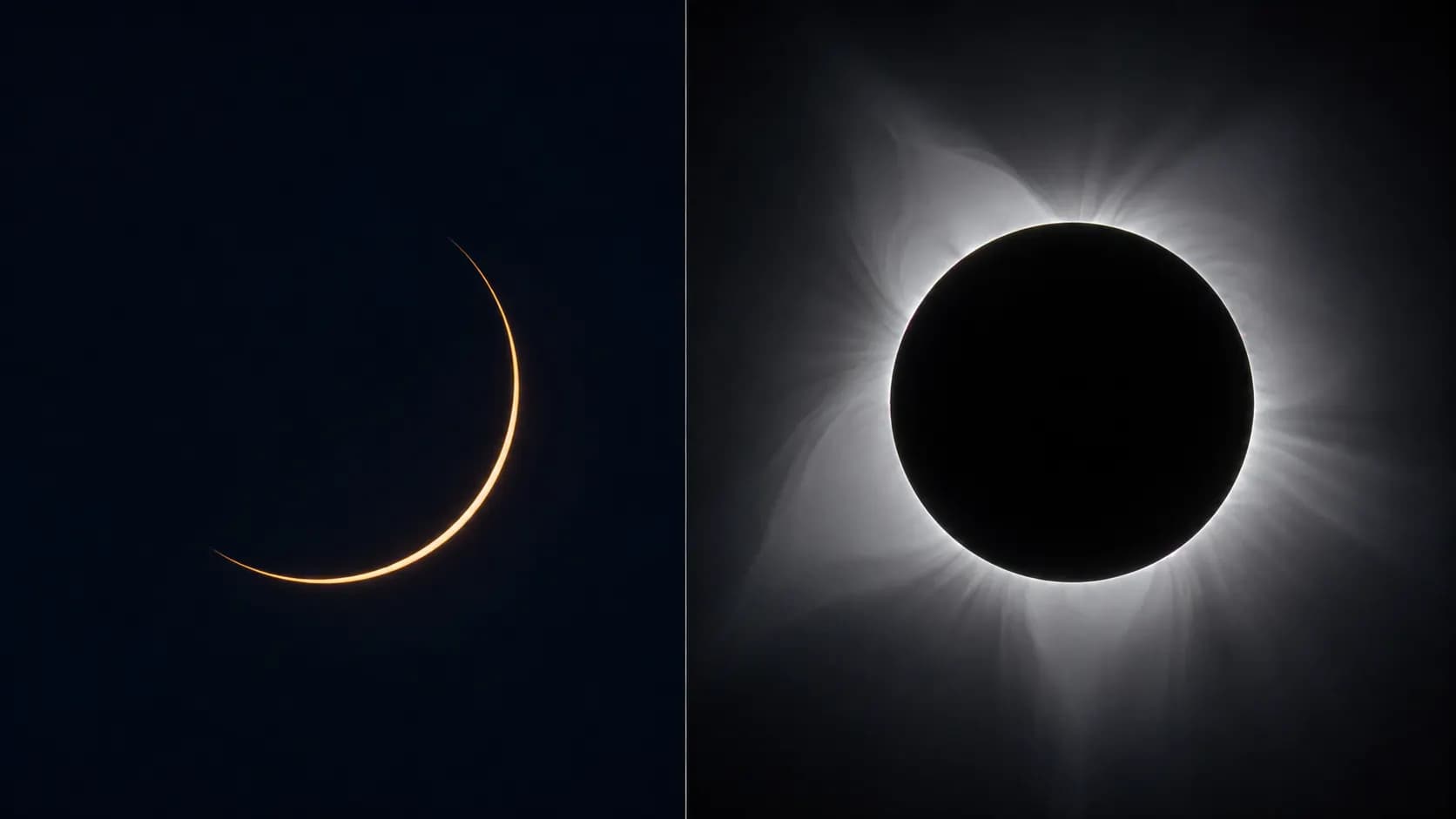
At 99% coverage, a thin piece of the Sun's photosphere is still exposed. NASA warns that even when 99% of the Sun is obscured, the remaining crescent is intense enough to injure the retina. The surroundings may become strangely dim, but you are still experiencing a partial eclipse.
At 100%, the bright solar face disappears completely. For those brief moments, the Sun's faint outer atmosphere, the corona, becomes visible around the black silhouette of the Moon. The landscape darkens toward twilight, while the horizon can remain brighter in directions outside the Moon's narrow shadow. That transition is why eclipse travellers care so much about being inside the path rather than merely close to it.
Keep reading
Solar Eclipse and Perseid Meteor Shower 2026: August 12 Guide
How to Watch the Eclipse Without Damaging Your Eyes
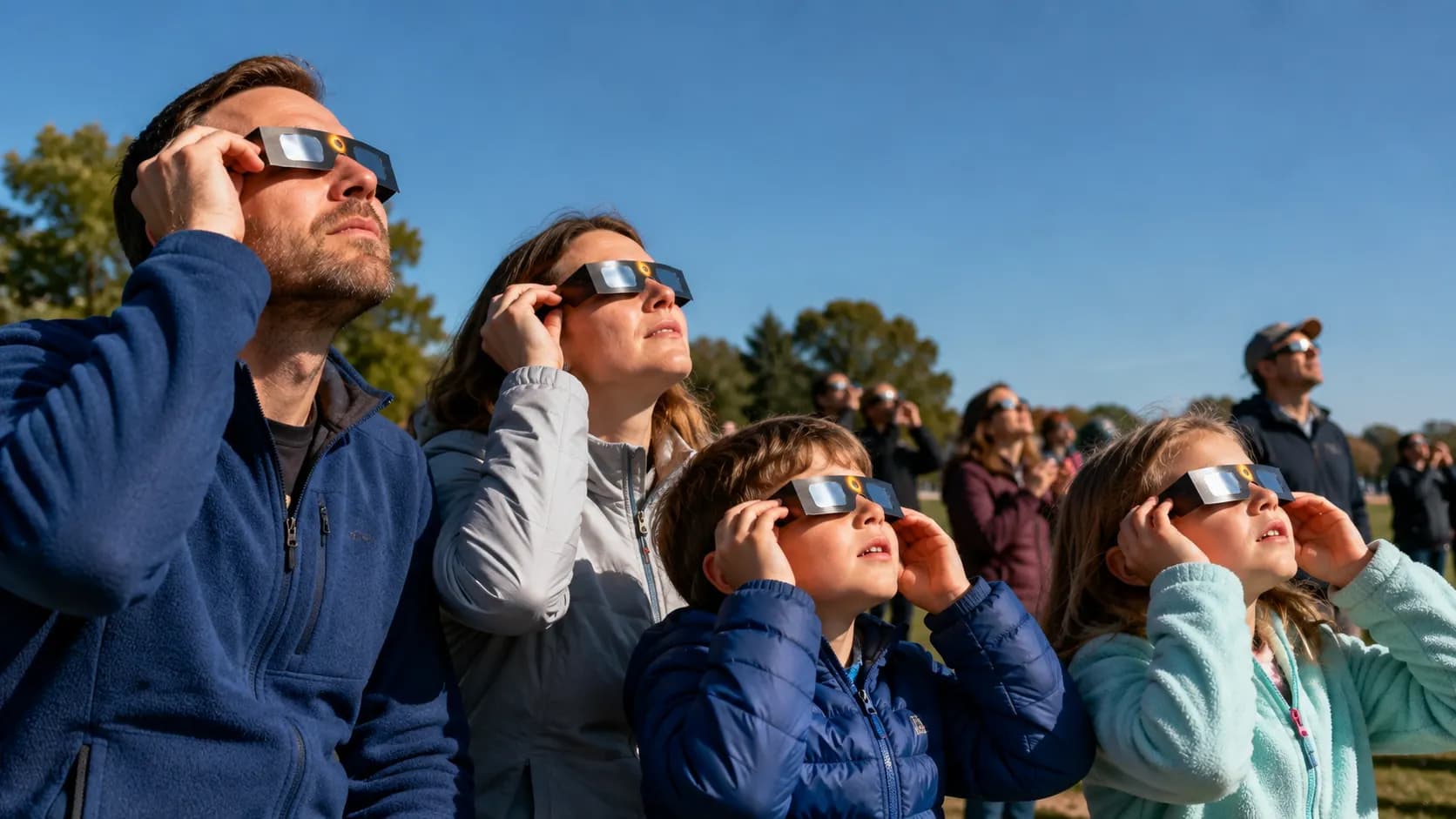
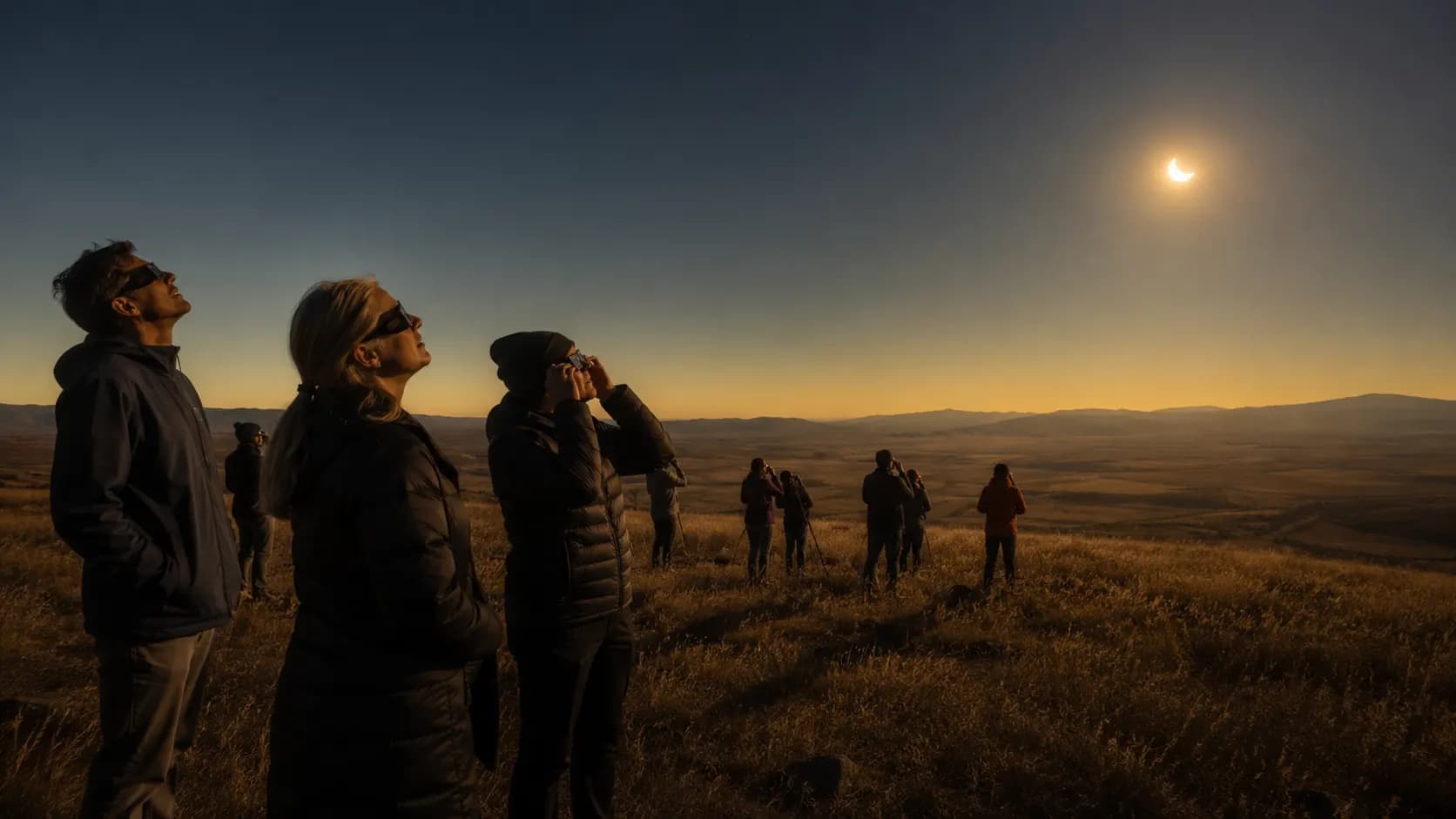
During every partial phase, use proper eclipse glasses or a safe handheld solar viewer that complies with the ISO 12312-2 international standard. Ordinary sunglasses are not sufficient, regardless of how dark they appear. Inspect solar viewers for scratches, tears or other damage before use.
Only people inside the path of totality may remove their solar viewers, and only after the Moon has completely hidden the Sun's bright face. Put protection back on before any bright part of the Sun reappears. Anyone outside the totality path must keep proper protection on for the entire eclipse.
The Viewing Mistakes to Avoid
Do not substitute ordinary sunglasses for eclipse glasses.
Do not look through binoculars, a telescope or a camera lens while wearing eclipse glasses; concentrated sunlight can burn through the viewer.
Optical equipment requires a solar filter designed for that equipment and secured over the Sun-facing front of the optics.
Do not remove eye protection because the Sun looks almost completely covered.
Do not use damaged, scratched or torn solar viewers.
What If You Do Not Have Eclipse Glasses?
Use indirect viewing instead of looking at the Sun. NASA recommends methods such as a pinhole projector, which projects an image of the Sun onto another surface while you keep your back to the Sun. Never look through the pinhole itself.
Why Scientists Care About This Eclipse
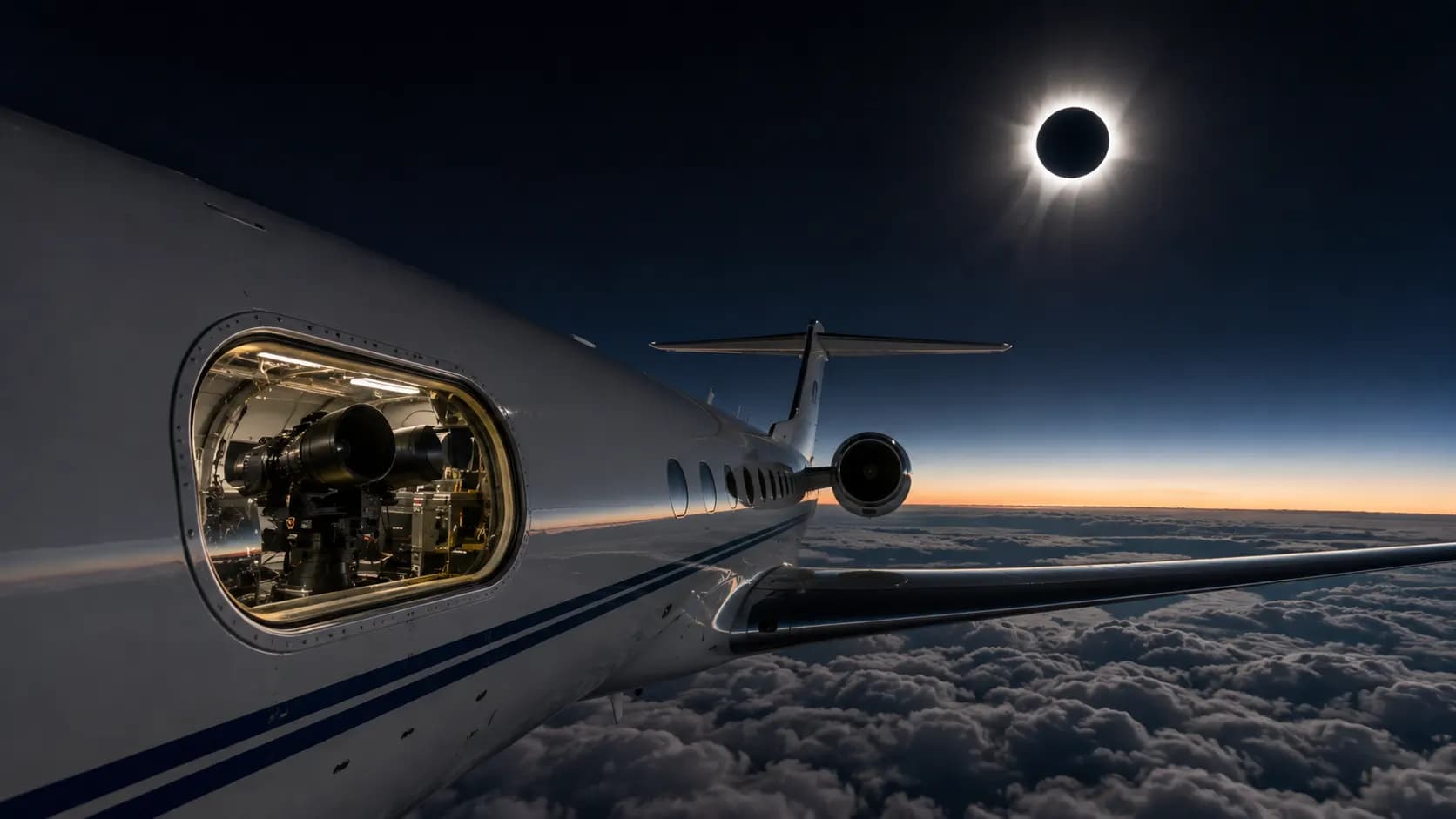
Totality blocks the overwhelmingly bright solar surface and briefly reveals the corona, giving scientists an unusual opportunity to investigate the Sun's outer atmosphere. For the August 12 eclipse, a NASA-funded team plans to chase the Moon's shadow in a WB-57 aircraft flying at about 50,000 feet. Travelling along the path will extend its view of the corona to nearly three minutes.
NASA-supported student teams will also launch scientific balloons in Iceland and Spain to study how the temporary loss of sunlight affects Earth's atmosphere. NASA has announced live eclipse coverage with telescope views and experts for people who cannot travel to the path.
What Makes August 12 Truly Special?
It is not simply that the Sun appears to disappear. For a brief moment, the apparent sizes and positions of the Sun and Moon line up closely enough for the bright solar surface to vanish while the much fainter corona emerges.
The experience also depends completely on where you stand. Someone inside the narrow path may see a black Sun surrounded by the corona. Someone a relatively short distance away may see a spectacular 99% partial eclipse but never experience true totality.
Reference notes
Sources and further reading
- NASA (opens in a new tab)https://science.nasa.gov/eclipses/future-eclipses/total-solar-eclipse-on-august-12-2026/
- NASA (opens in a new tab)https://science.nasa.gov/eclipses/safety/
- NASA (opens in a new tab)https://science.nasa.gov/eclipses/geometry/
- NASA (opens in a new tab)https://science.nasa.gov/moon/eclipses/
- NASA (opens in a new tab)https://science.nasa.gov/science-research/heliophysics/nasa-science-soars-during-august-total-solar-eclipse/
- NASA (opens in a new tab)https://www.nasa.gov/news-release/nasa-sets-coverage-for-august-northern-hemisphere-total-solar-eclipse/
- NASA (opens in a new tab)https://science.nasa.gov/eclipses/faq/
Our editorial promise
Prepared with clarity and care.
This guide completed our editorial review before publishing. If something needs attention, report a correction or contact the publisher.
About this article
- Published:
- Last updated:
- Author:
- Ceyora Editorial Team
- Review status:
- Editorially reviewed
- Sources:
- 7
- Corrections:
- Report an issue