A cyclist can cross the finish line first, celebrate a Tour de France victory and still be nowhere near winning the Tour.
That is the first thing that makes the race confusing for a new viewer. The Tour de France is not one race from the start to Paris. It is a collection of stages raced over roughly three weeks, and the most important competition is decided by the time riders accumulate across those stages.
Once that idea clicks, the yellow jersey, mountain battles, time trials and apparently self-sacrificing teammates begin to make much more sense.
What Exactly Is the Tour de France?
The Tour is cycling's best-known stage race. Instead of racing continuously for three weeks, riders complete one stage at a time, usually followed by another stage the next day, with a small number of rest days built into the event.
The route changes every year. It can include flat roads designed for high-speed sprint finishes, rolling terrain suited to breakaways, major mountain passes and races against the clock.
The 2026 edition is a useful example. It ran from July 4 to July 26 with 21 stages and two rest days. The official route included seven flat stages, four hilly stages, eight mountain stages, one team time trial and one individual time trial. The race began in Barcelona before moving into France and finishing in Paris.
Why Does the Race Need So Many Different Stages?
Because different terrain rewards different abilities.
A powerful sprinter may be among the fastest riders in the world over the final 200 metres of a flat stage but lose substantial time to specialist climbers on a steep mountain. A lightweight climber may dominate an ascent but be less suited to a flat sprint. Time trials reward the ability to maintain high speed alone against the clock.
To win the entire Tour, a rider generally needs to survive all of those environments without suffering a disastrous loss of time.
How Do You Actually Win the Tour de France?
The overall race is decided by the general classification, often shortened to GC.
Each rider's race time accumulates across the stages under the Tour's official timing rules. If Rider A completes the relevant stages in a combined time of 70 hours and Rider B takes 70 hours and three minutes, Rider A is three minutes ahead in the general classification.
That gap matters much more to the yellow-jersey contest than the number of stages each rider has won.
This produces situations that can look strange at first. A rider may finish seventh on a stage and still have an excellent day because every major overall rival finished behind them. Another rider may win the stage brilliantly while remaining an hour behind in the general classification.
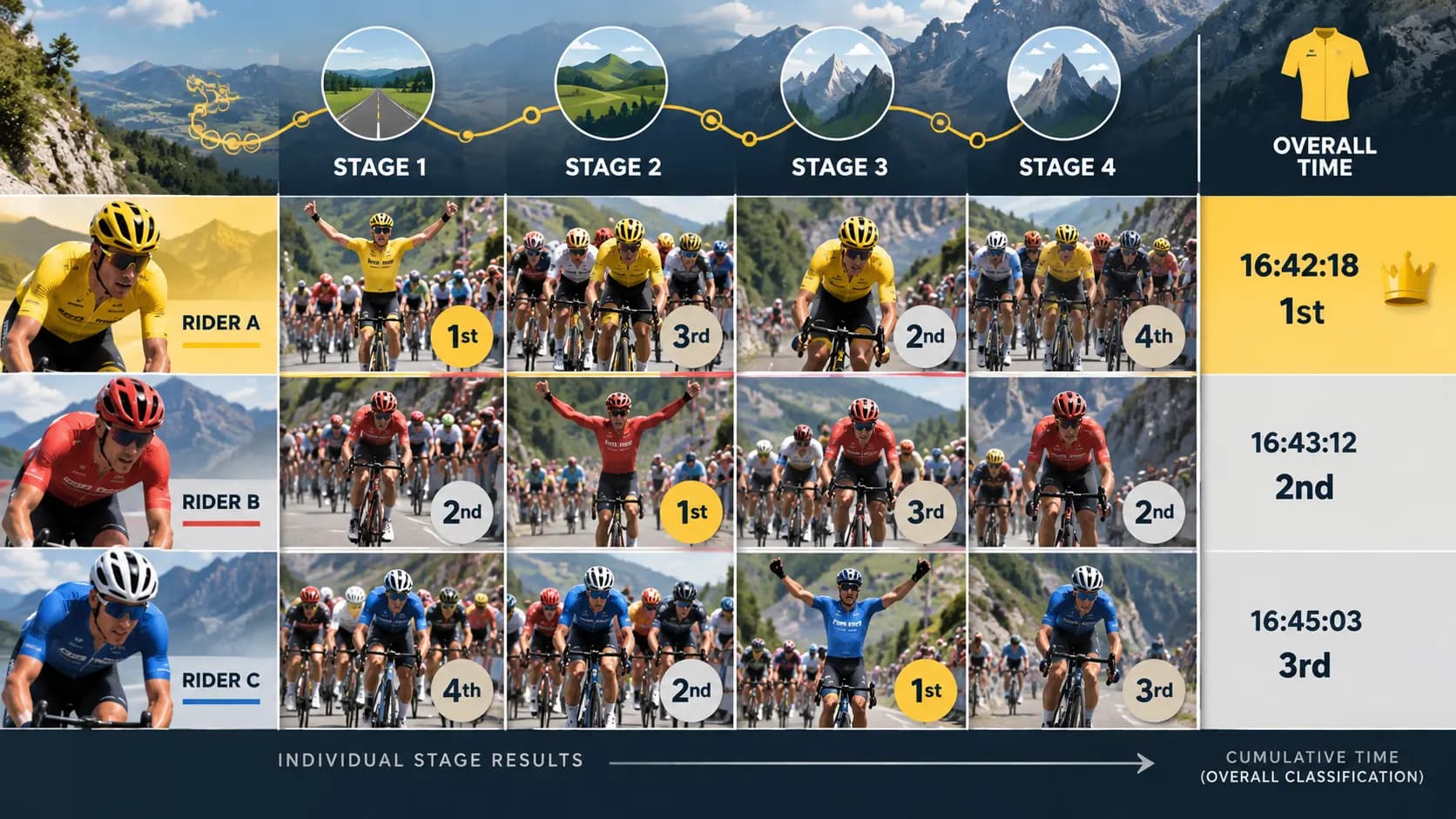
The yellow jersey, or maillot jaune, identifies the current leader of the individual general classification.
It can change shoulders many times during the race. If another rider gains enough time to move into first place overall, that rider wears yellow on the next stage. The person still leading the general classification when the Tour finishes is the overall champion.
This is why television coverage constantly refers to time gaps between the main contenders even when none of them is fighting for the stage victory.
What Do the Other Tour de France Jerseys Mean?
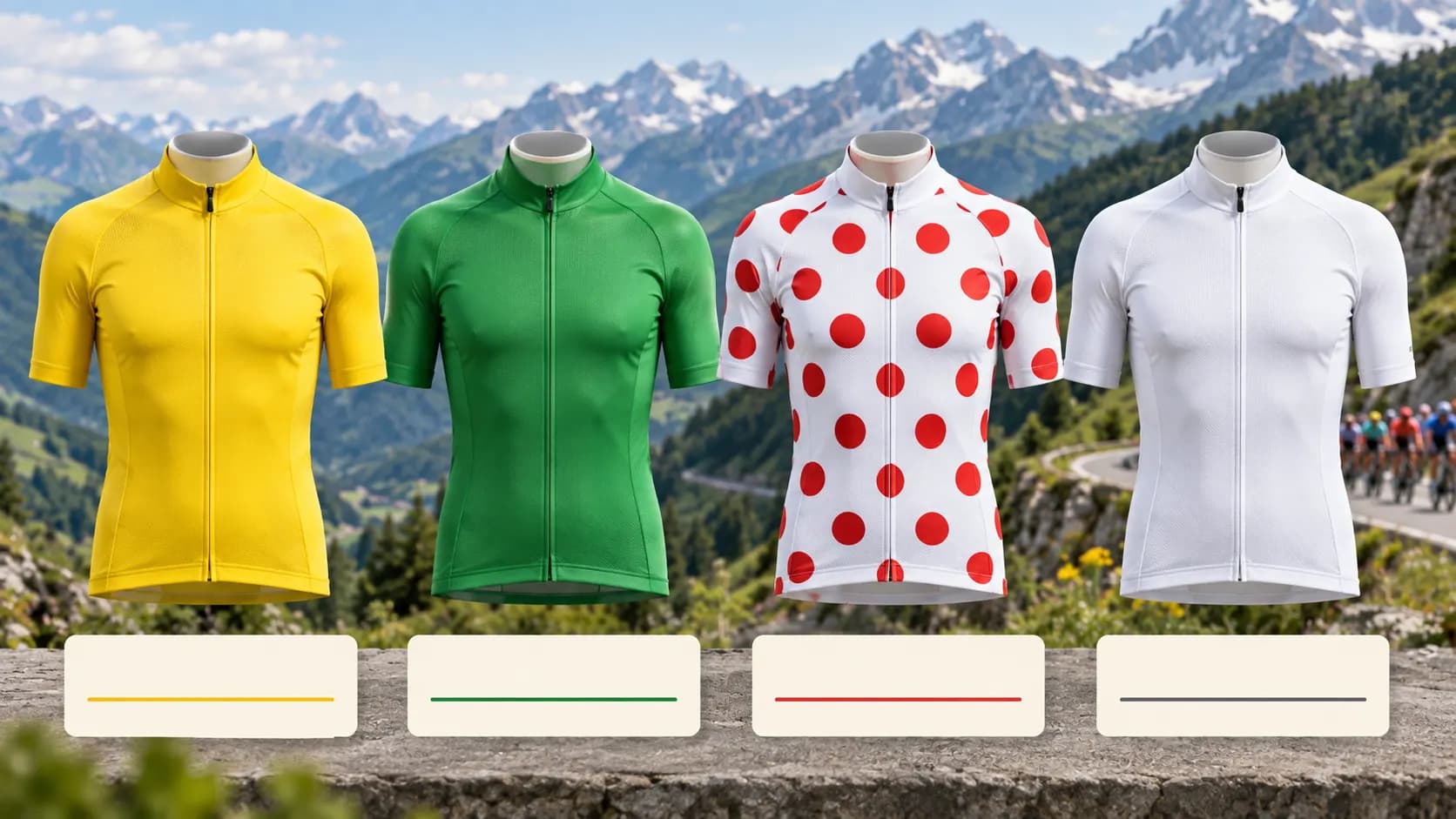
Yellow is the most famous jersey, but several major competitions run alongside the general classification. A rider can therefore have a hugely successful Tour without ever seriously challenging for yellow.
Green Jersey
The green jersey belongs to the leader of the points classification. Points are awarded at stage finishes and intermediate sprints, making this competition especially attractive to riders who can repeatedly place highly in fast finishes.
Polka Dot Jersey
The white jersey with red polka dots identifies the leader of the mountains classification. Riders collect points at categorized climbs and mountain finishes, with the competition rewarding repeated success on the race's ascents.
White Jersey
The white jersey is the young-rider classification. Under the current Tour rules, it goes to the best-placed eligible rider in the overall standings who is aged 25 or under during that calendar year.
Why Does One Cyclist Need an Entire Team?
The yellow jersey is awarded to an individual, but winning it is almost impossible to understand without understanding the team around that rider.
In 2026, 184 riders started across 23 teams—eight riders per team. Those eight riders did not all begin the race with identical jobs.
A team targeting the overall victory may designate one rider as its main leader. Teammates often called domestiques can spend their own energy helping that leader: collecting bottles, keeping them near the front of the peloton, setting the pace, helping close a dangerous breakaway or staying with them deep into a mountain stage.
Keep reading
The New World Map Explained: What Actually Changed?
A teammate may deliberately ride until exhausted and then drop away because the effort has placed the leader exactly where the team wanted them. From an individual perspective that can look like failure. Tactically, it may be a perfect performance.
Teams can also pursue several goals at once. One rider may target the overall classification, another a sprint stage and another a breakaway or mountains competition.
Why Do Riders Stay in One Huge Group?
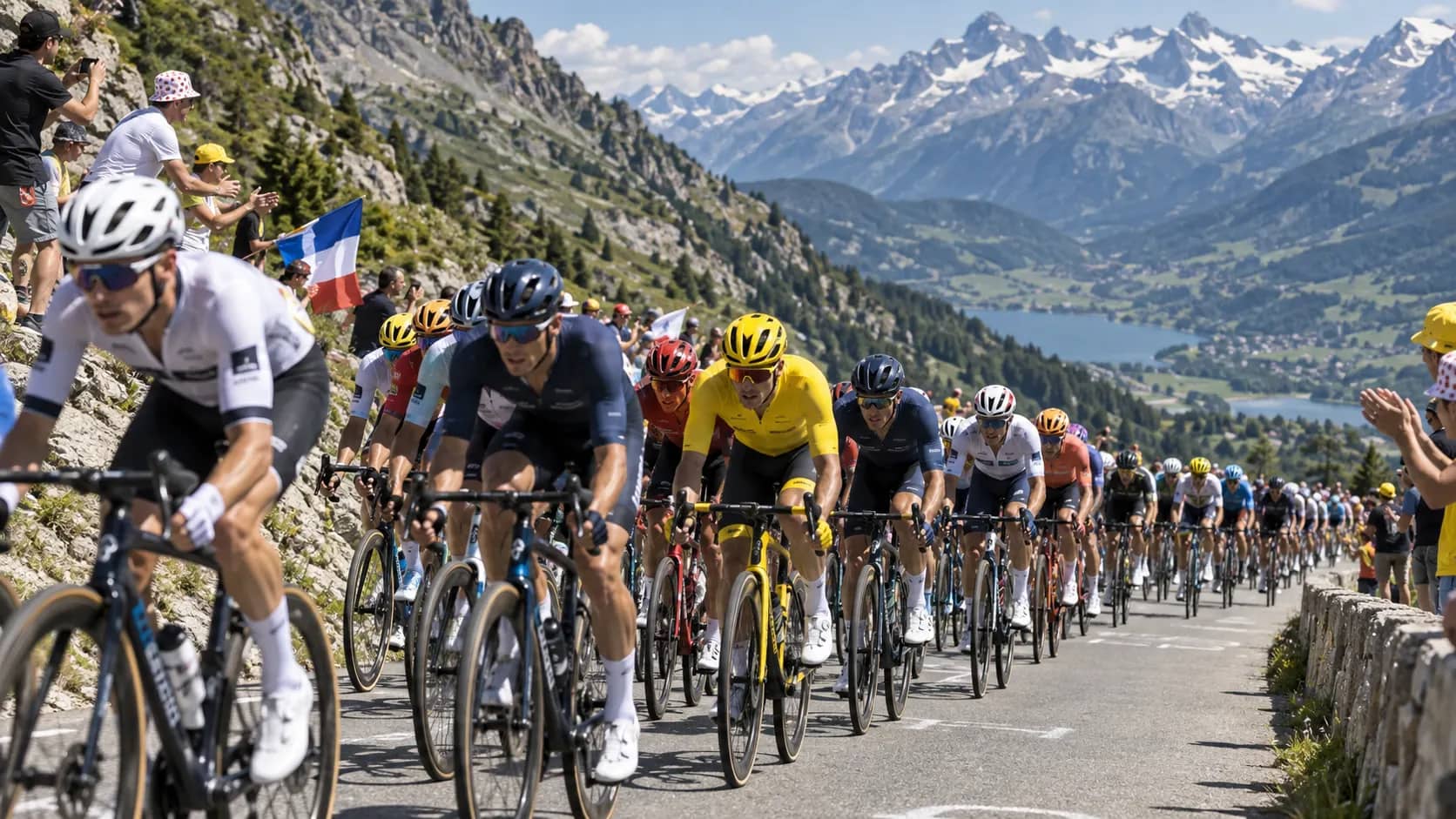
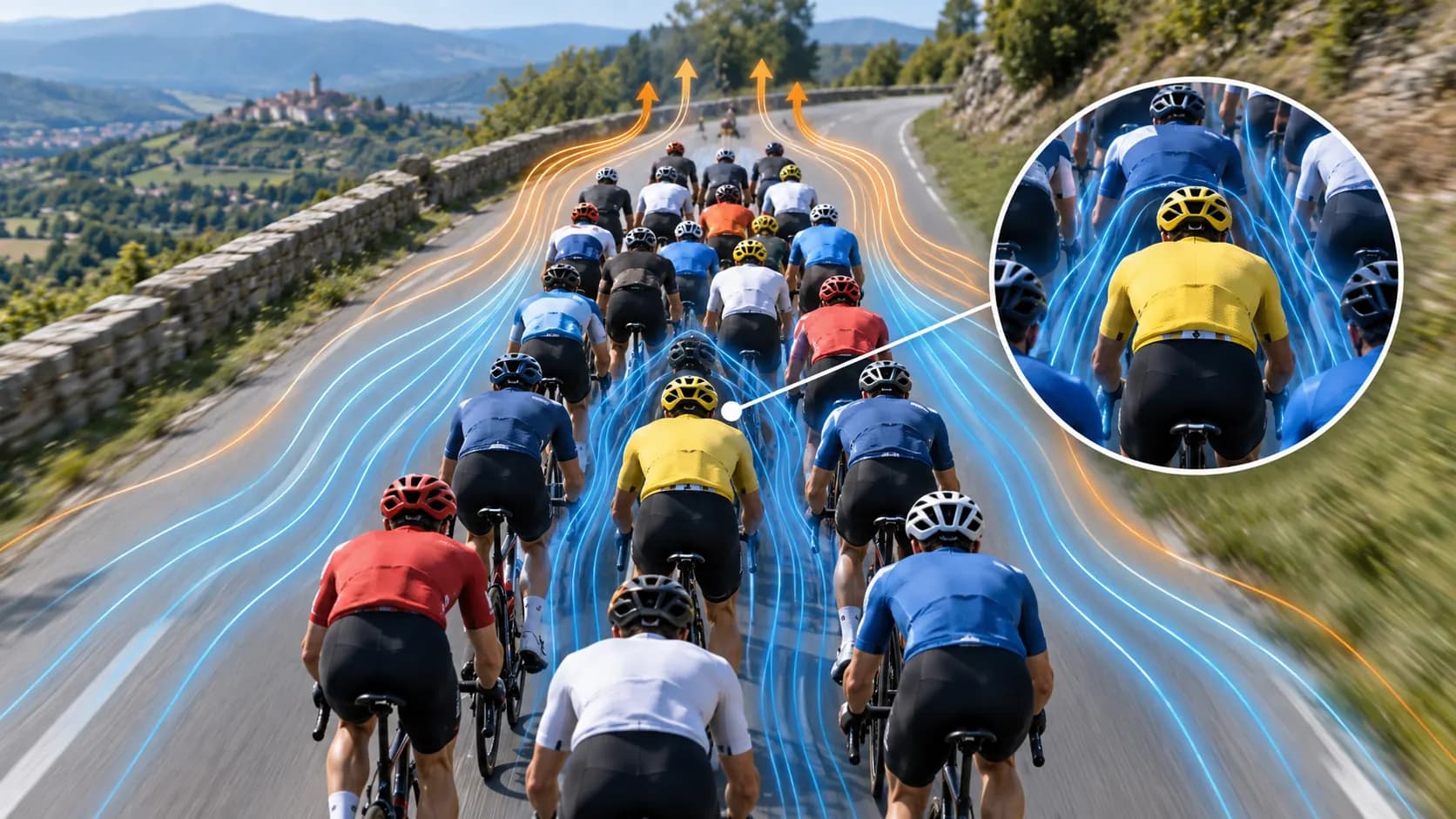
The large main group of riders is called the peloton, and aerodynamics are one major reason it exists.
A cyclist pushing through open air experiences substantial aerodynamic drag. Riding behind other cyclists provides shelter from some of that airflow and can reduce the energy required to maintain speed.
Wind-tunnel and computational research on large cycling groups has shown that riders protected deep inside a tightly packed peloton can experience dramatically less aerodynamic drag than an isolated rider under controlled conditions.
That saving creates strategy. A general-classification contender does not want to spend every kilometre riding alone in the wind. Teammates can shelter the leader while other riders take turns doing more work near the front.
What Happens on a Mountain Stage?
Mountains are where the race can become brutally simple: riders who cannot hold the pace begin losing time.
A strong team may bring its leader to the base of a major climb in a good position, then set a demanding pace with several teammates. One by one, those helpers can exhaust themselves and drop away until the strongest general-classification riders are left fighting near the top.
A gap of only 15 seconds on one climb may not sound significant. Repeated over several major mountain stages, small losses can become the difference between winning the Tour and finishing several places lower.
Why Are Time Trials So Different?
Most Tour stages involve a mass start, where riders race together and react to one another. An individual time trial removes much of that interaction.
Riders start separately and race the course against the clock. There is no peloton to shelter inside and no teammate directly pacing them. The challenge becomes maintaining the fastest sustainable effort while choosing an aerodynamic position and handling the course efficiently.
The Tour can also use team time trials. The 2026 opening stage in Barcelona used an unusual format: teams rode together, the stage result was based on each team's first finisher, but individual riders received their own times for the general classification.
Can You Win the Tour Without Winning Many Stages?
Yes. There is no rule requiring the overall champion to win the most stages—or even to build the campaign around stage victories.
Imagine a rider who repeatedly finishes with the best general-classification contenders, avoids crashes and bad days, climbs consistently and gains valuable seconds in a time trial. Another rider may collect several spectacular stage wins but lose 25 minutes in the mountains.
The second rider has more stage victories. The first can still win the Tour.
How to Watch the Tour if You Are Completely New
You do not need to understand every tactic on your first day. Start by following three things.
Check who won the stage. That tells you who was first across the line that day.
Then check the general classification. This tells you who is actually leading the Tour and how large the important time gaps are.
Notice what kind of stage comes next. A flat sprint, mountain finish or time trial can completely change which riders are likely to attack and which classification matters most.
Why Is It Called the Tour de France if It Leaves France?
The race is centered on France, but it regularly begins in or visits neighbouring countries.
The 2026 Grand Départ was held in Barcelona, Spain. Riders spent the opening stages there before the route crossed into France and eventually reached Paris.
That international element has become part of the Tour's identity. The route changes every year, but the overall competition remains the Tour de France.
The Finish Line Only Tells You Who Won Today
That may be the easiest way to understand the Tour de France.
Every stage has its own story and its own winner. Behind that visible race is a slower contest measured in seconds accumulated across weeks: protecting a leader from the wind, surviving mountains, limiting losses, gaining time in the right places and avoiding the one terrible day that can undo everything.
The cyclist in yellow at the end does not necessarily have the most dramatic collection of finish-line celebrations. They are the rider who completed the whole puzzle faster than everyone else.
Reference notes
Sources and further reading
- Letour Fr (opens in a new tab)https://www.letour.fr/en/the-race/sporting-stakes
- Letour Fr (opens in a new tab)https://www.letour.fr/en/the-jerseys-tour-de-france/the-yellow-jersey
- Letour Fr (opens in a new tab)https://www.letour.fr/en/the-jerseys-tour-de-france/the-green-jersey
Show all 10 sources
- Letour Fr (opens in a new tab)https://www.letour.fr/en/the-jerseys-tour-de-france/the-polka-dot-jersey
- Letour Fr (opens in a new tab)https://www.letour.fr/en/the-jerseys-tour-de-france/the-white-jersey
- Letour Fr (opens in a new tab)https://www.letour.fr/en/overall-route
- Letour Fr (opens in a new tab)https://www.letour.fr/en/news/2026/info-with-one-day-to-go-1/1333148
- Letour Fr (opens in a new tab)https://www.letour.fr/en/the-race/grands-departs/grand-depart-2026
- Letour Fr (opens in a new tab)https://www.letour.fr/en/news/2026/change-to-the-route-of-the-final-stage-1/1355402
- Doi (opens in a new tab)https://doi.org/10.1016/j.jweia.2018.06.011
Our editorial promise
Prepared with clarity and care.
This guide completed our editorial review before publishing. If something needs attention, report a correction or contact the publisher.
About this article
- Published:
- Last updated:
- Author:
- Ceyora Editorial Team
- Review status:
- Editorially reviewed
- Sources:
- 10
- Corrections:
- Report an issue