
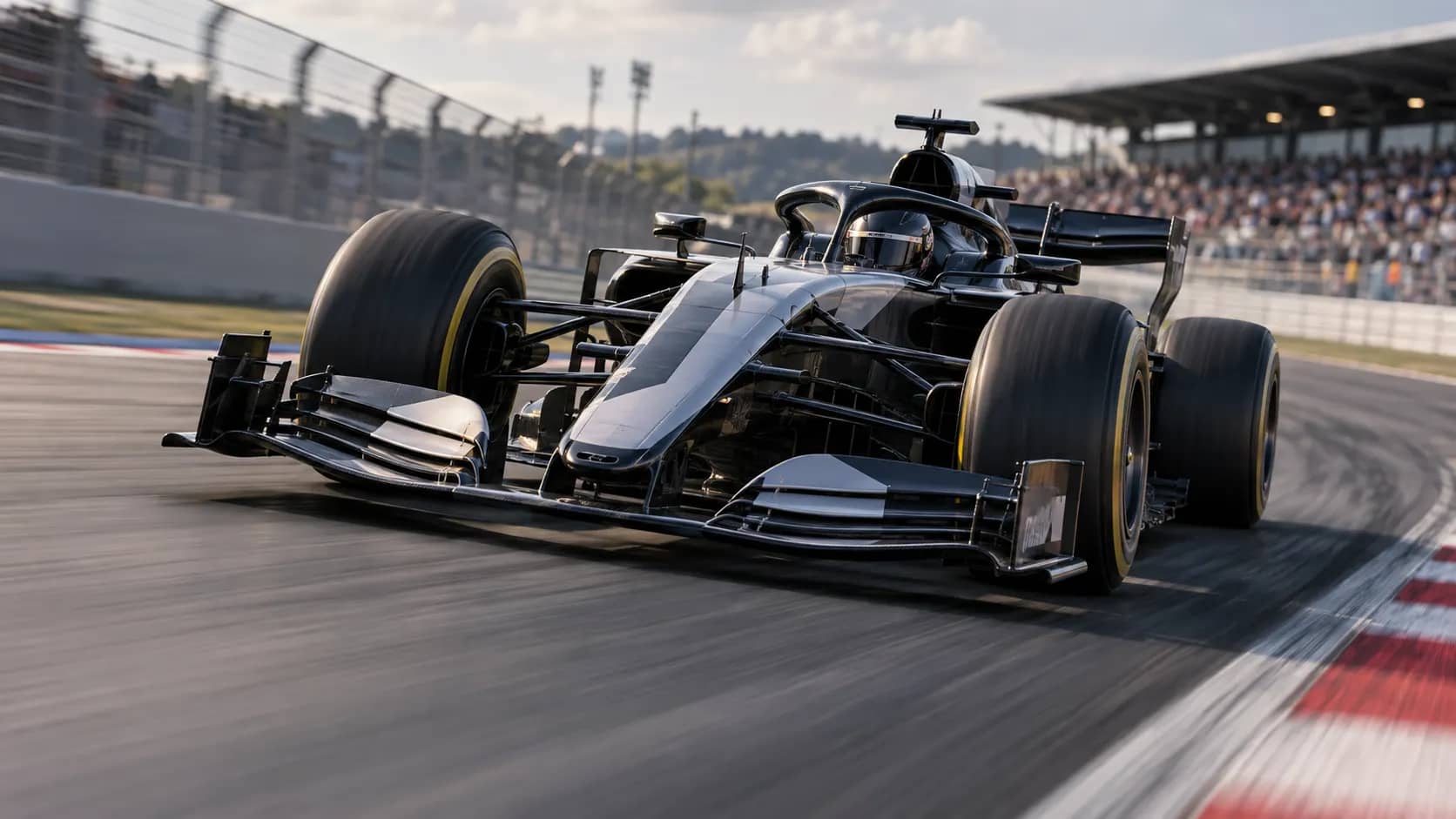
A Formula 1 car still has four tyres, a steering wheel and an accelerator. From the outside, the basic job has not changed: brake as late as possible, carry speed through the corner and accelerate away faster than everyone else.
What changed in 2026 is how much is happening underneath that simple picture. The cars became smaller, electrical power became far more important, both wings gained movable elements and the familiar DRS overtaking system disappeared.
For the driver, that means racing is increasingly about deciding how to use energy as well as grip. An attack may begin several corners before the actual overtaking attempt.
Why Did Formula 1 Change the Cars Again?
Formula 1 periodically rewrites its technical regulations to change the direction of the sport. The 2026 package was unusually broad because the chassis, aerodynamics and power unit all changed together.
The FIA's goals included making the cars smaller and more agile, increasing the relevance of electrical technology, using advanced sustainable fuel and preserving close racing while improving safety.
Those are design goals rather than guarantees. A rulebook can create the conditions engineers work within, but whether the resulting cars consistently produce better racing has to be judged on track.
The Cars Became Smaller and More Agile
One of the easiest changes to understand is size. The maximum wheelbase fell by 200 millimetres, from 3.6 metres to 3.4 metres. The overall car is narrower as well, and the front and rear tyres became narrower.
That may sound modest, but F1 cars had become extremely large machines. Reducing their dimensions was part of what the regulations called the more 'nimble' car concept.
Smaller does not mean simple. Much of the complexity merely moved into the way the car manages airflow and energy.
The Engine Is Only Part of the Power Story Now
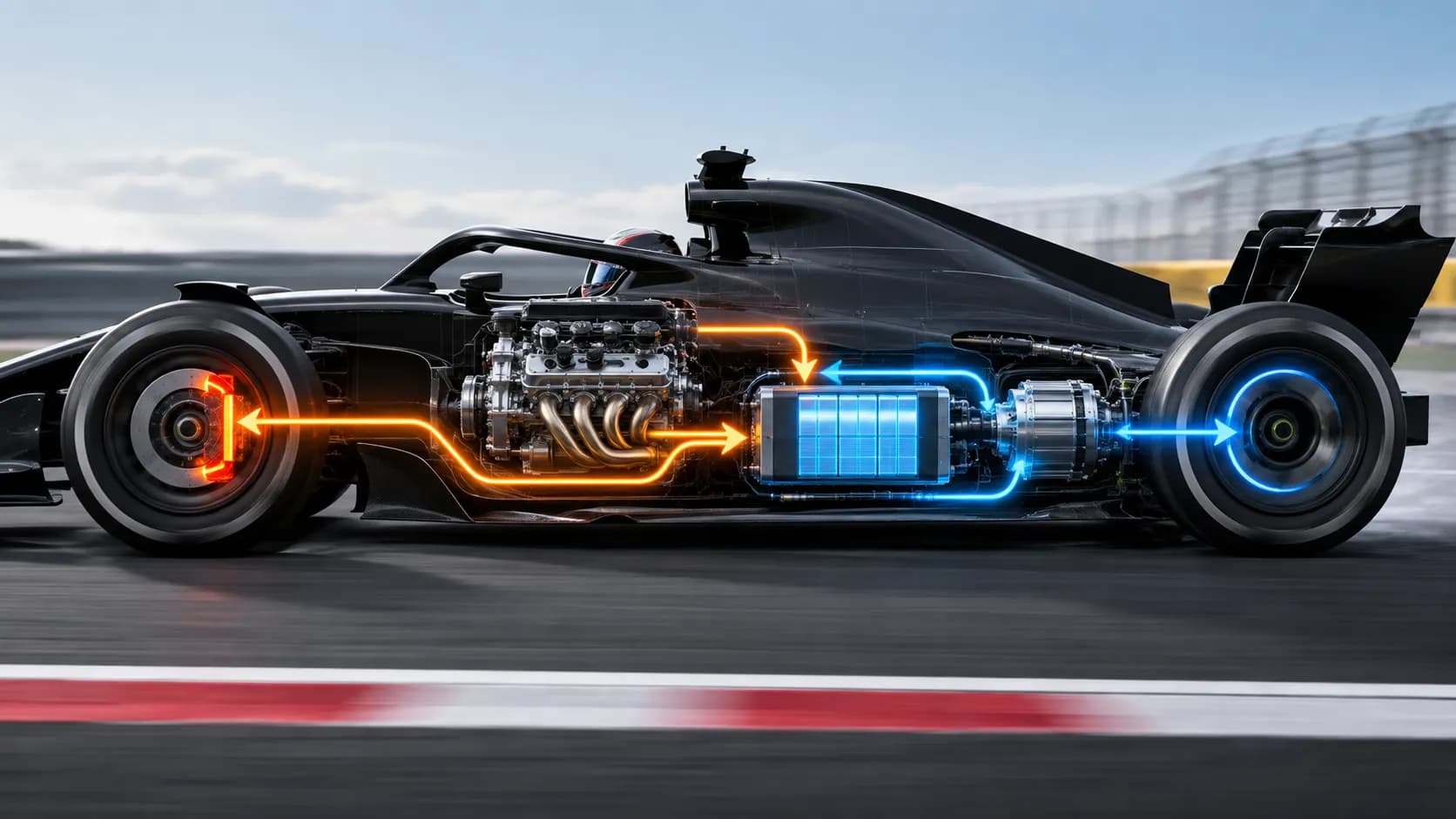
The 2026 cars are still hybrids. They have not become fully electric, and they still use a 1.6-litre turbocharged V6 internal-combustion engine.
Much More Power Comes From Electricity
The important change is the balance. Formula 1 describes the new system as moving toward roughly a 50-50 split between internal-combustion and electrical power.
The MGU-K, which converts recovered energy into electrical power for the rear wheels, increased from 120 kW in the previous generation to as much as 350 kW. At the same time, the complicated MGU-H system was removed.
Energy Has Become Part of Race Strategy
A battery contains a finite amount of usable energy. Spending more electrical energy to attack now can affect what is available later, while harvesting energy can come with its own performance trade-offs.
Much of the harvesting process is controlled automatically through prepared engine maps, but drivers still have tactical control over important parts of deployment. The Boost function can be used offensively or defensively when sufficient energy is available.
Why Do the Wings Move?
Aerodynamic grip creates a problem. A wing angled to push the car hard into the track is useful in a fast corner, but that same shape creates drag when the driver wants maximum speed on a straight.
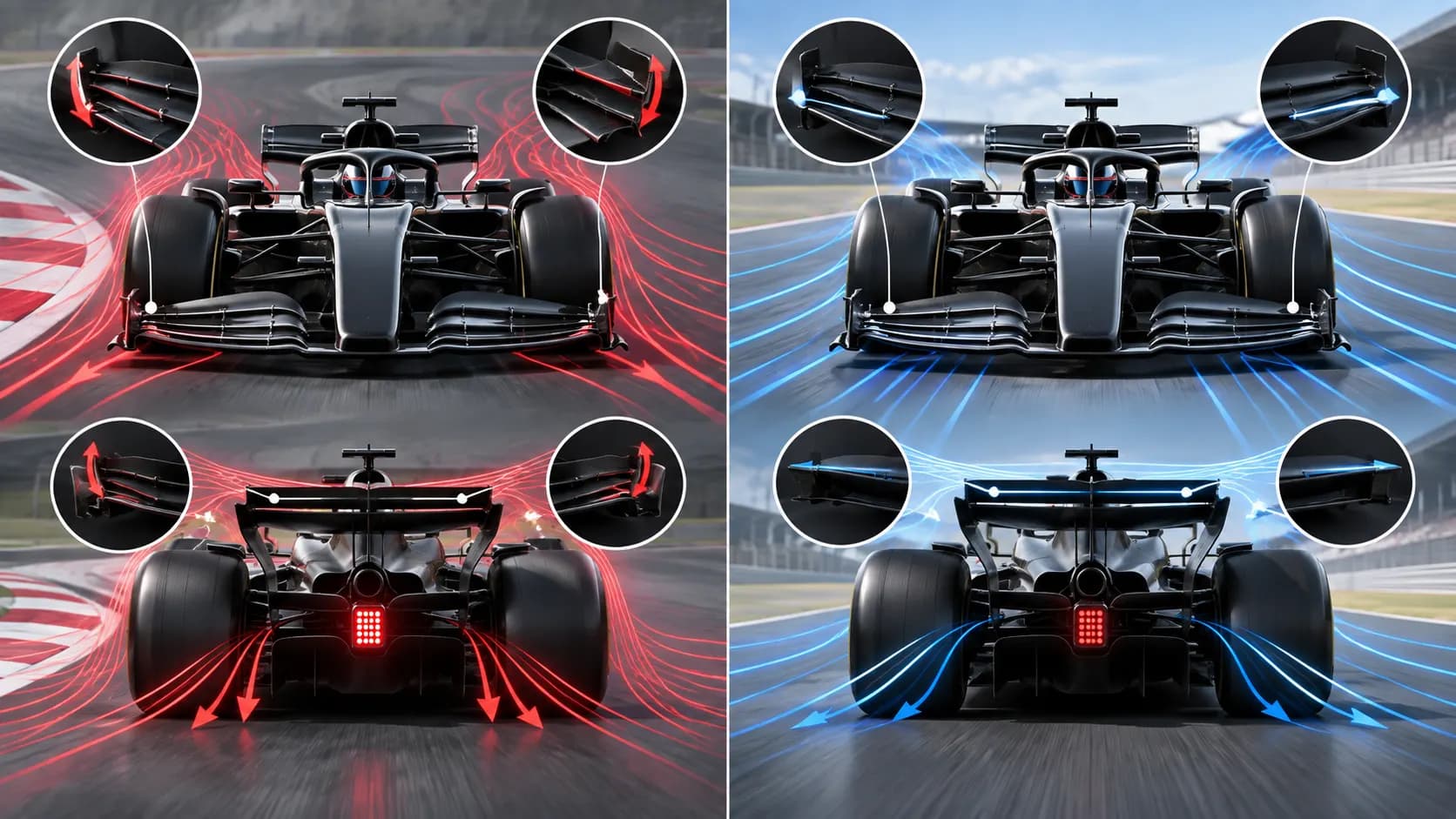
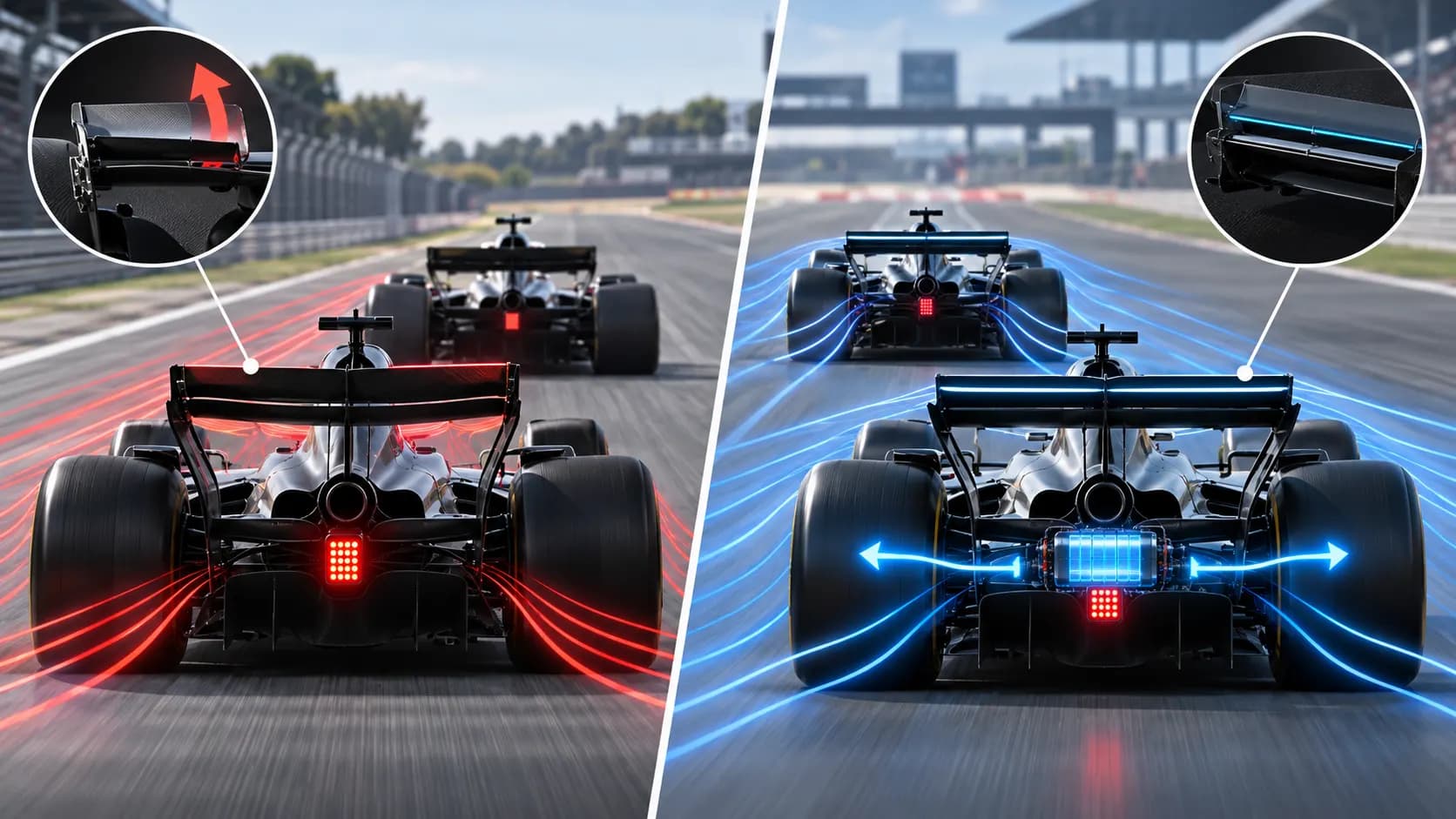
The 2026 solution is Active Aero. Movable elements in both the front and rear wings switch between two configurations.
Corner Mode keeps the wings in their higher-downforce configuration to provide grip through turns.
Straight Mode reduces wing angle in designated high-speed sections, lowering drag so the car can use its available power more efficiently.
Keep reading
The New World Map Explained: What Actually Changed?
Unlike the old DRS system, this low-drag aerodynamic configuration is not a reward reserved only for a driver chasing another car. Every driver can use Active Aero at the designated points when the conditions allow it.
What Happened to DRS?
DRS, or Drag Reduction System, had been part of Formula 1 since 2011. During races, a chasing driver who was close enough to the car ahead could open part of the rear wing in designated zones to reduce drag and gain speed.
That system disappeared in its old form in 2026.
Active Aero now handles the low-drag wing configuration for all cars. The overtaking assistance that used to be closely associated with DRS moved to the electrical side of the car through Overtake Mode.
Overtake Mode Changes How Drivers Attack
If a driver is within one second of the car ahead at the relevant detection point, Overtake Mode becomes available for the following lap.
The system gives the pursuing car an additional electrical energy allowance and a different deployment profile, helping it sustain greater performance while attacking. The driver can choose strategically where to use that advantage rather than receiving only a rear-wing opening in one traditional DRS zone.
This is separate from Boost. Boost is a driver-controlled energy-deployment tool that can be used for attacking, defending or lap time when enough stored energy is available. Overtake Mode is specifically earned by running close enough to the car ahead.
Is Driving an F1 Car More Complicated Now?
In some ways, yes—but not because the driver manually controls every technical process.
Much of the energy recovery is automated. Active Aero also operates within tightly defined rules and track locations. The driver's challenge is deciding when available energy is worth spending, when it should be conserved and how to combine those decisions with tyres, braking, traffic and race strategy.
The FIA has already adjusted some energy-management parameters during the 2026 season after studying the first races, partly to reduce excessive harvesting and driver workload. That is a reminder that these rules are not just engineering theory; their behaviour is being evaluated in real competition.
Are the New Cars Actually Better for Racing?
There is no useful yes-or-no answer based only on the regulations.
The rules were designed to support closer competition, reduce some of the aerodynamic problems of following another car and create new tactical overtaking opportunities. Active Aero and electrical Overtake Mode are part of that plan.
But racing quality depends on much more than one rule. The performance gap between teams, circuit layout, tyres, reliability and how quickly engineers learn to exploit a new regulation set all matter.
The Biggest Change Is What the Driver Has to Manage
The easiest way to understand the 2026 regulations is not to memorize every measurement.
The car now changes its aerodynamic shape between corners and straights. Electrical power makes up a much larger part of its performance. Energy can be recovered, saved, deployed for attack or held for defence. And overtaking no longer revolves around one chasing driver opening a rear wing.
The accelerator is still the pedal that makes the car go faster. The interesting part is deciding how much performance will be available when the driver presses it.
Reference notes
Sources and further reading
- Formula1 (opens in a new tab)https://www.formula1.com/en/latest/article/the-beginners-guide-to-the-2026-regulations.6j0tS0hrHG2T01tpmK6XYz
- Formula1 (opens in a new tab)https://www.formula1.com/en/latest/article/2026-regulations-explained-all-you-need-to-know-about-f1s-new-power-units.14jfv7a36905uDJDdNyfQd
- Formula1 (opens in a new tab)https://www.formula1.com/en/latest/article/2026-regulations-explained-all-you-need-to-know-about-f1s-new-aerodynamics.7IAt0auc32UkCEFE5ypkTB.7IAt0auc32UkCEFE5ypkTB
Show all 9 sources
- Formula1 (opens in a new tab)https://www.formula1.com/en/latest/article/f1-2026-regulations-explained-the-key-terms-for-formula-1s-new-for-2026-rules.3T5BU6TC9quGcIpGzoWkY0.3T5BU6TC9quGcIpGzoWkY0
- Corp Formula1 (opens in a new tab)https://corp.formula1.com/f1-2026-regulations-terminology-update/
- Fia (opens in a new tab)https://www.fia.com/news/f1s-new-era-everything-you-need-know-about-how-fia-making-formula-1-more-competitive-more
- Fia (opens in a new tab)https://www.fia.com/news/refinements-2026-fia-formula-1-regulations-agreed-all-stakeholders
- Fia (opens in a new tab)https://www.fia.com/system/files/documents/fia_2026_f1_regulations_-_section_b_sporting_-_iss_05_-_2026-02-27.pdf
- Fia (opens in a new tab)https://www.fia.com/system/files/documents/fia_2026_f1_regulations_-_section_c_technical_-_iss_16_-_2026-02-27.pdf
Our editorial promise
Prepared with clarity and care.
This guide completed our editorial review before publishing. If something needs attention, report a correction or contact the publisher.
About this article
- Published:
- Last updated:
- Author:
- Ceyora Editorial Team
- Review status:
- Editorially reviewed
- Sources:
- 9
- Corrections:
- Report an issue