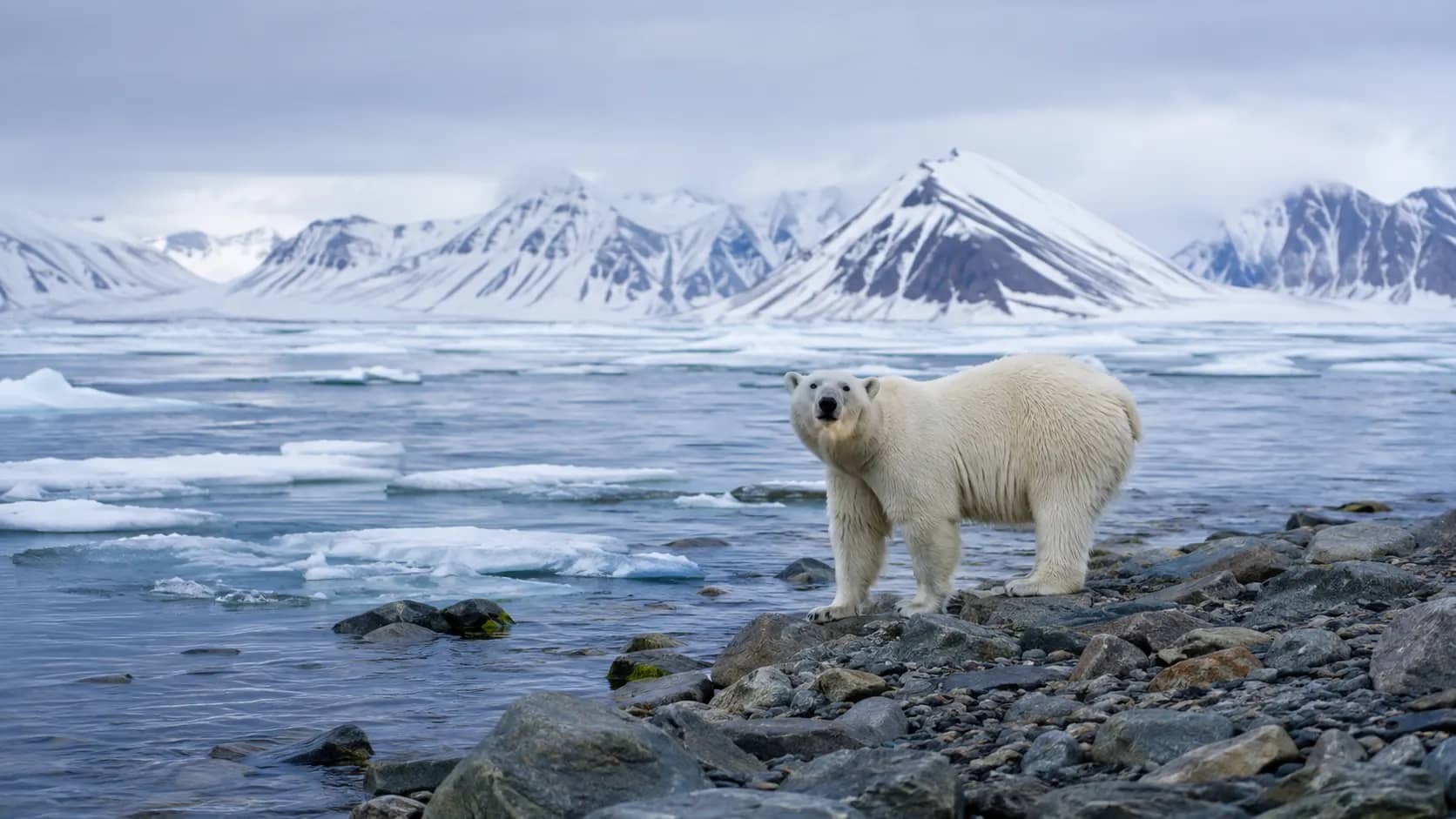
The familiar polar-bear story seems straightforward: less sea ice means less access to seals, less food and eventually thinner bears.
That relationship is real in several parts of the Arctic. But a 2026 study from Svalbard produced a result that complicates the picture.
Researchers studying adult polar bears in the western Barents Sea found that their overall body condition had not deteriorated despite exceptionally rapid sea-ice loss. After declining until around 2000, body condition improved and remained relatively strong through the later years of the study.
That does not mean melting sea ice is harmless to polar bears. It means different populations can respond differently, and some may temporarily compensate for environmental change better than expected.
Why Do Polar Bears Need Sea Ice?
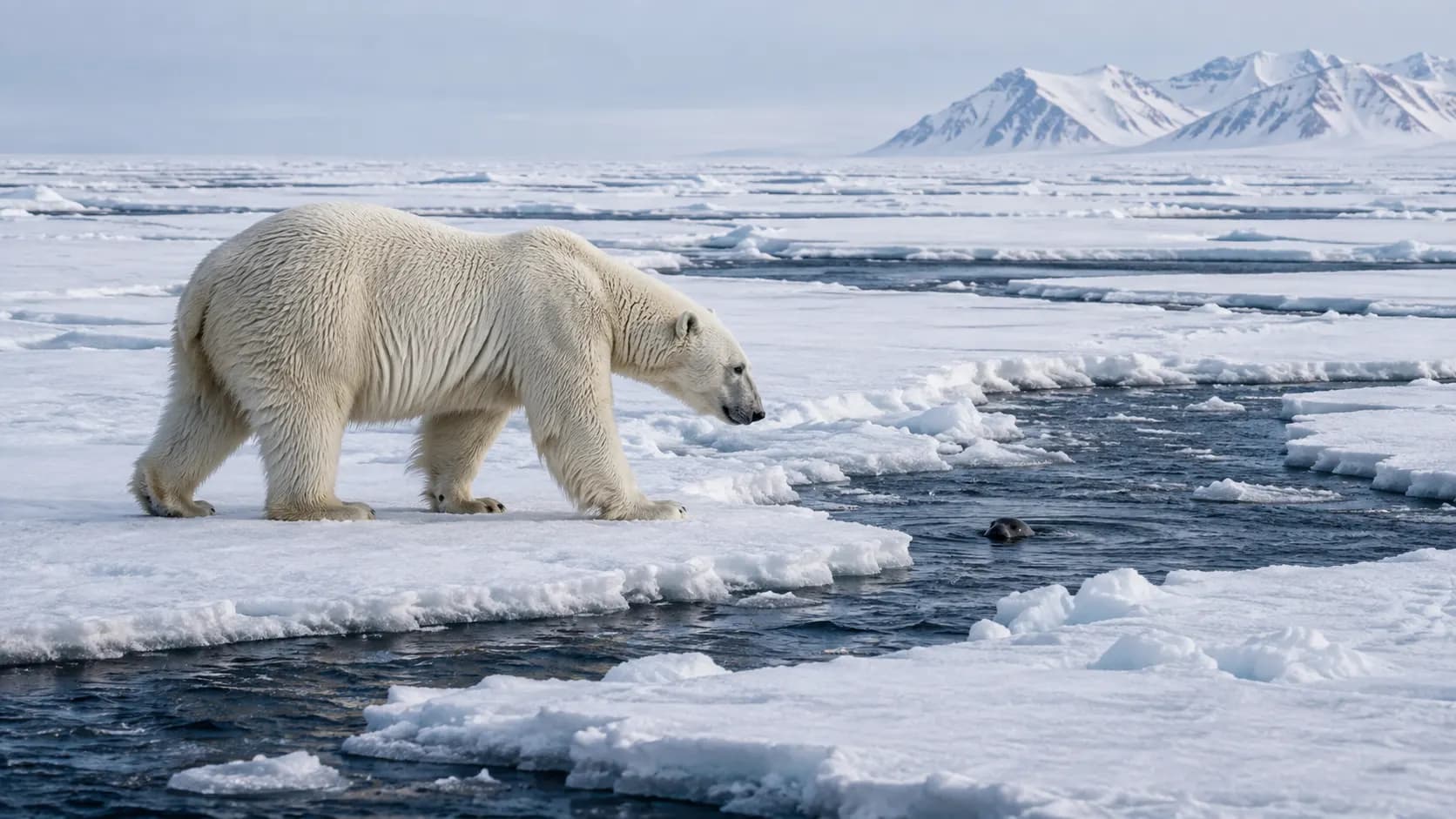
Polar bears may walk on land, climb rocky coastlines and swim long distances, but ecologically they are marine predators.
Their most important prey includes ringed and bearded seals. The seals' energy-rich fat allows polar bears to build the reserves they need for periods when hunting becomes difficult or impossible.
Sea ice provides the platform that gives bears access to this prey. They can wait near seal breathing holes, approach seals resting on ice and hunt across productive marine areas where seals are available.
Losing Ice Can Mean Losing Hunting Time
When ice disappears earlier or forms later, bears in some regions spend longer periods away from their most productive marine hunting grounds.
That matters because a polar bear cannot simply replace seal blubber calorie for calorie with berries, vegetation or most terrestrial prey.
What Did Scientists Find in Svalbard?
The 2026 Scientific Reports study analysed 1,188 captures involving 770 adult polar bears in Svalbard between 1995 and 2019.
Researchers assessed body condition while accounting for factors such as age, reproductive status and timing of capture. They expected worsening sea-ice conditions to be associated with thinner bears.
Instead, body condition declined until about 2000 and then increased, even during a period of rapid sea-ice loss. The statistical models did not support a simple relationship in which warmer conditions and declining ice automatically produced poorer adult body condition.
The result is especially interesting because the Barents Sea has experienced rapid habitat change. The study reports that the annual sea-ice season in the region shortened by more than two months between 1995 and 2019.
How Could Svalbard Bears Be Coping?
Hunting May Temporarily Become More Efficient
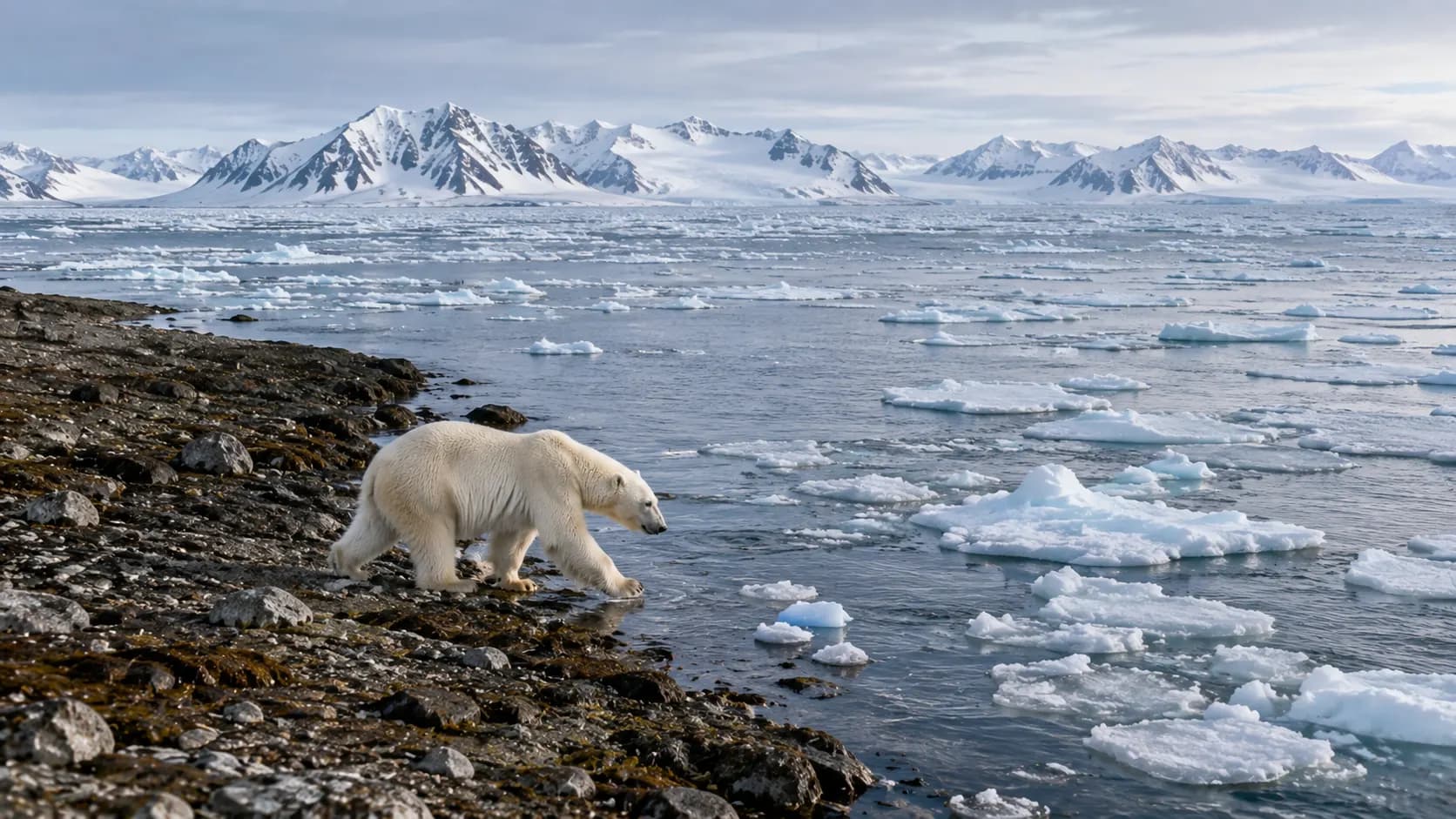
One possibility raised by the researchers is that lower ice coverage can, under some conditions, concentrate seals within the remaining suitable habitat.
If a bear needs less time or energy to find each seal, it might partly compensate for having a shorter hunting season. This remains a hypothesis, not evidence that continued ice loss will benefit polar bears.
Different Prey Can Help in Svalbard
Local ecology also matters. Svalbard bears can use bearded seals, and stranded whale carcasses can provide unusually rich food when available.
Researchers also discuss other local food opportunities, including reindeer, walrus, harbour seals, birds and eggs. These resources may give some Svalbard bears options that are less available to populations elsewhere.
Those foods should not be treated as a permanent replacement for seal hunting. Many are seasonal, unpredictable or less energy-dense than the marine prey polar bears evolved to exploit.
The Population May Still Be Below Its Carrying Capacity
The researchers raise another possibility. Barents Sea polar bears recovered after excessive hunting was restricted decades ago, and the population may still be below the number of bears the current ecosystem can support.
If that contributes to good body condition, the pattern could change as bear numbers rise or as continued habitat loss reduces the ecosystem's carrying capacity.
Can Polar Bears Simply Move Onto Land?
This is one of the easiest ways to overinterpret the Svalbard findings.

Keep reading
Why Spain Is Facing Another Dangerous Heatwave in 2026
Polar bears are remarkably flexible in what they will investigate and eat. On land, they may consume berries, vegetation, birds, eggs, carcasses and terrestrial mammals.
But flexibility is not the same as having a reliable replacement diet.
A 2024 Nature Communications study followed 20 polar bears spending part of the ice-free season on land in western Hudson Bay. Nineteen of the 20 lost body mass during roughly three weeks of monitoring despite large differences in activity and feeding behaviour.
Some bears ate terrestrial foods while others reduced activity to conserve energy. Neither approach reliably replaced access to energy-rich marine prey.
Why Are Other Polar Bear Populations Struggling?
Polar bears do not live in one uniform Arctic environment. The timing of ice formation, water depth, seal abundance, alternative prey, distance to hunting areas and length of the ice-free season all vary by region.
Western Hudson Bay provides an important contrast to Svalbard. Long-term research there has linked earlier sea-ice breakup with poorer outcomes for bears, including effects on body condition, survival and population dynamics.
Other research has also shown how declining sea ice can reduce hunting opportunities, increase energetic costs and affect reproduction or survival in vulnerable populations.
That is why one surprisingly resilient population should not be used as a stand-in for every polar bear across the Arctic.
Could Svalbard's Good News Be Temporary?
Yes. The researchers themselves emphasize that possibility.
A population can cope during one phase of environmental change and then decline after an ecological threshold is crossed. Productive hunting areas may become less accessible. Bears may need longer swims. Seal habitat may change. Alternative food may no longer compensate.
The Svalbard study concludes that continued warming and further sea-ice loss are still likely to have negative effects on Barents Sea polar bears in the future.
The surprising finding is therefore not that sea ice suddenly does not matter. It is that the relationship between habitat loss and animal condition can contain delays, local exceptions and temporary buffers.
Are Polar Bears Really Adapting?
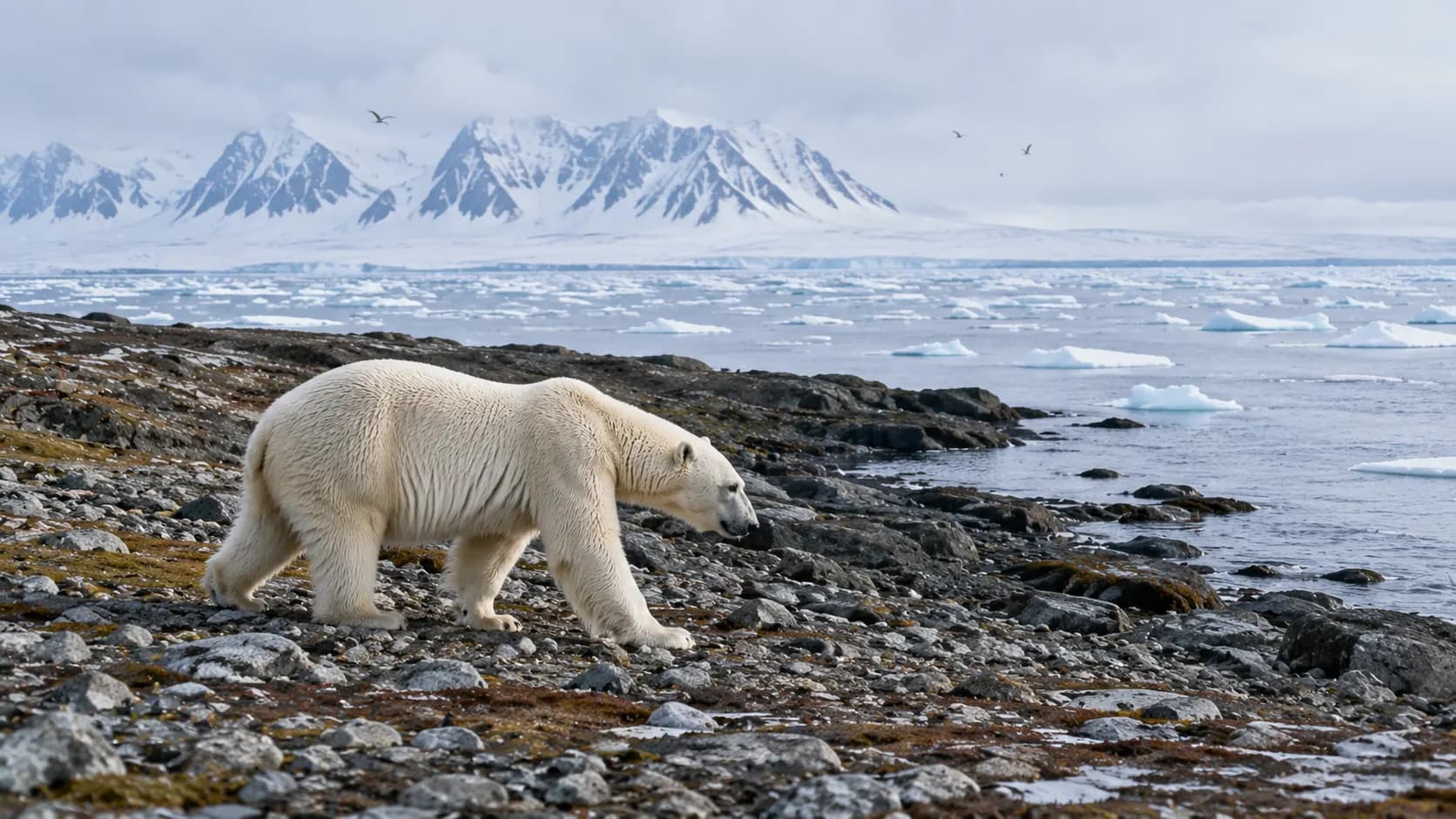
The word adapting needs care.
Individual polar bears clearly show behavioural flexibility. They can change where they travel, which prey they pursue, how much time they spend on land and which opportunistic foods they use.
But behavioural flexibility is not evidence that the species has evolved away from its dependence on sea ice.
The more useful question is whether that flexibility can compensate quickly enough for the pace and eventual scale of environmental change.
Why One Polar Bear Photo Can Mislead You
Polar bears are powerful visual symbols, which makes individual photographs unusually persuasive.
A photograph of one extremely thin bear cannot tell us that every polar bear population is starving. A photograph of one very fat bear cannot prove that polar bears are doing fine.
Scientists need repeated measurements over many years: body condition, survival, reproduction, cub recruitment, movement, prey availability and population abundance.
The Svalbard study is useful precisely because it relies on long-term monitoring rather than one dramatic observation.
How to Read the Next Polar Bear Headline
When you see a claim that polar bears are either thriving or collapsing, check what the evidence actually measured.
Check which polar bear population the research studied.
Look at whether the result measures body condition, population size, reproduction, survival or something else.
Check the study period rather than assuming one year describes a long-term trend.
Look for local explanations such as prey availability and sea-ice conditions.
Avoid treating a photograph of one bear as evidence for the entire species.
What Ultimately Determines Their Future?
There will probably never be one identical response shared by every polar bear population.
Their future depends on how quickly sea ice changes, whether productive seal habitat remains accessible, what prey is available locally, how far bears must travel, reproductive success and increasing interaction between bears and people as some animals spend more time on land.
Svalbard shows that wildlife can sometimes respond to environmental change in ways that surprise researchers. That is a reason for better science and long-term monitoring, not a reason to assume the underlying habitat loss has stopped mattering.
Reference notes
Sources and further reading
- Nature (opens in a new tab)https://www.nature.com/articles/s41598-025-33227-9
- Nature (opens in a new tab)https://www.nature.com/articles/s41467-023-44682-1
- Usgs (opens in a new tab)https://www.usgs.gov/programs/cmhrp/news/polar-bears-forced-shore-sea-ice-loss-are-unlikely-thrive-land-based-foods
- Usgs (opens in a new tab)https://www.usgs.gov/publications/polar-bears-and-sea-ice-habitat-change
- Pubs Usgs (opens in a new tab)https://pubs.usgs.gov/publication/70174286
- Pubs Usgs (opens in a new tab)https://pubs.usgs.gov/publication/70031436
- Polarbearsinternational (opens in a new tab)https://polarbearsinternational.org/polar-bears-changing-arctic/polar-bear-facts/diet-prey/
- Polarbearsinternational (opens in a new tab)https://polarbearsinternational.org/what-we-do/research/barents-sea-polar-bear-population/
Our editorial promise
Prepared with clarity and care.
This guide completed our editorial review before publishing. If something needs attention, report a correction or contact the publisher.
About this article
- Published:
- Last updated:
- Author:
- Ceyora Editorial Team
- Review status:
- Editorially reviewed
- Sources:
- 8
- Corrections:
- Report an issue