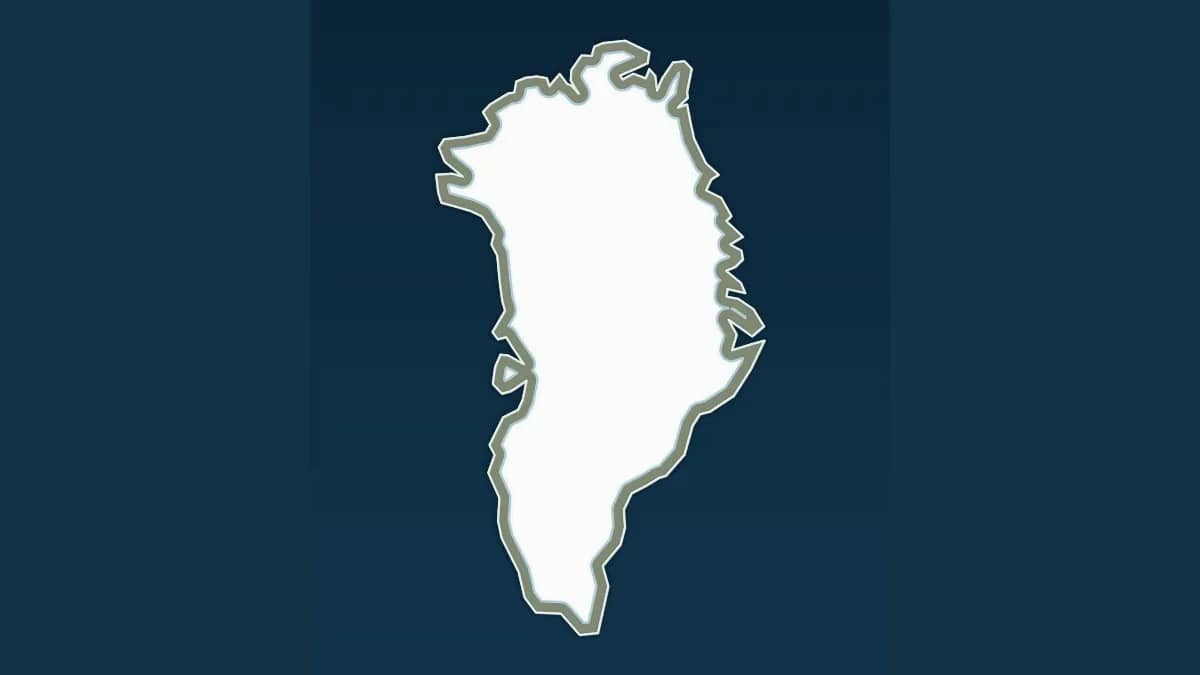
Greenland sounds as though it should be covered in meadows. Look at a satellite image instead and most of the island appears white.
That apparent contradiction has produced a wonderfully simple story: a Viking gave an icy island an attractive name to persuade people to move there.
There is truth behind that story, but it misses something important. Greenland was not secretly an ice-free paradise 1,000 years ago. At the same time, parts of the island really are green enough for grasslands, sheep farming and agriculture today.
Just How Much of Greenland Is Covered by Ice?
About 80% of Greenland is covered by the Greenland Ice Sheet, according to the National Snow and Ice Data Center.
It stretches across roughly 1.7 million square kilometres. At its thickest, the ice exceeds 3 kilometres, and the sheet contains around 2.9 million cubic kilometres of ice.
It is the largest ice sheet on Earth outside Antarctica.
Those numbers make Greenland sound almost completely frozen, but the remaining ice-free land is still enormous. Much of it forms a strip of mountains, valleys and fjords around the coastline.
Then Why Is It Called Greenland?
The name is closely associated with the Norse explorer Erik the Red.
According to the saga tradition, Erik explored Greenland after being outlawed from Iceland. He later returned to encourage others to settle there and called the new land Greenland because an attractive name might make people more willing to go.
That is why Greenland's name is often described as one of history's earliest marketing tricks.
But because this account comes through medieval saga tradition, it is better treated as a historical story about the naming than as a recorded advertising campaign with modern documentation.
But Greenland Really Can Be Green
This is the part the joke about Greenland's name often leaves out.
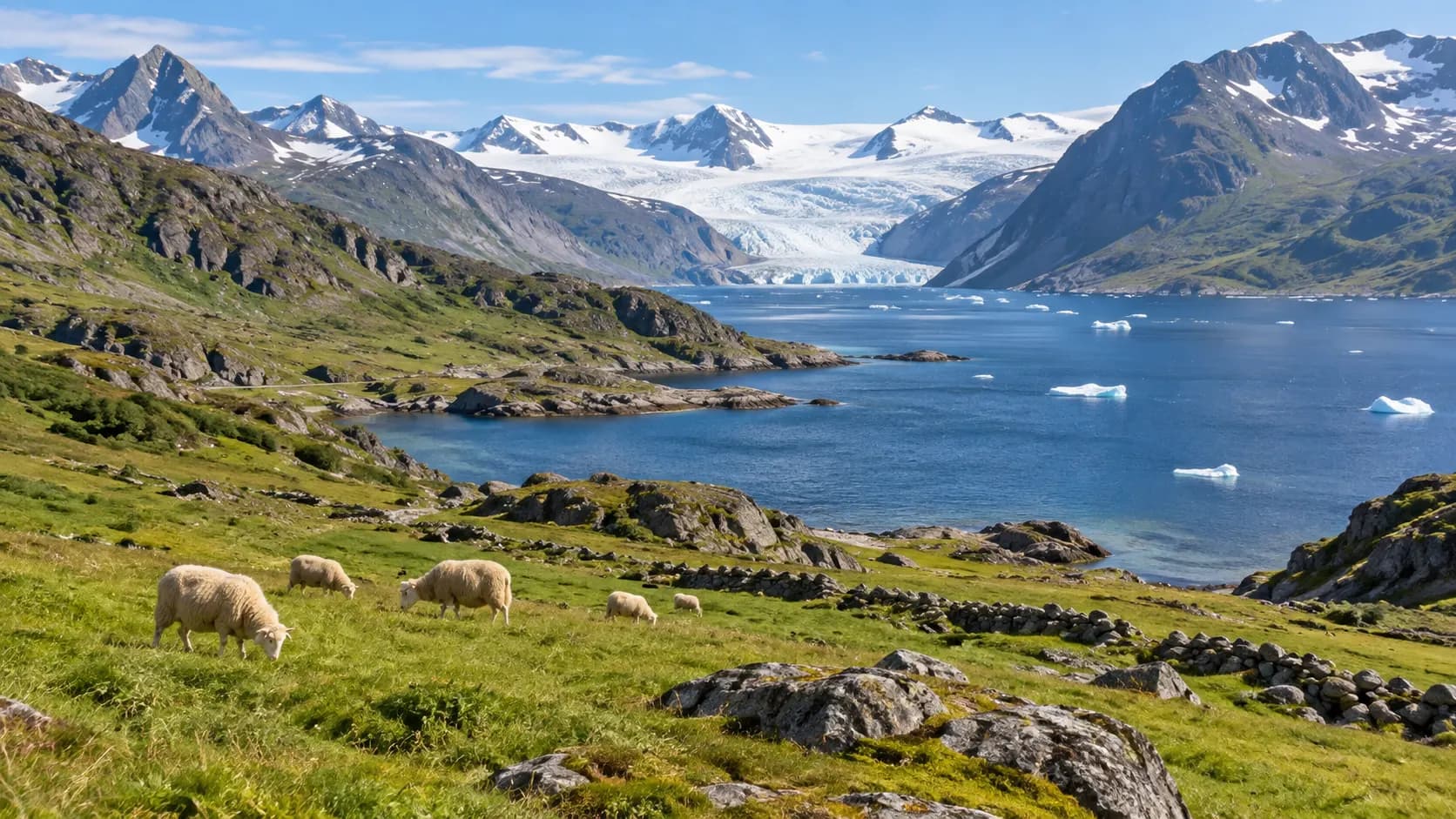
South Greenland contains sheltered fjords and valleys where summer vegetation can be strikingly green. Visit Greenland describes green pastures, sheep farms and agricultural communities bordering a landscape of mountains, fjords and ice.
UNESCO's Kujataa World Heritage landscape preserves this farming tradition. Norse settlers began farming the region in the 10th century, and Inuit farming communities later developed in the same southern landscape.
Modern sheep still graze in places such as Qassiarsuk and Igaliku. Greenland is therefore mostly icy and genuinely green at the same time.
Where Did Erik the Red Settle?
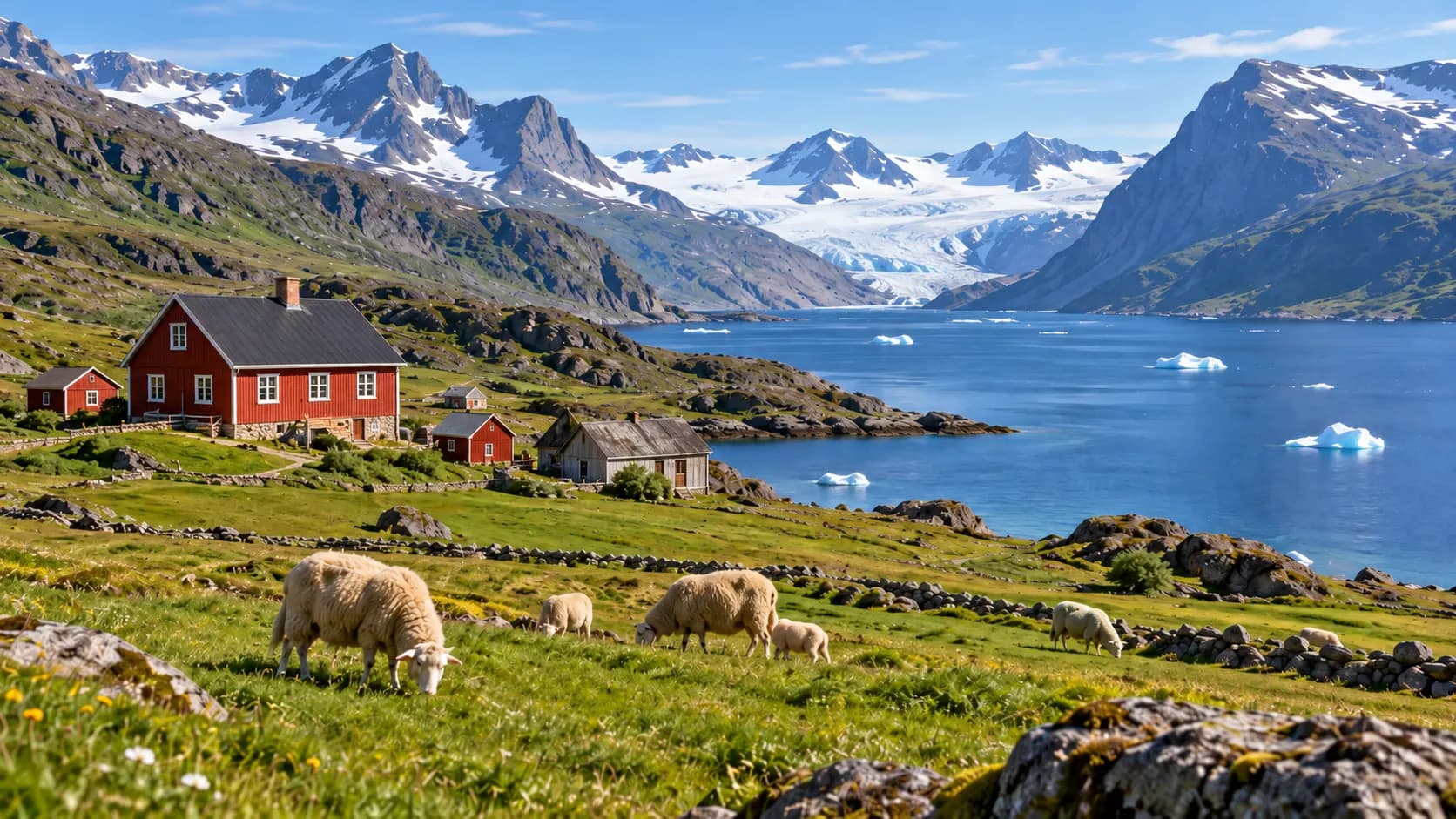
Erik's settlement was at Brattahlíð, in the area now known as Qassiarsuk in South Greenland.
The surrounding region offered something essential that Greenland's frozen interior could not: a local climate capable of supporting grazing and limited agriculture.
Nearby Igaliku later became another important farming centre. UNESCO describes the wider Kujataa landscape as the Arctic margin of viable agriculture, where farming had to be combined with hunting and other local resources.
The Norse settlers were therefore not farming on top of the ice sheet. They lived in ice-free coastal landscapes where fjords and sheltered valleys created far more favourable conditions.

Keep reading
Is Ramen Really Japanese? The Story Behind the Bowl
Was Greenland Greener 1,000 Years Ago?
Parts of southern Greenland supported Norse farms, and climate conditions varied during the centuries when those settlements existed.
But that should not be turned into the claim that Greenland was once a completely green island that later froze over.
The huge interior ice sheet long predates Erik the Red and the Norse settlements. What changed through time were regional temperatures, glaciers, growing conditions and the boundaries between ice and ice-free land not the sudden creation of Greenland's entire ice sheet after the Vikings arrived.
What Is Actually Under Greenland's Ice?
The ice does not sit on one smooth flat surface.
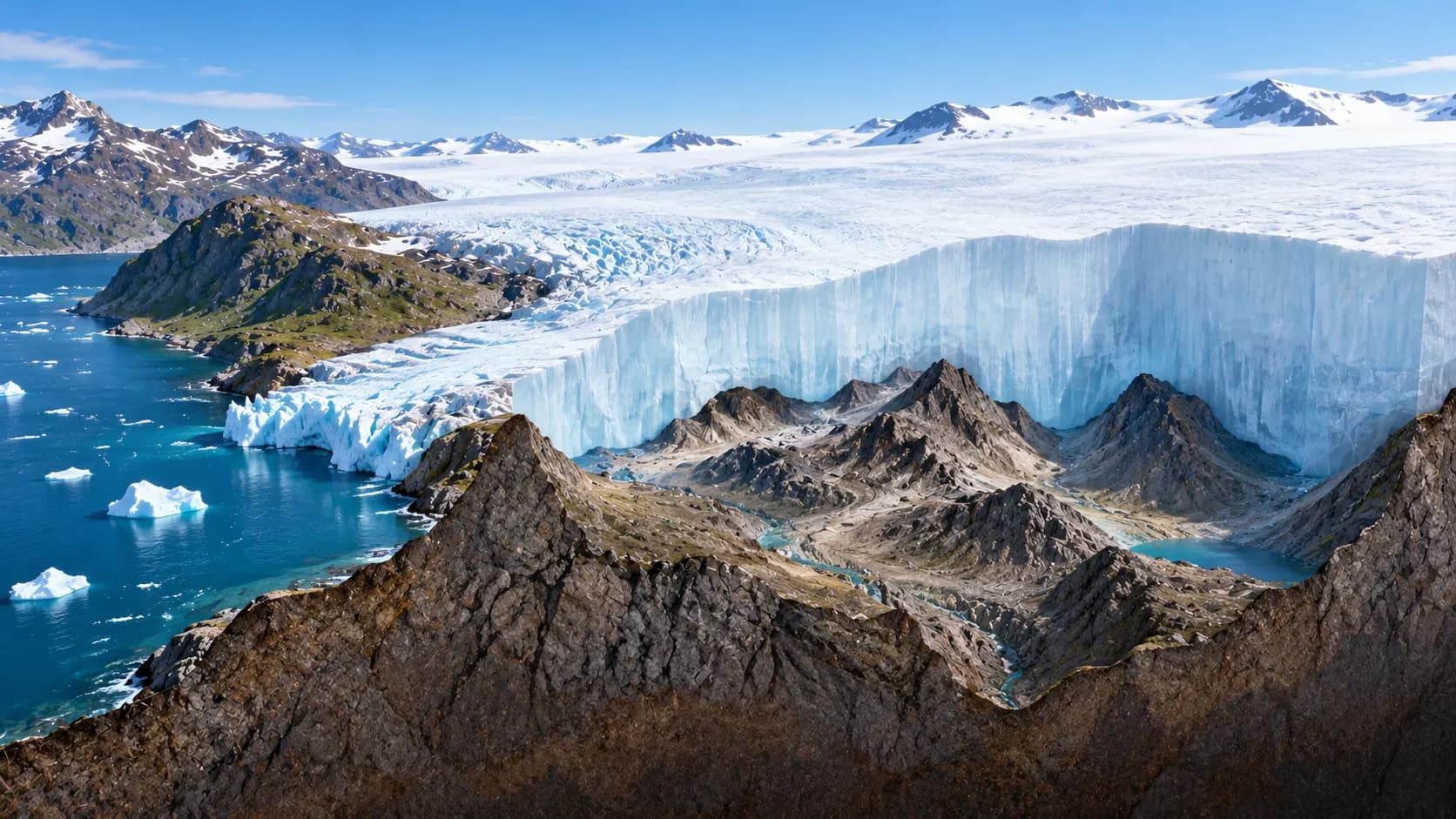
Radar, gravity measurements and drilling have revealed a complicated buried landscape of bedrock, valleys, mountains and basins beneath the ice sheet.
NASA-backed research has even identified ancient soil and tundra material preserved beneath deep ice, showing that parts of the underlying landscape have an extraordinary geological history.
That buried topography also matters today because the shape of the land beneath glaciers can influence how ice flows toward the coast.
Why Does Greenland Have So Much Ice?
Greenland sits deep in the Arctic, where cold conditions allow snow to survive from year to year across the high interior.
As new snow accumulates, older layers become compressed into ice. Over extremely long periods, that process built an ice sheet thick enough to spread outward under its own enormous weight.
Snow continues to add mass to the interior, while melting and glaciers flowing into the ocean remove ice around the margins.
Is Greenland's Ice Disappearing?
Greenland's ice sheet is currently losing more mass than it gains overall.
NASA satellite measurements have tracked sustained net ice loss since 2002 as warmer air and ocean conditions increase surface melting and glacier loss.
That does not mean Greenland's entire ice sheet is about to disappear. The sheet contains an immense volume of ice, and its future depends on climate conditions over very long timescales.
The scale is still important. NSIDC estimates that complete loss of the Greenland Ice Sheet would eventually raise global mean sea level by about 7.4 metres. That figure describes a theoretical complete-melt consequence, not a prediction of a sudden event.
Greenland Is Both Icy and Green
The name sounds ridiculous only if we imagine Greenland as one uninterrupted sheet of white.
Most of the island really is dominated by ice. Erik the Red's name also appears to have been chosen partly because it sounded inviting to potential settlers.
But those settlers established farms in real green valleys along the southern coast, and sheep still graze there today.
Greenland's name is therefore part advertising story, part geography and part reminder that an island more than 2,000 kilometres from north to south cannot be understood from the colour at its centre alone.
Reference notes
Sources and further reading
- Nsidc (opens in a new tab)https://nsidc.org/learn/parts-cryosphere/ice-sheets
- Nsidc (opens in a new tab)https://nsidc.org/ice-sheets-today/about-project
- Visitgreenland (opens in a new tab)https://visitgreenland.com/articles/erik-the-red/
Show all 8 sources
- Visitgreenland (opens in a new tab)https://visitgreenland.com/articles/what-really-happened-to-greenlands-vikings/
- Visitgreenland (opens in a new tab)https://visitgreenland.com/destinations/south-greenland/
- Whc Unesco (opens in a new tab)https://whc.unesco.org/en/list/1536
- NASA (opens in a new tab)https://science.nasa.gov/science-research/earth-science/climate-science/sea-ice/researchers-find-3-million-year-old-landscape-beneath-greenland-ice-sheet/
- NASA (opens in a new tab)https://science.nasa.gov/earth/explore/earth-indicators/ice-sheets/
Our editorial promise
Prepared with clarity and care.
This guide completed our editorial review before publishing. If something needs attention, report a correction or contact the publisher.
About this article
- Published:
- Last updated:
- Author:
- Ceyora Editorial Team
- Review status:
- Editorially reviewed
- Sources:
- 8
- Corrections:
- Report an issue