You go to bed at 11, wake at 7 and do the maths: eight hours. Yet getting out of bed still feels harder than it should, and within an hour you are wondering why you feel as though you barely slept.
The problem is that sleep is not measured only by the distance between bedtime and the alarm.
CDC describes healthy sleep as involving both enough sleep and good-quality sleep. Quality sleep should be refreshing and reasonably uninterrupted. Timing matters as well because your internal body clock helps determine when your body is prepared to sleep and when it expects to be awake.
Is Eight Hours of Sleep Always Enough?
There is nothing magical about exactly eight hours.
CDC recommends seven or more hours per day for adults aged 18 to 60. Its guidance changes slightly for older adults, and individual sleep needs vary.
That means someone sleeping seven and a half hours and waking refreshed may not need to force themselves to reach eight. At the same time, another person may need somewhat more than eight hours to feel and function well.
The more useful question is not simply, "Did I reach eight hours?" It is whether you regularly get enough sleep for your needs and wake feeling reasonably restored.
Sleep Is More Than the Number of Hours
Your brain does not enter one state at bedtime and remain there until morning.
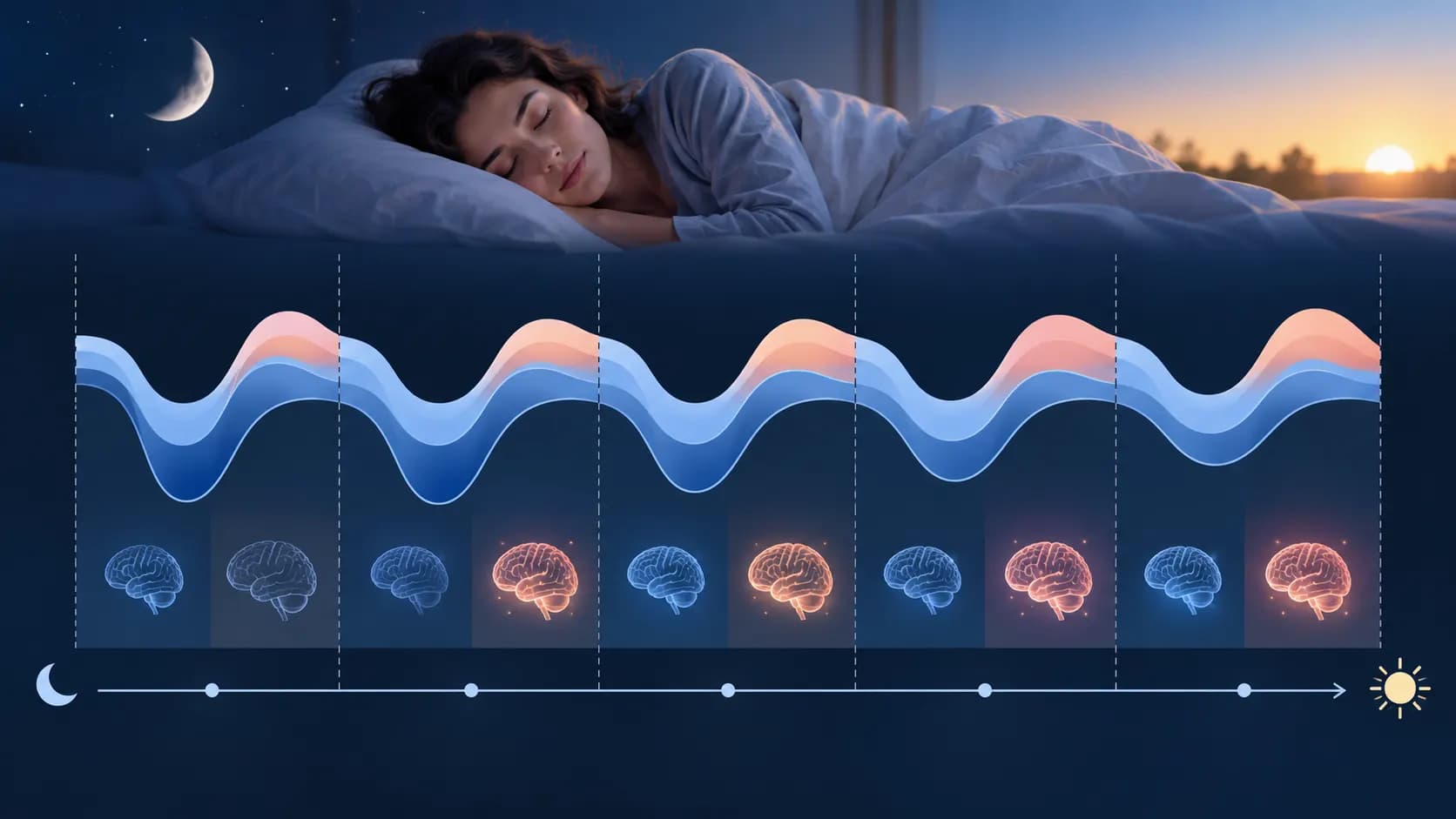
During a typical night, sleep repeatedly moves through non-REM and REM phases. NHLBI says a sleep cycle usually begins again every 80 to 100 minutes, with most people moving through roughly four to six cycles in a night.
Deep non-REM sleep tends to be more prominent earlier in the night. REM sleep appears repeatedly as the night progresses. These stages have different patterns of brain activity and are part of normal sleep architecture.
This is one reason eight hours in bed cannot be treated like eight identical blocks. What happens during that time matters.
You May Be Waking More Than You Realise
Brief awakenings can occur normally between sleep cycles, and you may not remember every one of them the next morning.
The problem is when sleep becomes repeatedly or substantially fragmented. Noise, an uncomfortable room, needing the bathroom, pain, stress, breathing problems or other disturbances can interrupt sleep often enough to make it less refreshing.
CDC lists repeated waking during the night and feeling tired even after getting enough sleep among signs of poor sleep quality.
This also explains why looking only at a phone or watch estimate can be misleading. A device may provide useful patterns, but feeling consistently unrefreshed still deserves attention even when the screen reports a respectable number of hours.
Your Body Clock May Be Out of Sync
Sleep also has timing.
Your circadian system runs on an approximately 24-hour rhythm and responds strongly to environmental cues, particularly light and darkness. It helps coordinate when you become sleepy and when your body prepares to wake.
An inconsistent routine can work against that system. Going to sleep at very different times across the week, working nights, travelling across time zones or receiving bright light late in the evening can shift or disrupt sleep timing.
You may therefore spend enough total time asleep while sleeping at a time that does not line up well with your internal clock.

Caffeine Can Still Matter Even if You Fall Asleep
People sometimes judge caffeine only by one test: "I can drink coffee and still fall asleep."
Falling asleep, however, is not the only part of sleep quality. Caffeine blocks the effects of adenosine, a chemical involved in the pressure to sleep, and NHLBI notes that caffeine can disrupt normal sleep-wake processes.
Sensitivity and timing vary between people. CDC's practical sleep guidance recommends avoiding caffeine in the afternoon or evening if sleep is a problem.
If you regularly wake tired, moving your final caffeinated drink earlier for a week or two can be more informative than assuming caffeine has no effect simply because you fall asleep quickly.
Alcohol Can Make Sleep Feel Better at First

Keep reading
Why Your Mood Drops at the Same Time Every Day
Alcohol creates another misleading situation.
It can make falling asleep easier, which can feel like better sleep. NHLBI notes that alcohol can also make sleep lighter and increase the likelihood of waking during the night.
Someone may therefore remember falling asleep unusually fast while overlooking what happened during the rest of the night.
Your Bedroom Can Fragment Sleep Without Fully Waking You
The room itself deserves a quick check before assuming something complicated is wrong.
CDC recommends a quiet, relaxing and cool sleeping environment. Light, recurring noise, uncomfortable temperature and other disruptions may make sleep less continuous even when you remain in bed for eight hours.
Think about patterns rather than chasing a perfect bedroom. If you consistently sleep better in a quieter, darker or more comfortable setting, that difference is useful information.
What About Snoring and Sleep Apnea?
Not everyone who wakes tired has a sleep disorder. But persistent unrefreshing sleep can sometimes be a clue that something is repeatedly disrupting breathing during the night.
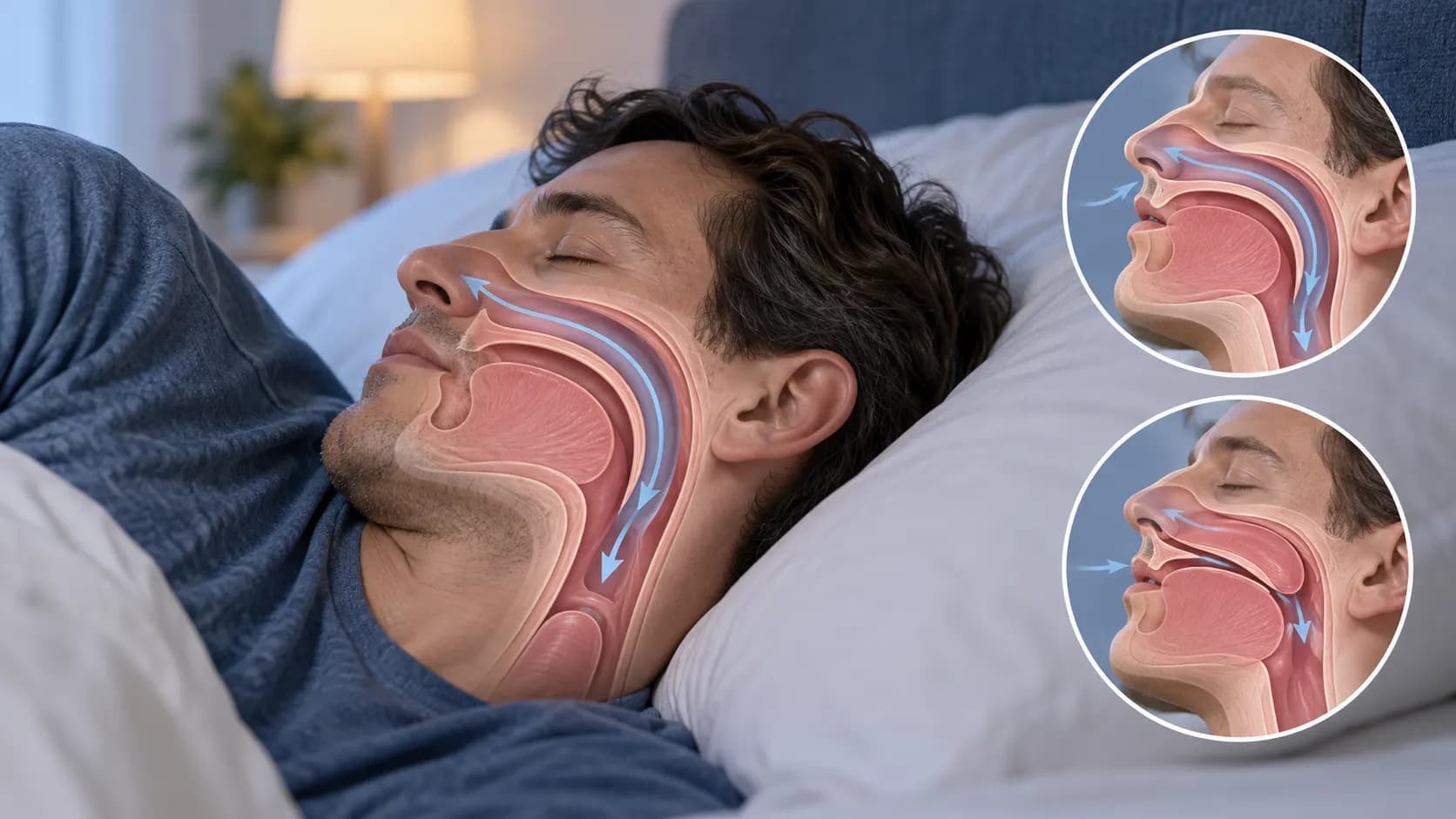
Sleep apnea can cause breathing to repeatedly stop and restart during sleep. NHLBI lists frequent loud snoring, gasping for air and observed breathing pauses among possible nighttime signs. Daytime sleepiness and tiredness can occur as well.
You may not notice those breathing changes yourself. A partner or family member is sometimes the person who first notices them.
Snoring alone does not prove that someone has sleep apnea, and waking tired does not diagnose it. A healthcare professional can decide whether symptoms justify a sleep assessment or sleep study.
Does Sleeping Longer Fix the Problem?
Sometimes you are tired because you simply have not been getting enough sleep, and additional sleep can help.
But adding another hour in bed will not necessarily solve repeated awakenings, badly timed sleep, a disruptive environment or an underlying sleep disorder.
If you routinely give yourself enough opportunity to sleep and still wake unrefreshed, it makes sense to investigate the pattern rather than continually extending bedtime.
Try Tracking Your Sleep Before Guessing
One tired morning tells you very little. A week or two of patterns can tell you much more.
NHLBI recommends a sleep diary when sleep problems are being assessed. Useful details include when you go to bed, when you wake, nighttime awakenings, naps, daytime sleepiness, caffeine and alcohol use, medications and exercise.
You do not need a complicated app. A simple note on your phone or a paper table can reveal that the worst mornings repeatedly follow a late coffee, weekend schedule shift, alcohol, a noisy night or several awakenings.
When Is Waking Tired Worth Medical Attention?
Feeling groggy after an occasional bad night is different from being persistently unrefreshed despite regularly allowing enough time for sleep.
Consider discussing the problem with a healthcare professional if it continues, significantly interferes with work or daily activities, or comes with frequent loud snoring, gasping, witnessed breathing pauses or excessive daytime sleepiness.
Sleepiness while driving deserves particular attention because it can become a safety issue. Persistent fatigue can also have causes outside sleep itself, which is another reason not to self-diagnose based on one symptom.
Eight Hours Is a Number, Not a Guarantee
The idea that eight hours automatically equals good sleep is attractive because it gives us one easy target.
Real sleep is more complicated, but not necessarily harder to improve. Enough total sleep matters. Continuity matters. Timing matters. Your environment and habits matter. And for some people, a sleep disorder needs to be ruled out.
If you keep waking tired, start by looking at the whole night rather than adding up the hours between bedtime and your alarm.
Reference notes
Sources and further reading
- CDC (opens in a new tab)https://www.cdc.gov/sleep/about/index.html
- CDC (opens in a new tab)https://www.cdc.gov/nchs/products/databriefs/db559.htm
- NIH (opens in a new tab)https://www.nhlbi.nih.gov/health/sleep/stages-of-sleep
Show all 9 sources
- NIH (opens in a new tab)https://www.nhlbi.nih.gov/health/sleep/sleep-wake-cycle
- NIH (opens in a new tab)https://www.nhlbi.nih.gov/health/insomnia/treatment
- NIH (opens in a new tab)https://www.nhlbi.nih.gov/health/insomnia/diagnosis
- NIH (opens in a new tab)https://www.nhlbi.nih.gov/health/sleep-apnea/symptoms
- NIH (opens in a new tab)https://www.nhlbi.nih.gov/health/sleep-deprivation/diagnosis-treatment
- NIH (opens in a new tab)https://www.nhlbi.nih.gov/resources/sleep-diary
Our editorial promise
Prepared with clarity and care.
This guide completed our editorial review before publishing. If something needs attention, report a correction or contact the publisher.
About this article
- Published:
- Last updated:
- Author:
- Ceyora Editorial Team
- Review status:
- Editorially reviewed
- Sources:
- 9
- Corrections:
- Report an issue