

Few experimental obesity medicines have attracted numbers quite like retatrutide. In a major Phase 3 trial, participants receiving the highest studied dose lost an average of 28.3% of their starting body weight after 80 weeks. In an extension involving some participants with a higher starting BMI, average weight loss reached about 30% after 104 weeks.
Those results are genuinely striking. They are also easy to misinterpret.
Retatrutide is still an investigational medicine. As of August 27, 2026, it is not approved by the FDA or any other regulatory agency, and Lilly says legitimate retatrutide is available only through its clinical trials. The trial averages are not a prediction of what any person would lose.
What Exactly Is Retatrutide?
Retatrutide is an investigational medicine being developed by Eli Lilly for obesity and several related metabolic conditions. In clinical trials, it is given as a once-weekly injection under the skin.
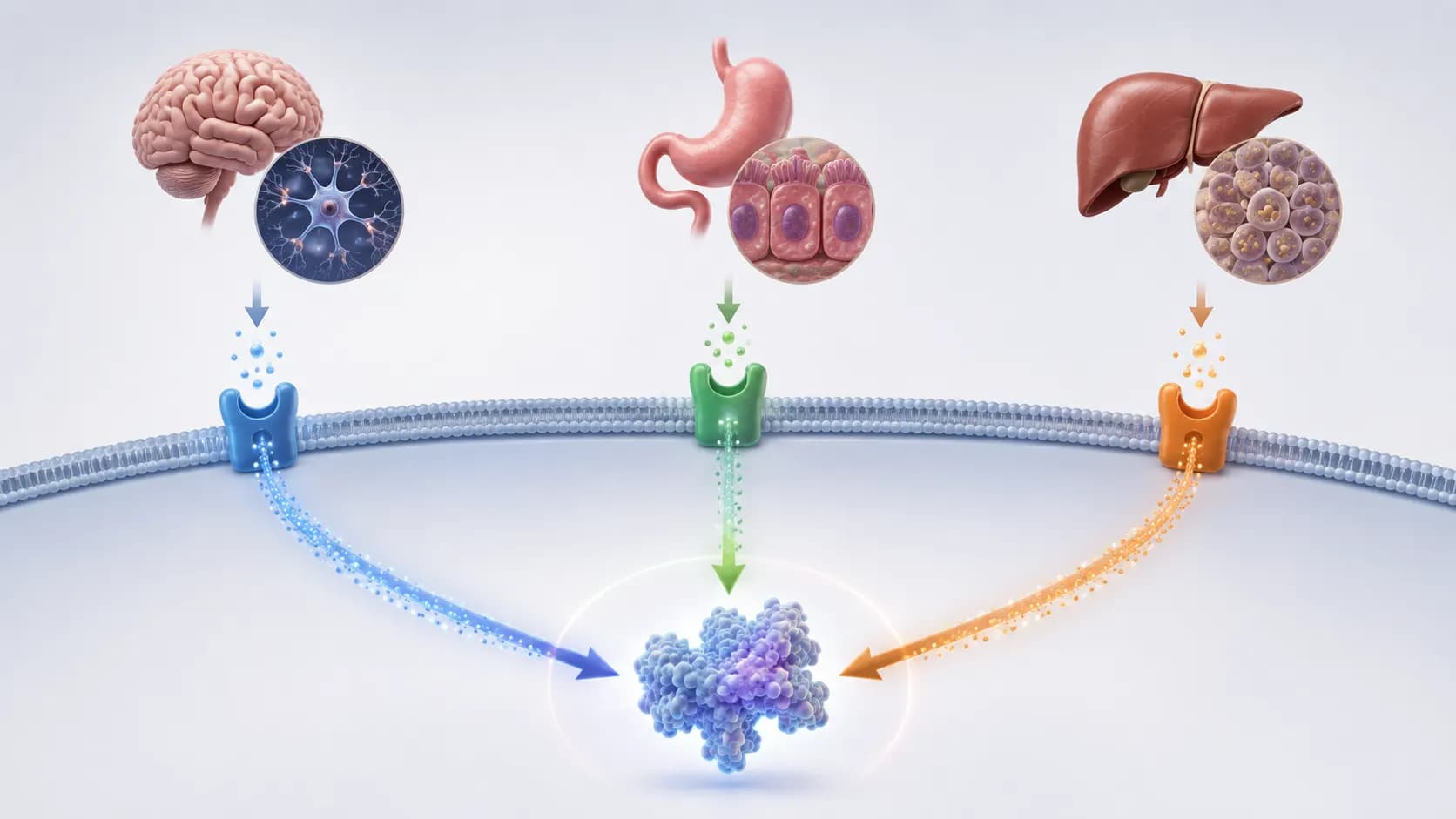
It belongs to the rapidly developing family of medicines that influence hormone signals involved in appetite, blood glucose and energy balance. What makes retatrutide unusual is that one molecule activates three different hormone receptors.
Why Is It Called a Triple Agonist?
Retatrutide activates receptors for GLP-1, GIP and glucagon. That is why researchers describe it as a triple hormone receptor agonist. You may occasionally see the nickname "GLP-3" online, but Lilly notes that this is not a scientifically accurate name.
GLP-1
GLP-1 signalling can reduce appetite, influence insulin release and slow the movement of food through the stomach. Semaglutide, the active ingredient in Wegovy and Ozempic, works primarily through the GLP-1 receptor.
GIP
GIP is another hormone involved in metabolic signalling. Tirzepatide, sold for obesity as Zepbound, activates both GIP and GLP-1 receptors.
Glucagon
Retatrutide adds glucagon-receptor activity as a third pathway. The scientific interest is not simply that three receptors sound better than one or two. Researchers are testing whether the combined signalling can produce useful metabolic effects while maintaining an acceptable safety profile.
How Much Weight Did People Lose With Retatrutide?
The clearest recent numbers come from TRIUMPH-1, a large randomized Phase 3 trial involving more than 2,300 adults with obesity or overweight and at least one weight-related condition, without diabetes.
At 80 weeks, average weight reduction was 19.0% with the 4 mg dose, 25.9% with 9 mg and 28.3% with 12 mg. Participants receiving placebo lost substantially less weight.
A prespecified extension followed a subset of participants who began with a BMI of at least 35. Those continuing the 12 mg dose reached an average 30.3% weight reduction at 104 weeks.
That 30.3% figure is the source of many dramatic retatrutide headlines. But saying simply that "retatrutide causes 30% weight loss" removes several pieces of context: it was an average, it came from a selected extension population, it followed nearly two years of treatment, and individuals did not all respond identically.
The Phase 3 results also build on an earlier Phase 2 trial published in the New England Journal of Medicine. In that smaller study, participants receiving 12 mg lost an average of 24.2% after 48 weeks.
Does This Mean Retatrutide Is Better Than Wegovy or Zepbound?
Not from these numbers alone.
It is tempting to place the percentage from one retatrutide trial beside a percentage from a semaglutide or tirzepatide trial and declare a winner. Different studies can enroll different populations, use different treatment durations, handle missing data differently and apply different trial protocols.
A reliable claim that one medicine is superior generally needs direct comparative evidence designed for that question. Retatrutide's results make it an important drug to watch, but they do not make every cross-trial internet comparison scientifically fair.
There is also a practical difference that outweighs any percentage comparison today: Wegovy and Zepbound are approved obesity treatments in the United States, while retatrutide remains investigational.
What Side Effects Have Researchers Seen?
Gastrointestinal effects have been prominent across retatrutide studies. In the earlier Phase 2 trial, the most common adverse events were gastrointestinal, were related to dose and were mostly mild to moderate. Researchers also observed dose-dependent increases in heart rate that peaked during the trial and later declined.

Keep reading
Why Do You Still Wake Up Tired After 8 Hours of Sleep?
The Phase 3 picture is broader. In TRIUMPH-1, gastrointestinal events were the most common reason people stopped treatment because of side effects. Researchers also tracked effects including altered skin sensation, injection-site reactions and low blood pressure.
In the later TRIUMPH-2 and TRIUMPH-3 announcements, diarrhea, nausea, constipation and decreased appetite were among the commonly reported effects. Those July results are still topline company disclosures, and Lilly says detailed findings will be presented at medical meetings and published later.
That distinction matters. A successful Phase 3 trial provides much more safety information than an early experiment, but regulatory review exists partly to examine the full evidence rather than one attractive efficacy number.
What Do the Newer Phase 3 Trials Add?
Retatrutide has now been tested in populations with more complicated health profiles as well.
In July 2026, Lilly reported that participants with obesity or overweight and type 2 diabetes in TRIUMPH-2 lost up to an average of 20.8% at 80 weeks with the 12 mg dose. In TRIUMPH-3, adults with severe obesity and established cardiovascular disease lost up to an average of 22.6% at 80 weeks.
Those results should not be viewed as weaker simply because the percentages are below the 28.3% reported in TRIUMPH-1. People with type 2 diabetes and people with serious cardiovascular disease are different trial populations. The studies are answering different clinical questions.
Is Retatrutide FDA Approved?
No.
As of August 27, 2026, retatrutide has not been approved by the FDA or any other regulatory agency. Lilly says it plans to submit retatrutide for U.S. approval in the first quarter of 2027.
Can You Buy Retatrutide Online?
You may find websites, social-media accounts, medical spas or sellers offering products labelled "retatrutide," sometimes under descriptions such as "research peptide." That does not make them the medicine used in Lilly's clinical trials.
FDA states that retatrutide cannot be used in compounding under U.S. federal law and has not been found safe and effective for any condition. Lilly says retatrutide is legally available only through its clinical trials and warns that products sold elsewhere may contain the wrong amount of active ingredient, contaminants, impurities or a different substance entirely.

What Still Needs to Be Learned?
The strongest unanswered questions are no longer simply whether retatrutide can produce substantial weight loss. Phase 3 trials have shown that it can.
The remaining questions include how its overall benefit-risk profile looks after regulators review the complete data, how durable its effects are with long-term treatment, what happens after treatment stops, how it performs in direct comparisons with established therapies, and how uncommon adverse effects look once much larger populations are exposed.
TRIUMPH-2 and TRIUMPH-3 also illustrate why different patient groups matter. A medicine may behave differently in someone with uncomplicated obesity than in someone living with diabetes, cardiovascular disease, kidney disease or other conditions.
What Should Someone Interested in Retatrutide Do Now?
If the interest comes from wanting medical help with obesity, the useful conversation is about the treatments that are actually available now.
A qualified healthcare professional can assess whether an approved obesity medication is appropriate, discuss expected benefits and side effects, and take other health conditions and current medicines into account.
The 30% Number Is Impressive, but It Is Not the Whole Story
Retatrutide deserves the attention it is receiving. Average weight reductions approaching 30% in a Phase 3 development programme are scientifically important.
But the responsible interpretation is more interesting than the viral one.
Retatrutide is not a guaranteed 30% weight-loss injection. It is an experimental triple agonist that has produced substantial average weight loss under controlled trial conditions, with side effects, different responses across populations and a regulatory review still ahead.
For now, the story is not that a new miracle drug has arrived. It is that one of the most closely watched obesity medicines in development has moved much closer to answering whether unusually large trial results can translate into a safe, approved treatment.
Reference notes
Sources and further reading
- Lilly (opens in a new tab)https://www.lilly.com/news/stories/what-to-know-about-retatrutide
- Lilly (opens in a new tab)https://www.lilly.com/hcp/congresses/ada-2026/dv039292-triumph-1
- Investor Lilly (opens in a new tab)https://investor.lilly.com/news-releases/news-release-details/lillys-triple-agonist-retatrutide-delivered-powerful-weight-loss
Show all 10 sources
- Investor Lilly (opens in a new tab)https://investor.lilly.com/news-releases/news-release-details/lillys-triple-agonist-retatrutide-successful-two-additional
- American Diabetes Association (opens in a new tab)https://diabetes.org/newsroom/press-releases/breakthrough-studies-demonstrate-effectiveness-first-triple-hormone-therapy
- Nejm (opens in a new tab)https://www.nejm.org/doi/full/10.1056/NEJMoa2301972
- Clinicaltrials (opens in a new tab)https://clinicaltrials.gov/study/NCT05929066
- FDA (opens in a new tab)https://www.fda.gov/drugs/postmarket-drug-safety-information-patients-and-providers/medications-containing-semaglutide-marketed-type-2-diabetes-or-weight-loss
- FDA (opens in a new tab)https://www.fda.gov/news-events/press-announcements/fda-approves-fourth-product-under-national-priority-voucher-program-higher-dose-semaglutide
- FDA (opens in a new tab)https://www.accessdata.fda.gov/drugsatfda_docs/label/2024/217806s013lbl.pdf
Our editorial promise
Prepared with clarity and care.
This guide completed our editorial review before publishing. If something needs attention, report a correction or contact the publisher.
About this article
- Published:
- Last updated:
- Author:
- Ceyora Editorial Team
- Review status:
- Editorially reviewed
- Sources:
- 10
- Corrections:
- Report an issue