The short explanation is volcanic rock. But lava does not simply erupt, cool and instantly become a beach. Iceland's black sand is part of a much longer process involving volcanism, weathering, glaciers, rivers and the ocean.
Why Is Iceland's Sand Black?
Iceland is built overwhelmingly from volcanic rock, and basaltic volcanism is especially common. The Icelandic Institute of Natural History describes exposed Icelandic bedrock as predominantly igneous and notes that basaltic magma is the country's most common eruptive magma.
Basalt and related volcanic material are much darker than the pale quartz-rich sediment familiar from many tropical and continental beaches. When those rocks are fractured and ground into sand-sized particles, they can create a shoreline that looks almost black.
That does not mean every black beach has exactly the same mixture of minerals or was produced by the same eruption. A beach is a collection point for sediment, and that sediment may have travelled through several parts of the landscape before reaching the sea.
How Does Solid Lava Become Sand?
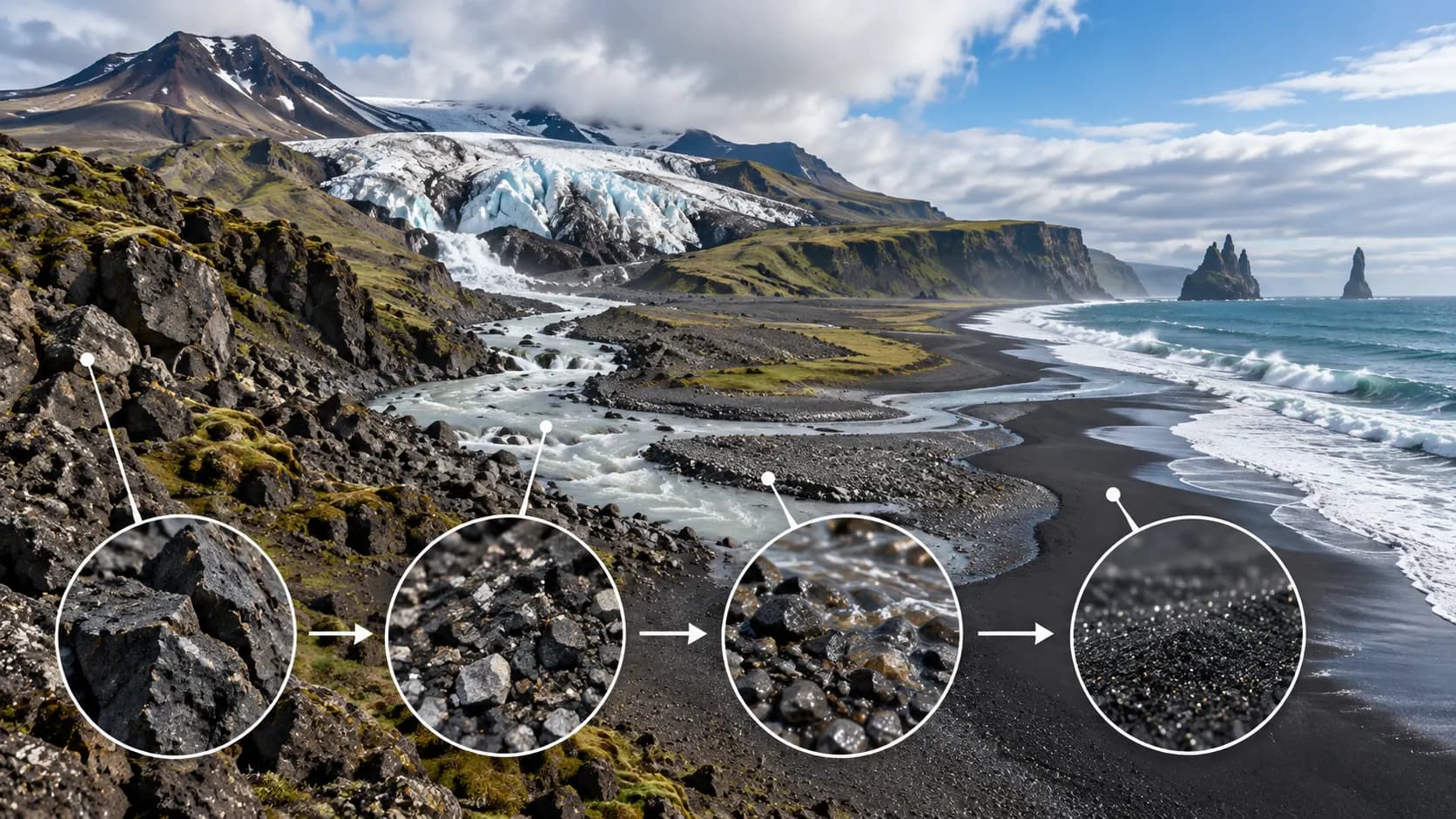
Once volcanic rock reaches the surface and cools, the landscape begins taking it apart.
Temperature changes, water, frost and chemical weathering weaken exposed rock. Glaciers can grind bedrock and carry huge quantities of sediment. Rivers then transport some of that material toward lower ground and the coast.
Research on Iceland's landscape shows how closely volcanism and glacial erosion are connected. The country has experienced repeated glaciations, while studies of Icelandic sandy environments find that glacial and river processes have produced enormous amounts of volcaniclastic sediment.
Once sediment reaches the shoreline, the Atlantic keeps working on it. Waves move grains back and forth, sort them by size and continually reshape the beach.
Is Black Sand the Same as Volcanic Ash?
Not necessarily. Volcanic ash and black beach sand can both come from volcanic activity, but the terms describe different things.
Volcanic ash is fine fragmented material produced during an eruption. Black beach sediment can include grains derived from lava, volcanic glass, older volcanic rocks and material that has already been transported and reworked by glaciers, rivers, wind or waves.
Research on Iceland's sandy environments specifically shows that glacial and river processes generate large quantities of volcanic sediment, while eruptions add more material to the system. Calling every black beach a giant deposit of fresh volcanic ash therefore oversimplifies what is happening.
Why Does Iceland Have So Many Black Beaches?
Iceland combines several ingredients unusually well: abundant volcanic rock, repeated glaciation, energetic rivers, frequent storms and a coastline exposed to powerful North Atlantic waves.
The Icelandic Institute of Natural History describes the country's modern landscape as the result of volcanism, glaciers, inland water and the surrounding ocean acting together. Visit Iceland uses much the same idea when explaining the country's black coastline.
This is why the most accurate explanation is not simply 'Iceland has volcanoes.' Volcanoes supply much of the dark raw material. Other forces break it apart, move it and continually rebuild the coastline.
Reynisfjara Shows the Story in One Place
Keep reading
Most Beautiful Islands in the World You Need to See
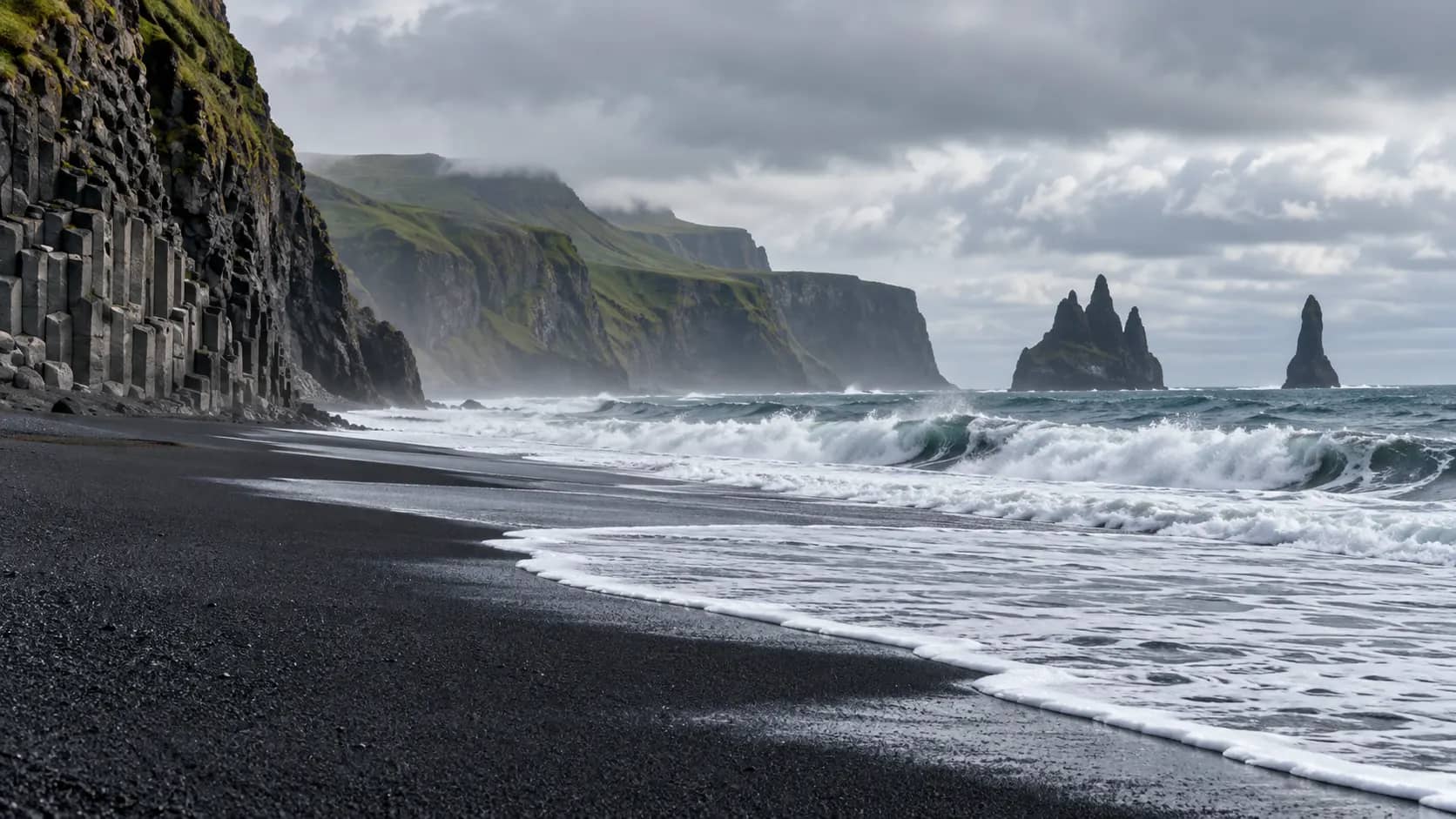
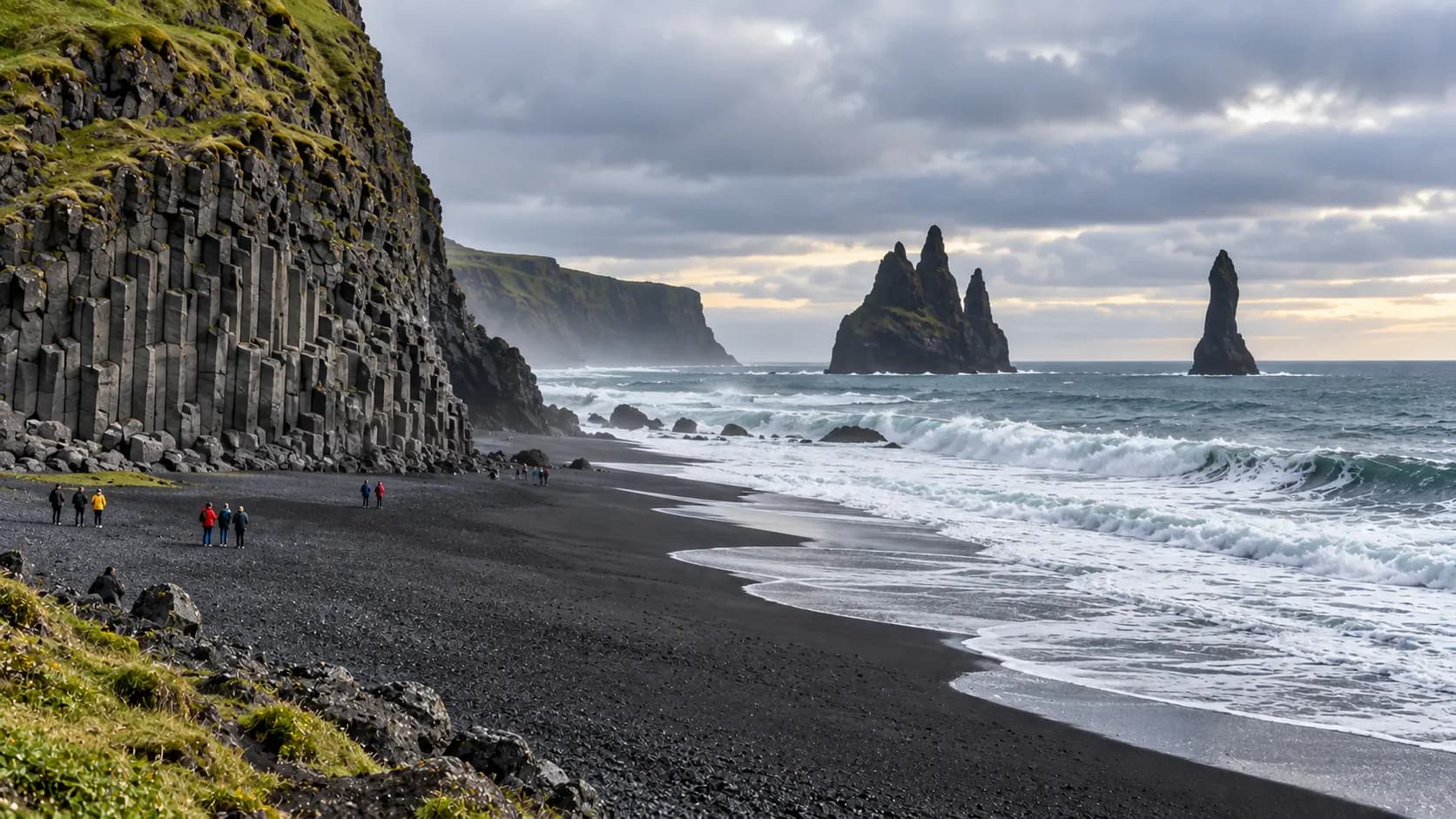
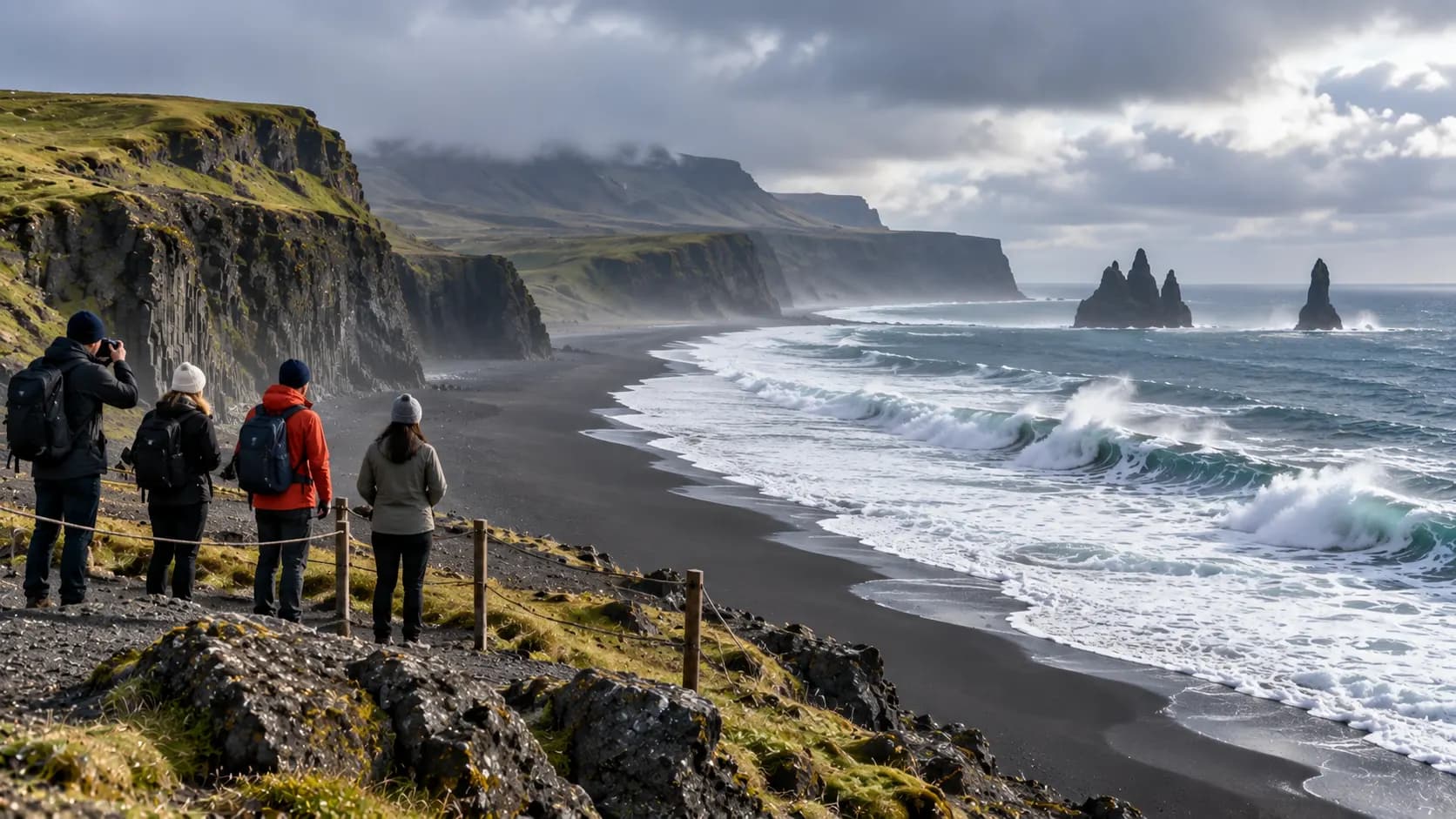
Reynisfjara, near Vík on Iceland's South Coast, is the country's most famous black beach. The setting brings several parts of the geological story together: dark volcanic sand, basalt formations, the Reynisfjall mountain and the Reynisdrangar sea stacks offshore.
Visit South Iceland describes Reynisfjall as a volcanic mountain containing tuff, pillow lava and columnar basalt. The Reynisdrangar pillars belong to the same broader geological formation.
The coastline is not static either. In February 2026, the Icelandic Tourist Board reported major erosion beneath the Reynisfjara viewing area. Wave action undermined safety infrastructure, and part of the beach that had been present only months earlier had disappeared.
Are All Icelandic Beaches Black?
No. Iceland's volcanic geology makes black beaches common, but the country's coastline contains other colours and sediment sources.
Rauðasandur in the Westfjords is a striking counterexample. Visit Westfjords describes a roughly 10-kilometre beach whose sand can appear red, yellow or even darker depending on the light, with much of its unusual colour linked to pulverized shell material.
That contrast is a useful reminder that beach colour records what material is available nearby and how currents, rivers, glaciers and waves transport and sort it.
What Should You Look for on a Black Sand Beach?
If you visit one, the sand itself is only the beginning of the story.
Look at the cliffs behind the beach for visible lava layers, tuff or columnar basalt.
Notice whether rivers or glacial meltwater enter the coast nearby, because they can transport volcanic sediment.
Look at the size of the grains. A beach can contain everything from very fine dark sand to rounded volcanic pebbles.
Watch how waves constantly move and sort sediment along the shoreline.
Remember that a dramatic rock formation and the sand beside it may share a volcanic history without having formed at exactly the same time.
Reynisfjara's Beauty Comes With a Serious Risk
Reynisfjara is also a place where geology and travel safety cannot be separated.
The beach is known for sneaker waves: unusually powerful waves that can travel much farther up the shore than visitors expect. Falling rocks from the cliffs are another recognised hazard.
As of August 31, 2026, SafeTravel Iceland says hazardous conditions mean Reynisfjara is accessible only from the viewpoint and asks visitors to respect current closures and safety instructions. Access conditions can change, so anyone planning a visit should check the live SafeTravel guidance rather than relying on an older travel article.
The Sand Is Only One Chapter of the Story
Iceland's black beaches are often described as volcanic beaches, and that is true. But the volcano is only the starting point.
Dark volcanic rock must be broken apart. Glaciers and rivers can transport the fragments. Waves sort and redistribute them. Storms and erosion can remove one part of a beach while building another.
That is what makes the coastline more interesting than the simple explanation that lava is black. Iceland's beaches are places where fire, ice, rivers and the Atlantic are still working on the same landscape.
Reference notes
Sources and further reading
- Visiticeland (opens in a new tab)https://www.visiticeland.com/article/black-beaches-iceland/
- Ni Is (opens in a new tab)https://www.ni.is/en/geology
- Ni Is (opens in a new tab)https://www.ni.is/en/geology/volcanic-activity
Show all 10 sources
- Ni Is (opens in a new tab)https://www.ni.is/en/geology/bedrock/rocks
- Iris Hi Is (opens in a new tab)https://iris.hi.is/en/publications/glaciation-erosion-and-landscape-evolution-of-iceland/
- Iris Hi Is (opens in a new tab)https://iris.hi.is/en/publications/the-icelandic-volcanic-aeolian-environment-processes-and-impacts-/
- South Is (opens in a new tab)https://www.south.is/en/destinations/nature/geopark/reynisfjara-reynisfjall-og-reynisdrangar
- Ferdamalastofa Is (opens in a new tab)https://www.ferdamalastofa.is/en/news/category/1/reynisfjara-recent-changes-due-to-coastal-erosion
- Safetravel Is (opens in a new tab)https://safetravel.is/travel-conditions/blackbeach-safety/
- Westfjords Is (opens in a new tab)https://www.westfjords.is/en/place/raudasandur
Our editorial promise
Prepared with clarity and care.
This guide completed our editorial review before publishing. If something needs attention, report a correction or contact the publisher.
About this article
- Published:
- Last updated:
- Author:
- Ceyora Editorial Team
- Review status:
- Editorially reviewed
- Sources:
- 10
- Corrections:
- Report an issue