

Every few months, a headline suggests that eating less protein could help people live longer. It is an appealing twist in a world filled with protein bars, shakes and high-protein versions of almost everything.
The evidence does not support one simple rule for everyone. Moderating a very high intake may make sense for some younger or middle-aged adults, especially when protein products are crowding out vegetables, fruit, legumes and whole grains. For many older adults, however, deliberately cutting protein could make it harder to preserve muscle, strength and independence.
Why Protein Restriction Appears in Longevity Research

The idea comes partly from experiments in yeast, worms, flies and rodents. Restricting total protein or particular amino acids can affect biological pathways involved in growth, metabolism and cellular maintenance, sometimes extending lifespan in those models.
Researchers often discuss mTOR and IGF-1, signalling systems that respond to nutrients and help regulate growth. Lower protein intake can reduce some of these growth signals. Protein restriction may also increase FGF21, a hormone involved in energy metabolism, although much of the strongest evidence comes from animal research.
This biology is genuinely interesting, but a mechanism is not the same as a proven recommendation. An intervention that lengthens the life of a laboratory animal may not produce the same result in a free-living human who must also maintain muscle, immunity, bone health and the ability to recover from illness.
Restriction Does Not Mean Malnutrition
Another source of confusion is the word restriction. In scientific research, it usually means reducing an intake that is already relatively high while still supplying enough energy and essential nutrients. It does not mean eating dangerously little protein.
Avoiding an excessive intake, correcting an inadequate intake and replacing one protein source with another are three different decisions. A person adding multiple shakes to meat-heavy meals is not in the same situation as an older adult with poor appetite who is unintentionally losing weight.
Has Eating Less Protein Been Proven to Extend Human Life?
No. Researchers cannot realistically keep large groups of people on tightly controlled protein diets for several decades. Human evidence therefore comes mainly from shorter metabolic trials and long-term observational studies.
These studies can identify associations and changes in biological markers, but they cannot show with certainty that a lower-protein diet causes people to live longer. Health, smoking, exercise, income, total food intake and the types of foods providing protein can all influence the results.
Why Age Changes the Answer

During Younger and Middle Adulthood
Someone who already meets their needs is unlikely to gain unlimited benefits by continually increasing protein. If shakes, bars and large meat portions are displacing legumes, vegetables, whole grains and fruit, reducing the excess may improve the balance of the diet.
That does not mean everyone in midlife should follow a low-protein diet. Body size, training, pregnancy, injury and health all affect requirements. The more useful question is whether extra protein is serving a clear purpose or simply being added because high protein sounds healthy.
During Older Age
Later in life, the priority often shifts toward preventing loss of muscle and function. Older muscle can respond less strongly to a given amount of dietary protein, a pattern commonly described as anabolic resistance.

Keep reading
Why Floodwater Is More Dangerous Than It Looks
The ESPEN expert group recommends at least 1.0–1.2 grams of protein per kilogram of body weight each day for healthy older adults. It suggests 1.2–1.5 grams per kilogram for many older people who are ill, malnourished or at risk, with individual adjustment based on condition and tolerance.
These are clinical expert recommendations rather than a target every older person should calculate alone. They show why a general message to eat less protein may be particularly unsuitable for someone who is frail, underweight, losing strength or recovering from illness.
What Can Happen If Older Adults Cut Back Too Far?
An older adult with a small appetite may already struggle to eat enough energy and protein. Removing eggs, dairy, fish, meat, soy or legumes without suitable replacements can make that problem worse.
Loss of muscle mass and strength
Greater difficulty walking, climbing stairs or carrying groceries
Slower recovery after illness, surgery or a hospital stay
Higher risk of undernutrition when appetite is already poor
Reduced ability to maintain everyday independence
Resistance and other appropriate exercise also matter. Protein by itself cannot fully protect muscle when someone is inactive, while regular muscle-strengthening activity helps the body use dietary protein more effectively.
Protein Source May Matter More Than Chasing a Low Number
A large Nurses' Health Study analysis followed 48,762 women who were younger than 60 when their midlife diets were assessed. Higher protein intake was associated with greater odds of meeting the study's healthy-aging definition, and the strongest association was seen with plant protein.
This was an observational study, so it cannot prove that plant protein caused healthier aging. It does support a practical point: beans, lentils, peas, soy foods, nuts, seeds and whole grains provide protein alongside fibre and other nutrients.
Animal foods can also contribute to a healthy diet. The aim does not need to be eliminating them. Replacing some processed meat or heavily processed protein products with legumes, nuts, fish, eggs, dairy or minimally processed soy foods can improve overall dietary quality without turning meals into a protein calculation.
Do High-Protein Diets Automatically Damage Healthy Kidneys?
No responsible article should claim that eating more protein automatically damages healthy kidneys. The research and clinical concerns are more complicated than that.
People with chronic kidney disease may need to adjust both the amount and source of protein, and their needs can change with disease stage or dialysis. That decision should be made with a doctor or kidney dietitian. It should not be copied from a longevity diet or a fitness plan.
Who Should Not Experiment With Protein Restriction?
Older adults who are frail, underweight or losing weight without trying
People recovering from surgery, infection, injury or hospitalisation
Athletes and people doing substantial physical training
People who are pregnant or breastfeeding
Anyone with kidney, liver or another medical condition affecting nutrition
People with poor appetite, swallowing difficulty or a history of malnutrition
For these groups, reducing protein without professional guidance may work against recovery, strength or nutritional adequacy.
A Better Healthy-Aging Strategy
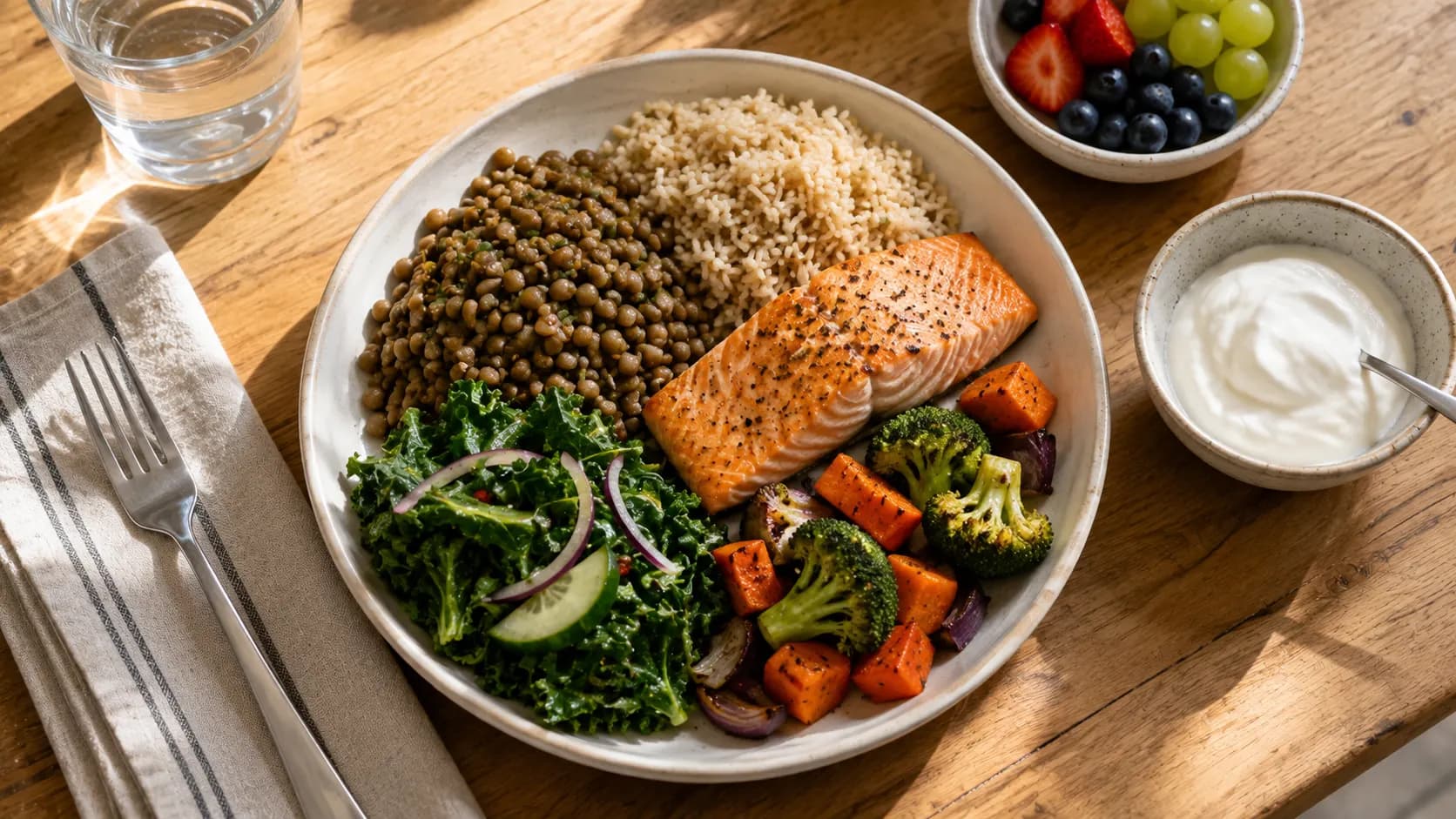
Check whether you are truly eating far above your needs before deciding to cut back.
Include a useful protein source at regular meals, especially if you are older or have a small appetite.
Replace some processed meat and highly processed snacks with beans, lentils, nuts, seeds, fish, eggs or minimally processed soy foods.
Keep vegetables, fruit, legumes and whole grains on the plate so protein does not crowd out fibre.
Combine adequate nutrition with regular resistance or muscle-strengthening activity appropriate for your ability.
Seek personalised advice when illness, weight loss, pregnancy, kidney function or recovery changes your needs.
The Bottom Line
Eating less protein is not a proven shortcut to a longer human life. For a younger or middle-aged adult consuming excessive amounts, moderation may create room for a more balanced diet. For many older adults, reducing intake could undermine muscle, recovery and independence.
Reference notes
Sources and further reading
- NIH (opens in a new tab)https://pubmed.ncbi.nlm.nih.gov/24814383/
- NIH (opens in a new tab)https://pubmed.ncbi.nlm.nih.gov/23867520/
- NIH (opens in a new tab)https://pubmed.ncbi.nlm.nih.gov/38309825/
- NIH (opens in a new tab)https://pubmed.ncbi.nlm.nih.gov/34890767/
- NIH (opens in a new tab)https://pubmed.ncbi.nlm.nih.gov/42326998/
- National Institute on Aging (opens in a new tab)https://www.nia.nih.gov/health/healthy-eating-nutrition-and-diet/healthy-meal-planning-tips-older-adults
- National Institute on Aging (opens in a new tab)https://www.nia.nih.gov/health/healthy-aging/what-do-we-know-about-healthy-aging
- NIDDK (opens in a new tab)https://www.niddk.nih.gov/health-information/kidney-disease/chronic-kidney-disease-ckd/healthy-eating-adults-chronic-kidney-disease
Our editorial promise
Prepared with clarity and care.
This guide completed our editorial review before publishing. If something needs attention, report a correction or contact the publisher.
About this article
- Published:
- Last updated:
- Author:
- Ceyora Editorial Team
- Review status:
- Editorially reviewed
- Sources:
- 8
- Corrections:
- Report an issue