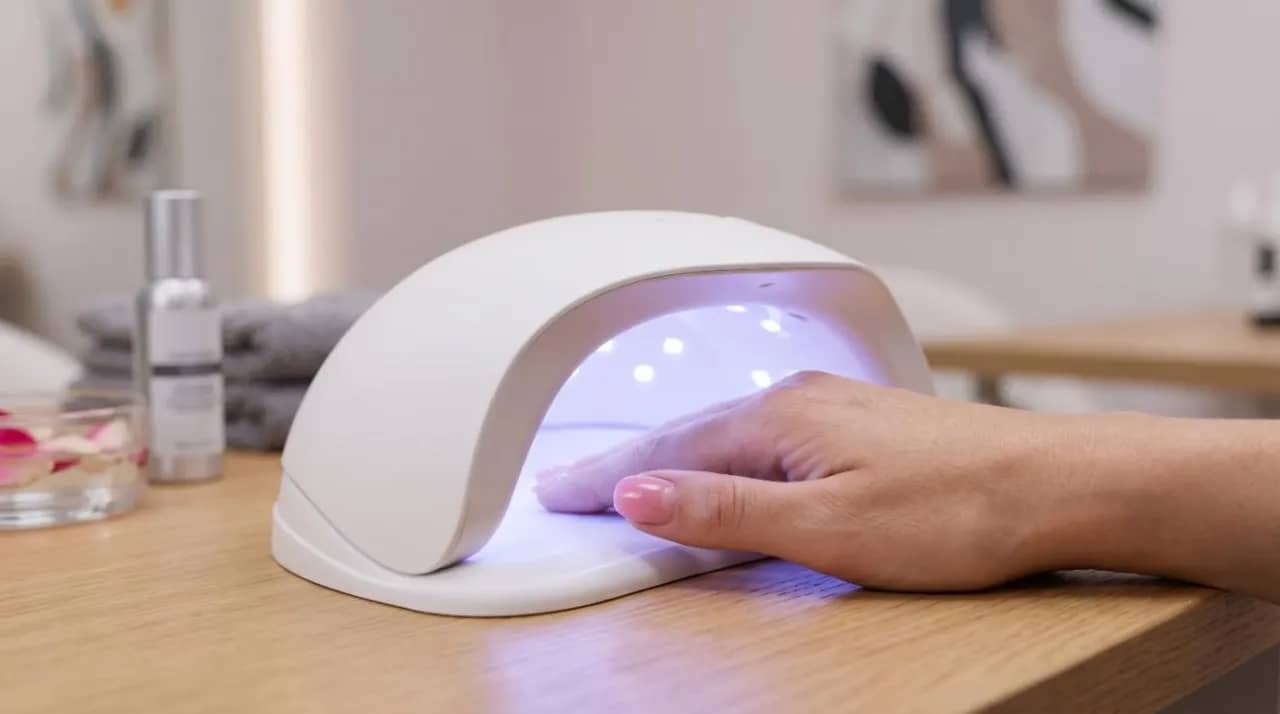
You slide your hand into the salon lamp, it glows, and a few minutes later the polish is hard and glossy. It feels like a harmless beauty routine. That is why headlines asking whether gel manicures can cause skin cancer have made many people uneasy.
The evidence does not support panic, but it does support simple precautions. Gel-curing lamps expose the hands to ultraviolet A radiation. Laboratory research shows that this radiation can damage cells, yet researchers have not established how much occasional or long-term manicure use changes a person’s real-world cancer risk.
Why Gel Manicures Raise Cancer Concerns
Gel polish does not air-dry like ordinary polish. It contains ingredients that must be cured under light. Most salon devices emit mainly UVA, the longer-wavelength ultraviolet radiation that penetrates more deeply into the skin and contributes to premature skin ageing and skin-cancer risk.
A lamp labelled “LED” is not automatically UV-free. LED and traditional UV nail lamps can both emit UVA. LED devices often cure compatible gels more quickly, which may shorten exposure, but the amount of radiation varies between machines.
What Current Research Actually Shows
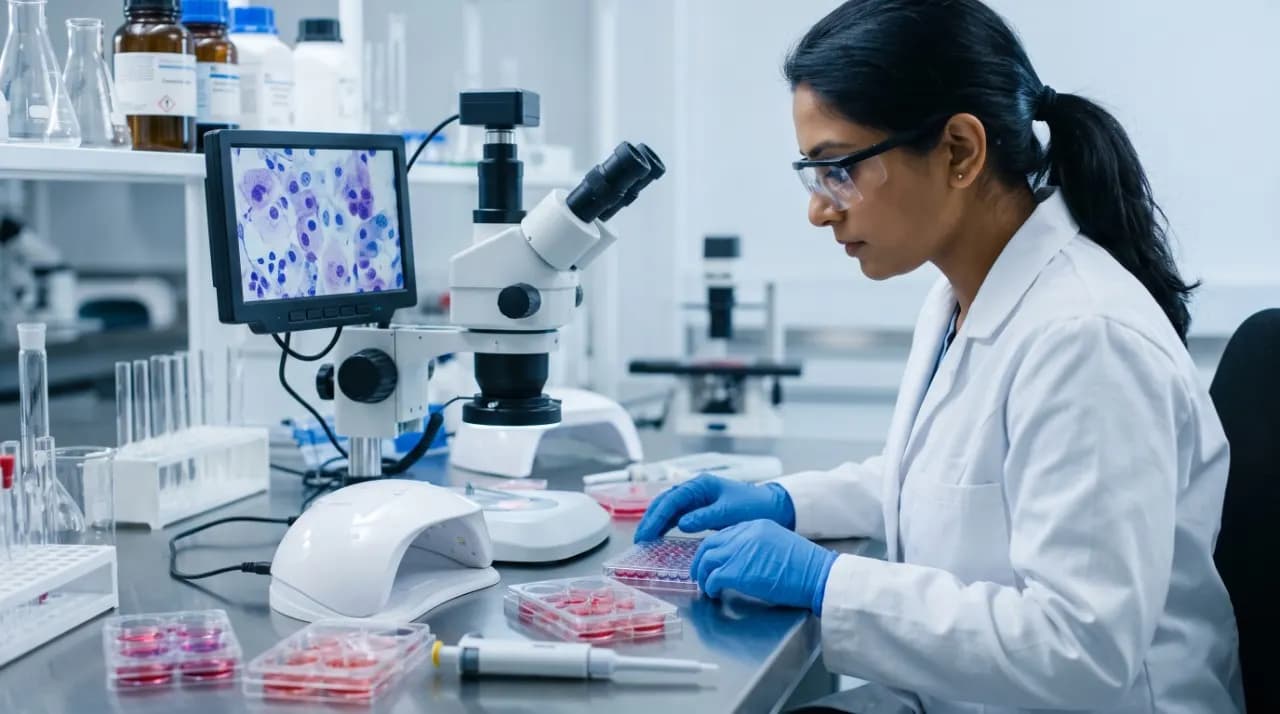
A 2023 Nature Communications study exposed mouse and human skin cells to a UV nail dryer. One 20-minute exposure caused 20% to 30% cell death, while three 20-minute exposures caused 65% to 70%. Surviving cells showed oxidative DNA damage and mutations.
Those findings matter because they show that nail-dryer radiation is biologically active. They do not prove that a salon manicure causes cancer. The experiment used cells in dishes rather than living hands, and its 20-minute exposure sessions may be longer than many routine curing cycles.
A 2014 JAMA Dermatology study measured 17 salon lamps and found large differences in UVA output. The researchers estimated that many visits would be needed to reach the laboratory threshold they used for potential DNA damage and concluded that the cancer risk appeared small. They also noted that the effects of repeated exposure in living people had not been tested.
Who May Want to Be More Cautious?
Someone who gets gel manicures every few weeks receives more cumulative exposure than someone who books one for a special occasion. Extra caution is also reasonable for people with a personal history of skin cancer, considerable sun damage, a weakened immune system or a condition that increases sensitivity to light.
Some medicines can cause photosensitivity. The US Food and Drug Administration lists examples that include doxycycline, certain diuretics, retinoids and some anti-inflammatory medicines. Do not stop prescribed medication because of a manicure. Ask a doctor or pharmacist whether artificial UVA exposure matters for your treatment.

Keep reading
Do You Really Need Sunscreen When You Stay Indoors?
How to Reduce UV Exposure at the Salon
Apply broad-spectrum, water-resistant SPF 30 or higher to the backs of your hands before the appointment, while keeping the nail plates clean.
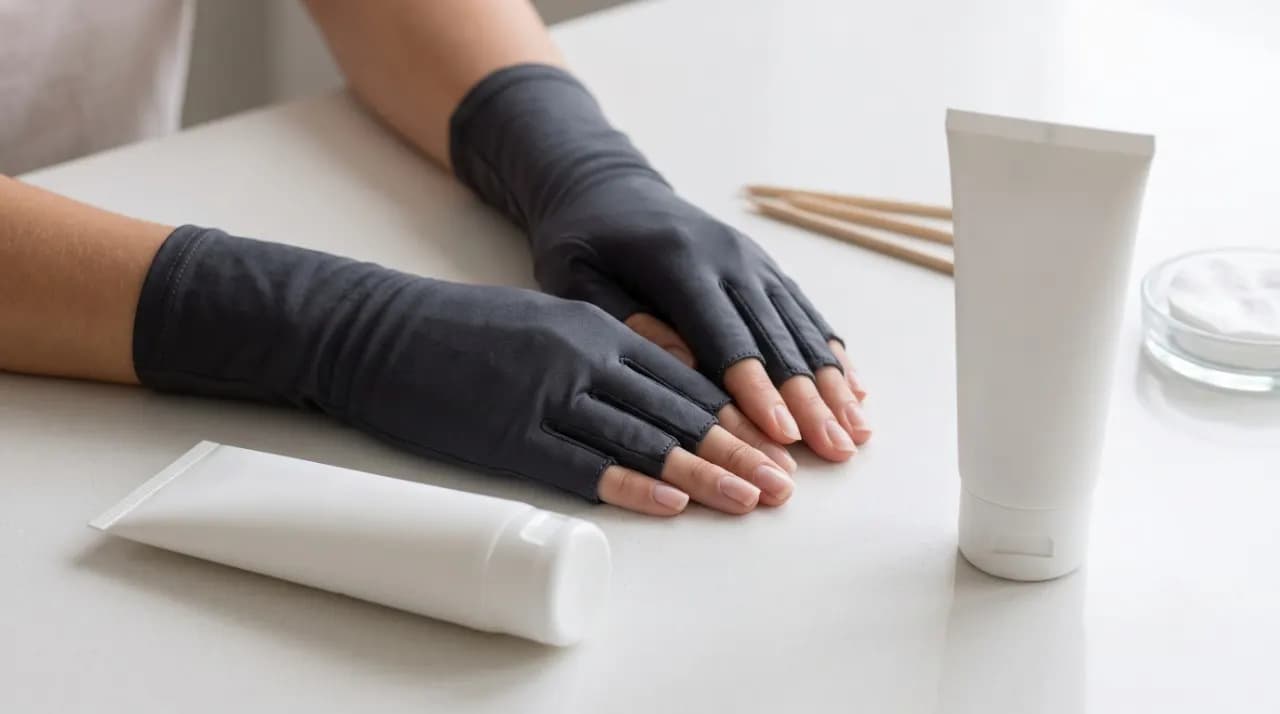
Wear dark, opaque UV-protective fingerless gloves that expose only the nails.
Choose ordinary air-dried polish sometimes, particularly if you have frequent manicures.
Use the lamp only for the curing time required for the product instead of repeating cycles unnecessarily.
Protection does not need to be perfect to be useful. The goal is to reduce repeated, avoidable UVA exposure without treating one manicure as a medical emergency.
The More Predictable Risk: Nail Damage
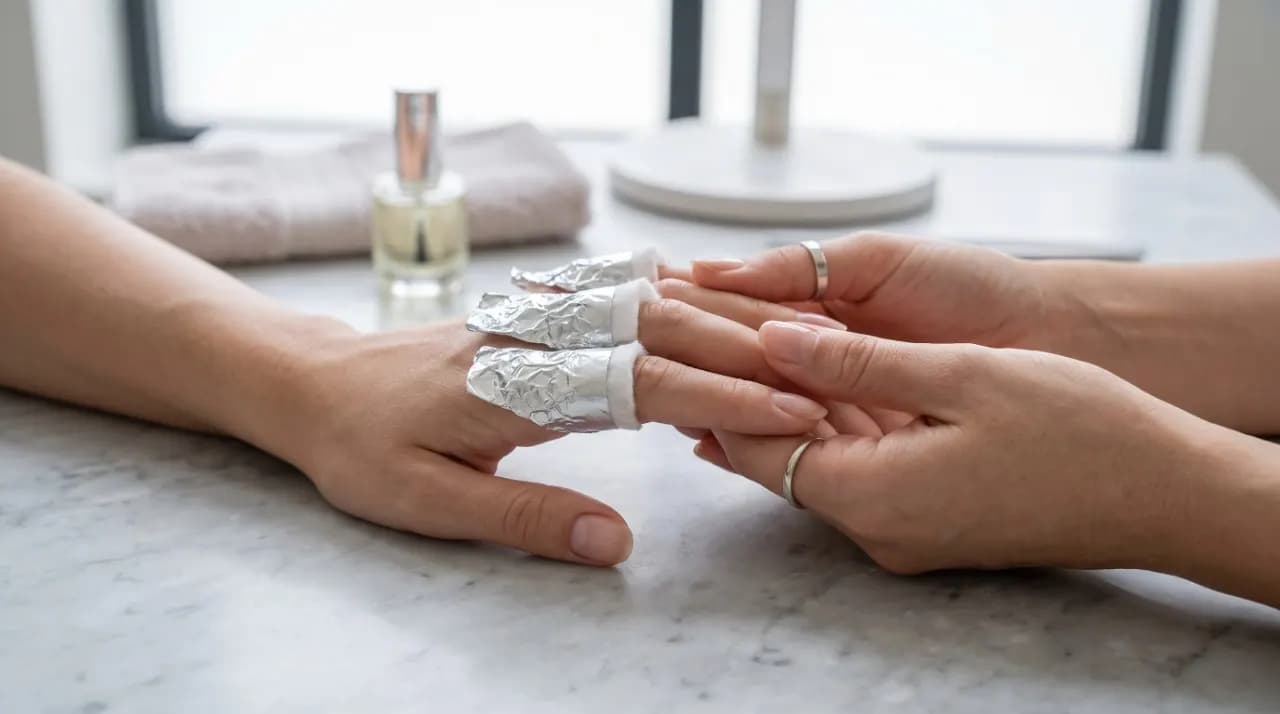
While the cancer question remains uncertain, brittle, peeling and cracked nails are familiar consequences of repeated gel manicures and rough removal. Peeling gel off can remove layers of the natural nail. Aggressive filing can thin the nail plate, while cutting or forcefully pushing cuticles can increase inflammation and infection risk.
Do not pick, peel or scrape gel from the nail.
Ask for gentle removal and avoid unnecessary filing of the natural nail surface.
Leave cuticles intact because they help protect the nail root from germs.
Check that reusable salon tools are cleaned and disinfected between clients.
Take a break from gel when nails become painful, thin, splitting or unusually dry.
A damaged nail normally has to grow out; another coat will not repair it. Keep weakened nails short, moisturise the nails and surrounding skin, and wear gloves during prolonged exposure to water or cleaning products.
When a Nail or Skin Change Needs Attention
See a dermatologist for persistent redness, swelling, pus, pain, nail lifting, a non-healing sore or a changing growth on the hand. A new or changing dark streak beneath a nail also deserves examination. Many dark streaks are not melanoma, but appearance alone cannot safely identify the cause.
A dermatologist may examine the area closely and biopsy a suspicious change when necessary. Do not cover a persistent problem with another manicure or try to treat possible skin cancer with cosmetic products or home remedies.
A Sensible Middle Ground
You do not need to panic or swear off gel forever. The lamps emit UVA, and the laboratory evidence of cellular damage is real. What remains uncertain is how much typical salon use changes a person’s chance of developing skin cancer. For occasional users, the available evidence suggests that any added risk is probably low.
Reference notes
Sources and further reading
- American Academy of Dermatology (opens in a new tab)https://www.aad.org/public/everyday-care/nail-care-secrets/basics/pedicures/gel-manicures
- American Academy of Dermatology (opens in a new tab)https://www.aad.org/public/everyday-care/nail-care-secrets/basics/pedicures/manicure-pedicure-safety
- American Academy of Dermatology (opens in a new tab)https://www.aad.org/public/diseases/skin-cancer/types/common/melanoma/nail-melanoma
Show all 7 sources
- Nature (opens in a new tab)https://www.nature.com/articles/s41467-023-35876-8
- Jamanetwork (opens in a new tab)https://jamanetwork.com/journals/jamadermatology/fullarticle/1862050
- Mdanderson (opens in a new tab)https://www.mdanderson.org/cancerwise/is-your-gel-manicure-safe.h00-159779601.html
- FDA (opens in a new tab)https://www.fda.gov/drugs/special-features/sun-and-your-medicine
Our editorial promise
Prepared with clarity and care.
This guide completed our editorial review before publishing. If something needs attention, report a correction or contact the publisher.
About this article
- Published:
- Last updated:
- Author:
- Ceyora Editorial Team
- Review status:
- Editorially reviewed
- Sources:
- 7
- Corrections:
- Report an issue