
Making tea seems almost too ordinary to hide a scientific question. Put a bag in a cup, pour in hot water, wait a few minutes and remove it.
Yet researchers have repeatedly found that some tea bags can release tiny particles from their materials into the water during brewing. A 2026 systematic review of 19 studies concluded that tea bags, particularly those containing plastic polymers, can be a notable source of micro- and nano plastics.
That finding deserves attention, but not panic. Detecting particles in tea is not the same as proving that ordinary tea-bag use causes cancer or another disease. Exposure is becoming clearer. The long-term health significance is not.
Why Is There Plastic in a Tea Bag?
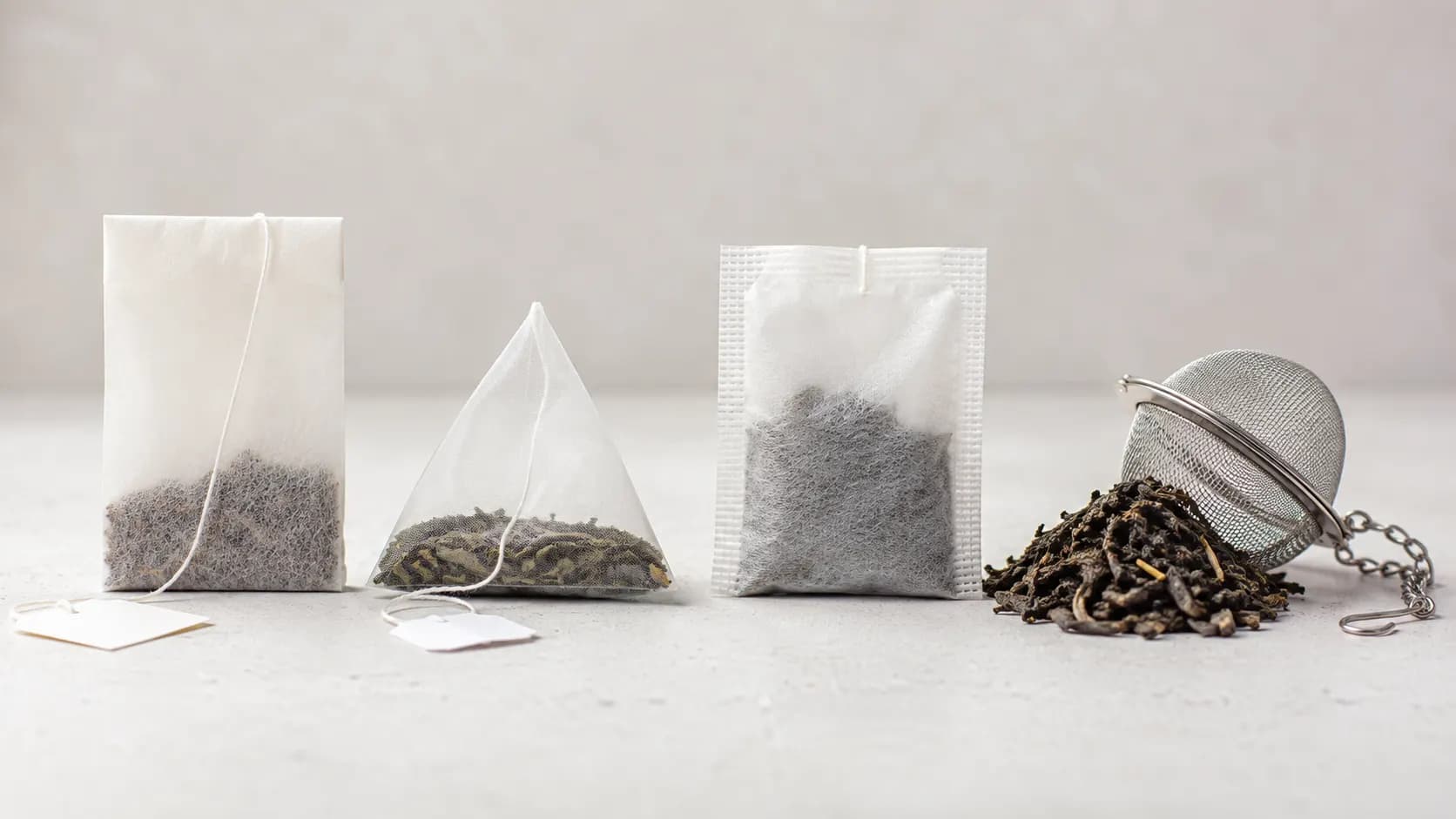
A tea bag that looks like paper is not necessarily made from simple untreated paper. Manufacturers use different materials to provide strength, create mesh, maintain a particular shape or seal the edges.
Studies have examined bags containing materials such as nylon, polypropylene, polyethylene terephthalate, cellulose and combinations of plant-derived fibers with polymers. Some newer bags use materials marketed as biodegradable or compostable.
Those labels can be useful, but they do not automatically mean that a bag is polymer-free or that it releases no microscopic particles into hot water. If this matters to you, manufacturer material information is more useful than judging a bag by whether it looks like paper.
What Happens When Hot Water Hits the Bag?
Microplastics are generally described as plastic particles smaller than 5 millimeters. Nano plastics are dramatically smaller, extending into the nanoscale, where measuring and identifying them becomes much more difficult.
Tea preparation creates a demanding environment for the bag material: very hot water, several minutes of soaking and sometimes squeezing or stirring. Experimental work has found that particle release can increase with brewing temperature and time, although the size and amount detected depend strongly on the material and laboratory method.
Are We Really Talking About Billions of Particles?
Sometimes, under particular experimental conditions. One widely cited 2019 study steeped plastic tea bags at 95°C and reported approximately 11.6 billion microplastic particles and 3.1 billion nano plastic particles from a single tested bag.
That result helped attract global attention to tea-bag materials. It should not, however, be translated into the claim that every cup of tea contains roughly 15 billion plastic particles.
Why Particle Counts Vary So Dramatically
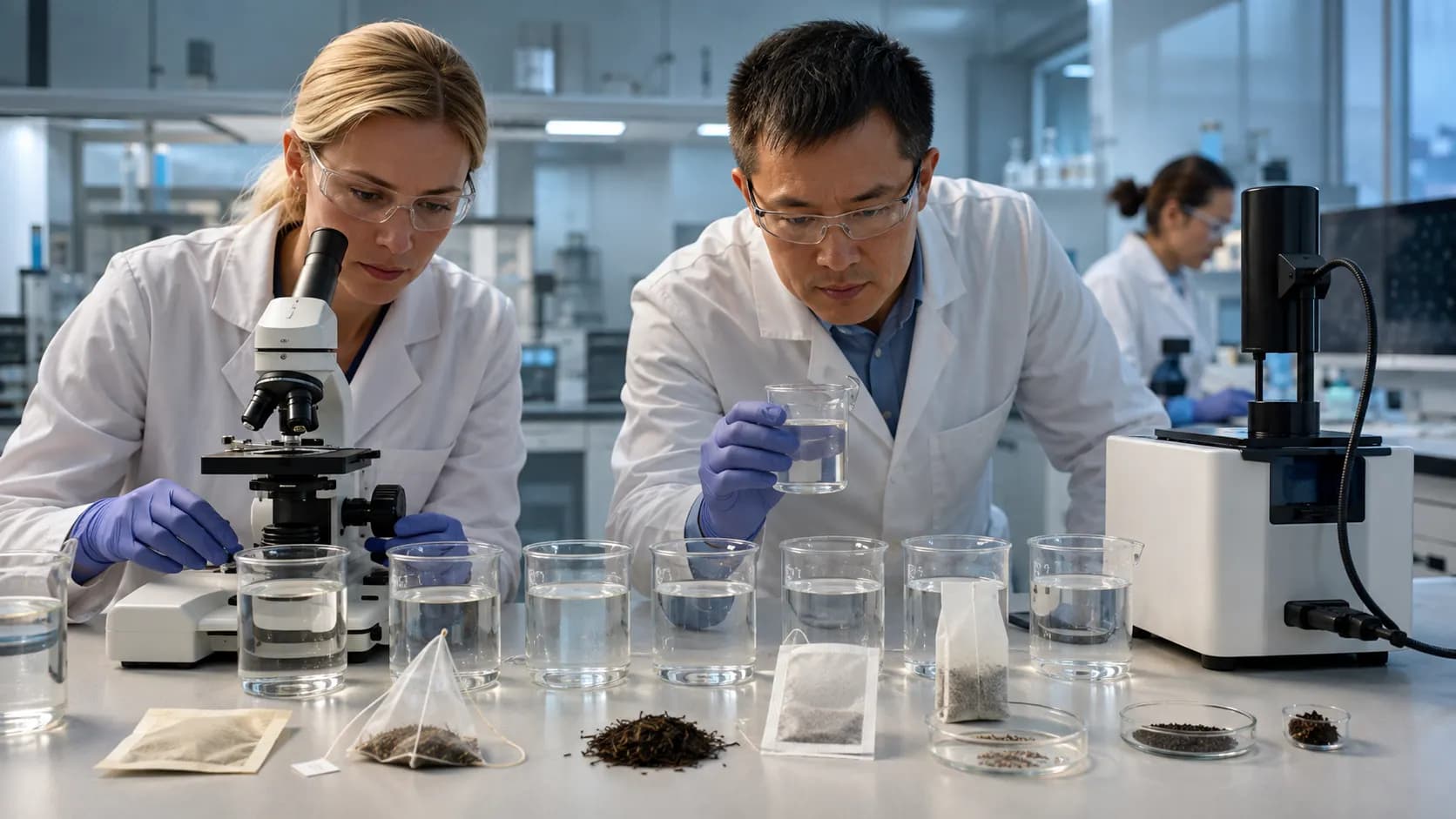
Microplastic research is technically difficult, especially when scientists try to measure extremely small particles. Laboratories may use different microscopes, spectroscopy techniques, filters, size cut-offs and methods for preparing samples.
A 2024 methodological review highlighted just how large the discrepancy can be: one tea-bag study reported billions of particles while another found only around one hundred particles per bag. Differences between brands and materials matter, but analytical methods can also change the answer dramatically.
The 2026 systematic review reached a similar conclusion. Particle release is real, but standardized measurement methods are still needed before researchers can make reliable universal exposure estimates.
Does This Mean Tea Bags Are Dangerous?
Current evidence does not justify saying that drinking tea from a tea bag causes disease in humans.
Scientists have become increasingly capable of detecting micro- and nano plastics in food, drinks and human tissues. But identifying an exposure pathway is only the first part of a health-risk assessment. Researchers also need to know how much enters the body, where particles travel, how long they remain, what biological effects occur at realistic doses and whether those changes translate into disease.
Laboratory studies have shown that very small tea-bag-derived particles can interact with cultured intestinal cells. Those experiments are useful for investigating mechanisms, but they cannot tell us that someone drinking several cups of tea will develop the same effects inside the body.

Keep reading
Pizza Can Be Part of a Balanced Meal If You Build It Better
Are Paper Tea Bags Automatically Better?
Not necessarily. Some paper-like bags contain polymer components or are made from composite materials. Research has also detected particles from some cellulose-containing bags.
That does not mean every paper bag is equivalent to a nylon mesh bag. It means categories such as paper, biodegradable and compostable are too broad to answer the question by themselves.
What About Pyramid Tea Bags?
The silky mesh of a pyramid bag can make its construction look obviously different from a traditional sachet. Some pyramid-style products have used nylon, PET or other polymers, and plastic tea bags have featured prominently in particle-release experiments.
But shape is not material. Not every pyramid bag is made from the same polymer, so check the manufacturer's specification rather than assuming every pyramid-shaped product contains conventional plastic.
Are Biodegradable Tea Bags Plastic-Free?
Biodegradable, compostable and plastic-free do not necessarily mean the same thing. A biodegradable bag may contain a polymer designed to break down under particular environmental or industrial-composting conditions.
Reviews have reported measurable particle release from some biodegradable and plastic-cellulose composite tea bags. If your aim is specifically to avoid polymer-containing tea bags, look for clear information about the material rather than relying on an environmental marketing term alone.
Is Loose-Leaf Tea the Simplest Alternative?
If you want to reduce exposure from the bag itself without giving up tea, loose-leaf brewing is the most straightforward option.
Use loose tea with a stainless-steel infuser.
Use a ceramic or glass strainer designed for loose tea.
Choose tea bags whose manufacturers clearly identify them as plastic-free if you prefer the convenience of bags.
Do not assume a paper-looking or biodegradable bag is automatically polymer-free.
Replace damaged plastic brewing accessories when practical.
Loose-leaf tea does not guarantee a completely microplastic-free drink. Particles can enter food and water through environmental contamination, production, packaging and other sources. It simply removes the disposable tea bag as one particular potential source.
Should You Stop Drinking Tea?
The current tea-bag research does not support telling everyone to stop drinking tea. The leaves and the packaging are separate questions.
If the uncertainty bothers you, changing the brewing method is a much more proportionate response than abandoning tea altogether. Loose leaves and a reusable non-plastic infuser allow you to keep the drink while removing the bag from the equation.
The Other Tea Risk Worth Knowing About
There is another issue that has nothing to do with microplastics: temperature. The International Agency for Research on Cancer classifies drinking beverages above 65°C as probably carcinogenic to humans because of evidence linking repeated consumption of very hot drinks with esophageal cancer.
A large 2025 UK Biobank study also found that people reporting a preference for hot or very hot tea and coffee had a higher incidence of esophageal squamous cell carcinoma than people who drank their beverages warm or did not drink them.
The concern is the repeated thermal exposure, not tea itself. Allowing a very hot drink to cool before drinking is therefore a separate practical consideration from choosing a tea-bag material.
What the Research Really Tells Us
The strongest conclusion is narrower than many viral headlines suggest. Some tea bags release micro- and nano plastics into hot water, and the material, temperature, brewing time and measurement method can all affect how much is detected.
What remains unresolved is the part people care about most: how much this specific exposure matters to long-term human health.
Reference notes
Sources and further reading
- NIH (opens in a new tab)https://pubmed.ncbi.nlm.nih.gov/42099858/
- NIH (opens in a new tab)https://pubmed.ncbi.nlm.nih.gov/39608112/
- NIH (opens in a new tab)https://pubmed.ncbi.nlm.nih.gov/31552738/
- NIH (opens in a new tab)https://pubmed.ncbi.nlm.nih.gov/41096345/
- NIH (opens in a new tab)https://pubmed.ncbi.nlm.nih.gov/38462817/
- NIH (opens in a new tab)https://pubmed.ncbi.nlm.nih.gov/39542373/
- WHO (opens in a new tab)https://www.iarc.who.int/media-centre-iarc-news-drinking-very-hot-beverages/
- NIH (opens in a new tab)https://pubmed.ncbi.nlm.nih.gov/39972189/
Our editorial promise
Prepared with clarity and care.
This guide completed our editorial review before publishing. If something needs attention, report a correction or contact the publisher.
About this article
- Published:
- Last updated:
- Author:
- Ceyora Editorial Team
- Review status:
- Editorially reviewed
- Sources:
- 8
- Corrections:
- Report an issue