
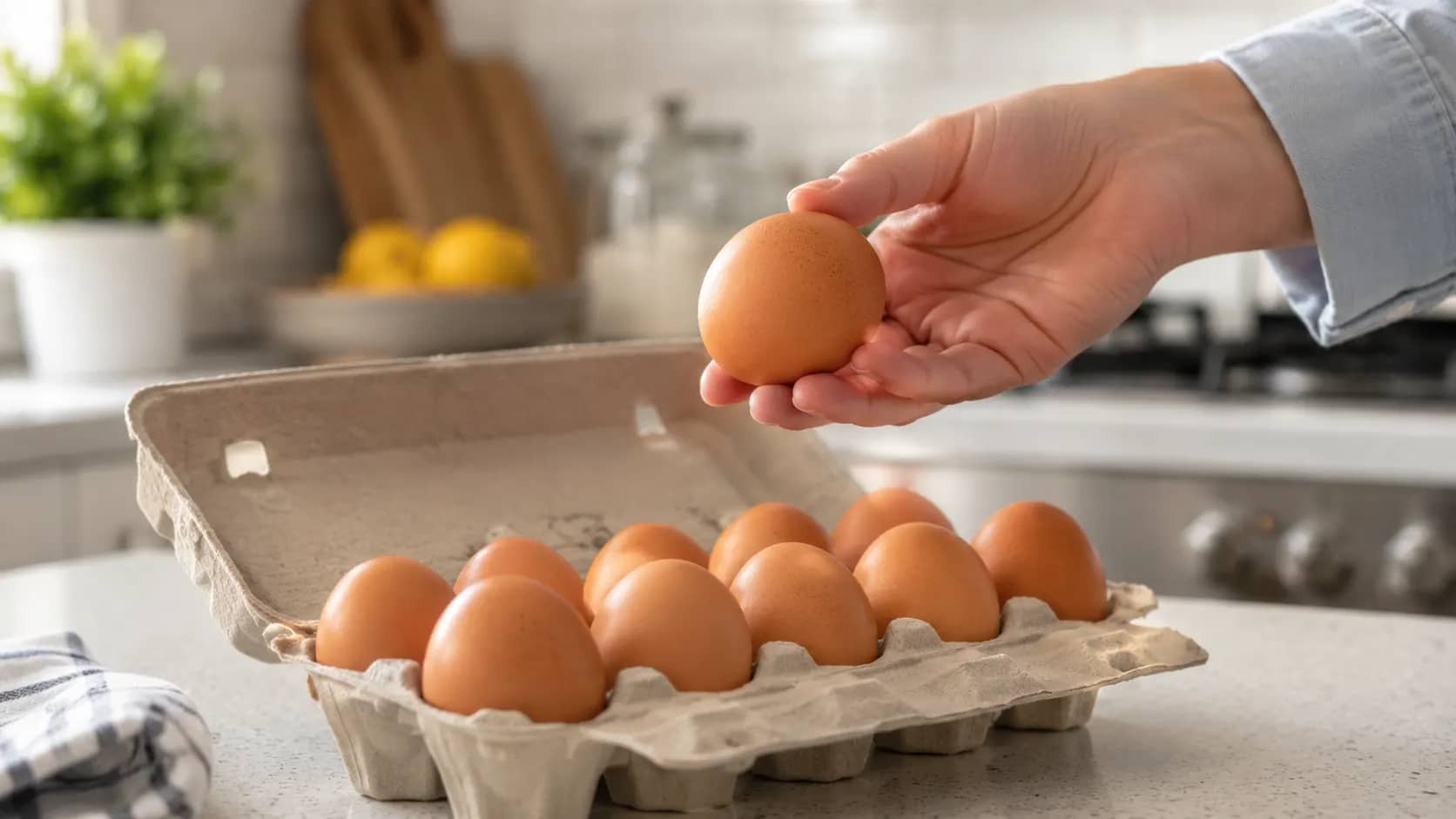
A major egg recall can make Salmonella sound like something that happens only when food has obviously gone wrong. But one of the most important facts about egg safety is much less visible: a fresh egg can have a clean, uncracked shell and still contain Salmonella.
The current U.S. outbreak is a useful reminder. In its July 24, 2026 update, the FDA reported 98 illnesses across 17 states, including 26 hospitalizations and no reported deaths. More than 1.5 million dozen eggs produced by Midwest Poultry Services were recalled, although investigators said that the producer did not explain every illness and the investigation remained ongoing.
The outbreak will eventually end. The more useful lesson is evergreen: you cannot judge an egg's microbiological safety simply by looking at the shell.
How Can Salmonella Get Inside a Clean Egg?
It helps to separate two different routes of contamination: contamination that happens before an egg is laid and contamination that happens around or after laying.
Contamination Can Happen Before the Shell Forms
According to the U.S. Department of Agriculture, Salmonella Enteritidis can contaminate a developing egg inside an infected hen's reproductive tract. In that situation, bacteria can reach the yolk or white before the shell forms around them.
This explains something that often seems counterintuitive: an intact shell is useful protection against contamination from the outside, but it cannot prevent contamination that happened before the shell existed.
The Shell Can Be Contaminated Too
An egg can also encounter bacteria as it is laid or from its environment afterward. USDA notes that eggshells contain pores and that bacteria can potentially enter through them after laying.
Cracked eggs create an especially obvious route for contamination, which is why food-safety agencies advise choosing intact shells. But an uncracked shell reduces one type of risk; it does not prove the contents are sterile.

Can You Tell If an Egg Has Salmonella?
Usually, no. FDA guidance explicitly warns that fresh eggs with clean, uncracked shells may contain Salmonella.
That is different from ordinary spoilage. A rotten egg may develop obvious quality problems, but the absence of an unusual appearance does not establish that a raw egg is free of a disease-causing bacterium.
This is why the safest approach is not to inspect an egg and decide whether it looks trustworthy. It is to reduce risk through production controls, appropriate storage, clean handling, pasteurization when needed and adequate cooking.
Does Cooking Kill Salmonella in Eggs?
Adequate heat is one of the most effective protections available in the kitchen.
CDC lists eggs cooked until both the yolk and white are firm as the safer choice compared with raw or undercooked eggs. For dishes such as frittatas, quiches and casseroles that contain egg but no meat or poultry, CDC recommends an internal temperature of 160°F, about 71°C. Egg dishes containing meat or poultry should reach 165°F, about 74°C.
The exact cooking method matters less than whether enough heat reaches the food. A browned edge or hot pan does not tell you what temperature the centre of a thick egg dish reached.
Are Runny Eggs Unsafe?
Raw and runny eggs are riskier than thoroughly cooked eggs. That does not mean every soft yolk contains Salmonella or that eating one guarantees illness.
It means the egg has not received the same Salmonella-killing heat treatment as an egg cooked until both the white and yolk are firm.
For someone who wants a recipe containing raw or lightly cooked egg, pasteurized shell eggs or pasteurized egg products provide another option. Pasteurization uses a controlled treatment intended to destroy Salmonella without fully cooking the egg.

What About Tiramisu, Mayonnaise and Caesar Dressing?
Some popular foods traditionally use eggs that receive little or no cooking. Depending on the recipe, that can include homemade mayonnaise, Caesar dressing, mousse, eggnog, tiramisu, hollandaise-style sauces and homemade ice cream.
FDA and CDC guidance recommends pasteurized eggs or pasteurized egg products for foods that will not be cooked to a temperature sufficient to control Salmonella.
Raw cookie dough needs extra caution. Changing to pasteurized eggs does not automatically make ordinary raw dough safe, because uncooked flour can also carry harmful germs. CDC lists dough made with heat-treated flour and pasteurized eggs, or a product specifically labelled as safe to eat raw, as safer options.

Keep reading
What Happens When You Drink Milk Every Day?
Why Refrigeration Still Matters
Cold storage does not sterilize an egg. Its job is to limit bacterial growth and help prevent a small contamination problem from becoming a larger one.
In the United States, untreated shell eggs held for retail distribution must be refrigerated at an ambient temperature of 45°F, or 7.2°C, or below. FDA consumer guidance recommends storing eggs promptly in a home refrigerator at 40°F, or about 4.4°C, or below.
USDA also advises that once refrigerated eggs are cold, they should remain refrigerated. A cold egg left at room temperature can develop condensation on its shell, and warmer conditions allow bacteria to multiply more readily.
Should You Wash Eggs Before Cooking?
For commercially packaged eggs in the United States, USDA says consumers should not wash them before use.
Commercially processed USDA-graded eggs have already been washed and sanitized under controlled conditions. Washing them again at home can create another contamination opportunity, and USDA warns that improperly controlled wash water can be drawn through pores in the shell.
This advice should not be turned into a universal rule for every egg in every country. Egg-processing practices differ internationally, and eggs from backyard flocks may require different handling from commercially packaged supermarket eggs. Local food-safety guidance should take priority.
Who Should Be Most Careful With Raw or Runny Eggs?
Anyone can develop salmonellosis, but some people have a greater chance of serious illness.
Children younger than 5
Adults aged 65 and older
Pregnant people
People with weakened immune systems
For these groups, choosing thoroughly cooked eggs or pasteurized eggs for recipes that remain raw or lightly cooked is particularly important.
What Does Salmonella Infection Feel Like?
According to the CDC, symptoms most often include diarrhea, fever and stomach cramps. Nausea, vomiting, headache and loss of appetite can also occur.
Symptoms can begin from about 6 hours to 6 days after infection and commonly last 4 to 7 days. Most people recover without specific treatment, but some infections become serious.
When Should You Contact a Doctor?
CDC advises contacting a healthcare professional for concerning symptoms such as diarrhea or vomiting lasting more than two days, bloody stool, a fever above 102°F, or signs of dehydration such as very little urination, intense thirst, dry mouth, dark urine or dizziness.
People at greater risk of severe foodborne illness should seek medical guidance promptly when symptoms are concerning rather than relying only on general online advice.
What Should You Do During an Egg Recall?
An egg recall does not automatically mean every egg in every supermarket or refrigerator is affected.
Official recall notices identify the products involved using details such as brand, producer or plant code, package size, date code and distribution area.
Use the official food-safety agency or recall notice rather than relying on a social-media screenshot.
Compare the brand, producer or plant code, package size and relevant dates with the carton in your refrigerator.
Do not eat, serve or sell a product confirmed to be part of the recall.
Follow the recall notice's instructions to discard the eggs or return them to the place of purchase.
Clean and sanitize containers, refrigerator areas, utensils or surfaces that recalled eggs may have contacted.
For the ongoing 2026 U.S. investigation, FDA identifies the recalled Midwest Poultry Services products by specific carton codes and date ranges. Those details matter more than simply knowing that the outbreak involves eggs.

Egg Safety Is About Reducing Risk, Not Fearing Eggs
Learning that a perfect-looking egg can contain Salmonella sounds alarming only if the story stops there.
Egg safety does not depend on one defence. Producers use sanitation, flock controls, testing and refrigeration. Consumers can avoid cracked eggs, keep eggs at the appropriate temperature, prevent cross-contamination, use pasteurized eggs when a recipe remains raw and cook eggs adequately when they want the lowest practical risk.
The useful lesson from an outbreak is therefore not that eggs have suddenly become dangerous. It is that food safety often depends on things we cannot see.
A spotless shell can tell you something about the egg's condition. It cannot tell you everything about what is inside.
Reference notes
Sources and further reading
- FDA (opens in a new tab)https://www.fda.gov/food/outbreaks-foodborne-illness/outbreak-investigation-salmonella-eggs-july-2026
- FDA (opens in a new tab)https://www.fda.gov/safety/recalls-market-withdrawals-safety-alerts/midwest-poultry-services-lp-recalls-shell-eggs-due-possible-salmonella-enteritidis-contamination
- FDA (opens in a new tab)https://www.fda.gov/food/buy-store-serve-safe-food/what-you-need-know-about-egg-safety
Show all 10 sources
- FDA (opens in a new tab)https://www.fda.gov/food/retail-food-industryregulatory-assistance-training/assuring-safety-eggs-and-menu-and-deli-items-made-raw-shell-eggs
- FDA (opens in a new tab)https://www.fda.gov/food/egg-guidance-regulation-and-other-information/egg-safety-final-rule
- USDA (opens in a new tab)https://ask.fsis.usda.gov/article/How-does-Salmonella-contaminate-eggs
- USDA (opens in a new tab)https://ask.fsis.usda.gov/article/Should-eggs-be-washed-before-they-are-used
- USDA (opens in a new tab)https://www.fsis.usda.gov/food-safety/safe-food-handling-and-preparation/eggs/shell-eggs-farm-table
- CDC (opens in a new tab)https://www.cdc.gov/food-safety/foods/safer-food-choices.html
- CDC (opens in a new tab)https://www.cdc.gov/salmonella/signs-symptoms/index.html
Our editorial promise
Prepared with clarity and care.
This guide completed our editorial review before publishing. If something needs attention, report a correction or contact the publisher.
About this article
- Published:
- Last updated:
- Author:
- Ceyora Editorial Team
- Review status:
- Editorially reviewed
- Sources:
- 10
- Corrections:
- Report an issue