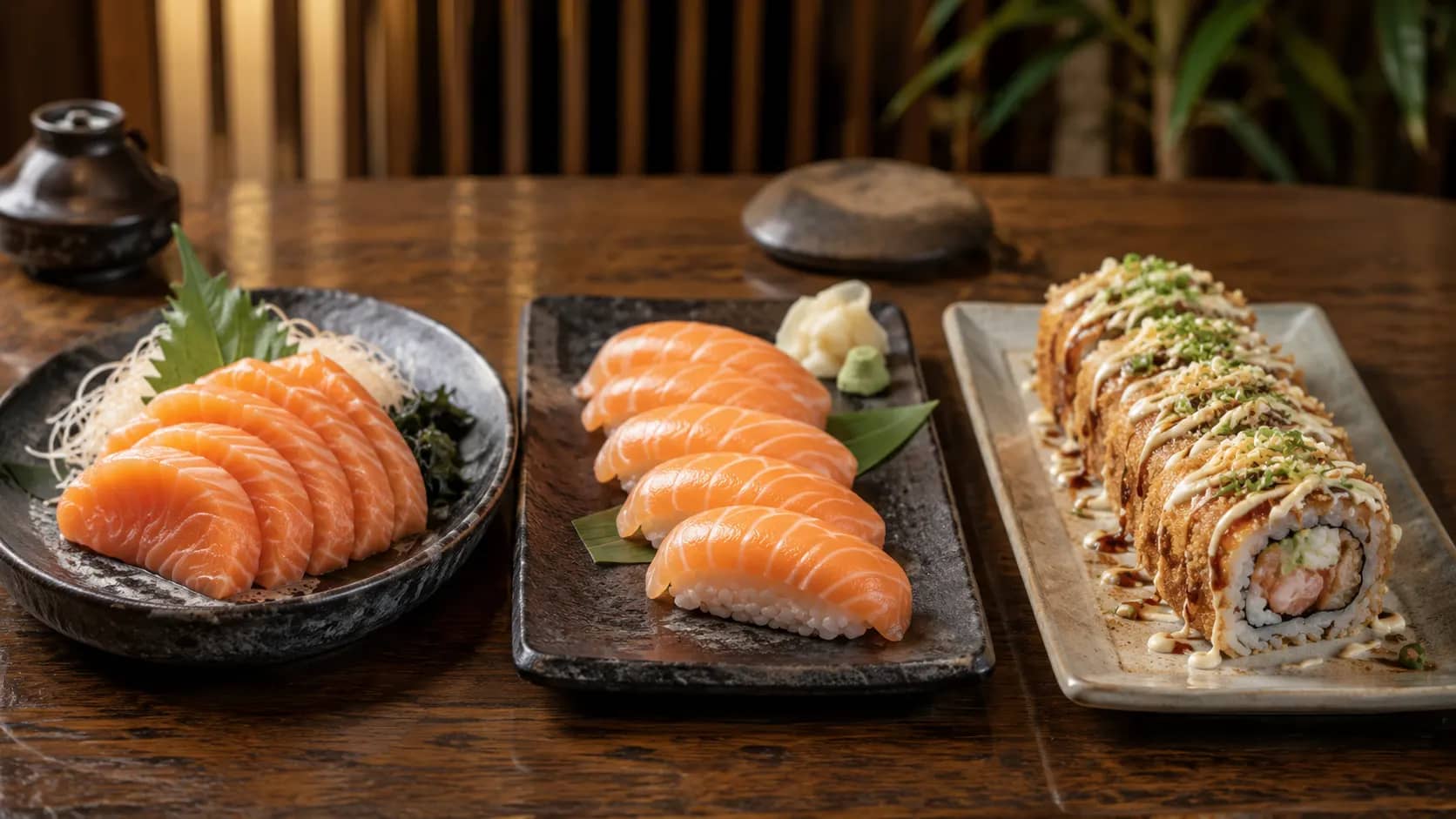
Place salmon sashimi, salmon nigiri, and a fried roll covered in creamy sauce side by side. All three can appear on a sushi menu, but nutritionally they are very different meals.
That is why asking whether sushi is healthy does not have a simple yes-or-no answer. Some choices provide fish, protein and useful nutrients in relatively simple portions. Others combine large amounts of rice, fried fillings, cream cheese, mayonnaise-based toppings and salty or sweet sauces.
Raw seafood adds another consideration: food safety. The useful question is not whether sushi as a category is healthy. It is what kind of sushi is actually on your plate.
Sushi Is Not One Food
One common misconception is that sushi means raw fish. Sushi is built around seasoned vinegared rice and can contain raw or cooked seafood, vegetables, egg, tofu and many other ingredients.
Sashimi is different because it generally consists of sliced fish or seafood without sushi rice. Nigiri combines a small portion of rice with a topping, while maki rolls wrap rice and fillings in seaweed or another outer layer.
Once restaurant creativity enters the picture, the possibilities expand dramatically. A roll might contain fried shrimp, avocado, cream cheese and mayonnaise before being topped with another sauce. It is still sushi, but it should not be nutritionally compared with a few pieces of plain nigiri.
What Can Make Sushi a Nutritious Meal?
Sushi can be a nutritious meal when the ingredients stay relatively simple and the balance works in your favour. Fish can provide protein and useful micronutrients, while vegetables, seaweed and modest portions of rice can add variety without turning the meal into something excessively heavy. The details matter more than the label “sushi.”
Fish Provides Protein and Micronutrients
Fish and seafood can provide high-quality protein along with nutrients such as vitamin B12, selenium, iodine and vitamin D, depending on the species. Oily fish such as salmon can also provide the long-chain omega-3 fats EPA and DHA.
The FDA continues to encourage eating fish as part of a healthy dietary pattern while recommending variety and lower-mercury choices, particularly for people who are pregnant or breastfeeding and for children.
Seaweed and Vegetables Add Variety
Nori and other seaweeds can contribute iodine and other nutrients, while fillings such as cucumber, avocado, radish and vegetables add variety.
The portion is worth remembering. A thin strip of cucumber inside one roll is not the same as eating a full serving of vegetables, so a vegetable side can still improve the overall balance of the meal.
The Rice Is Not Bad but It Can Add Up
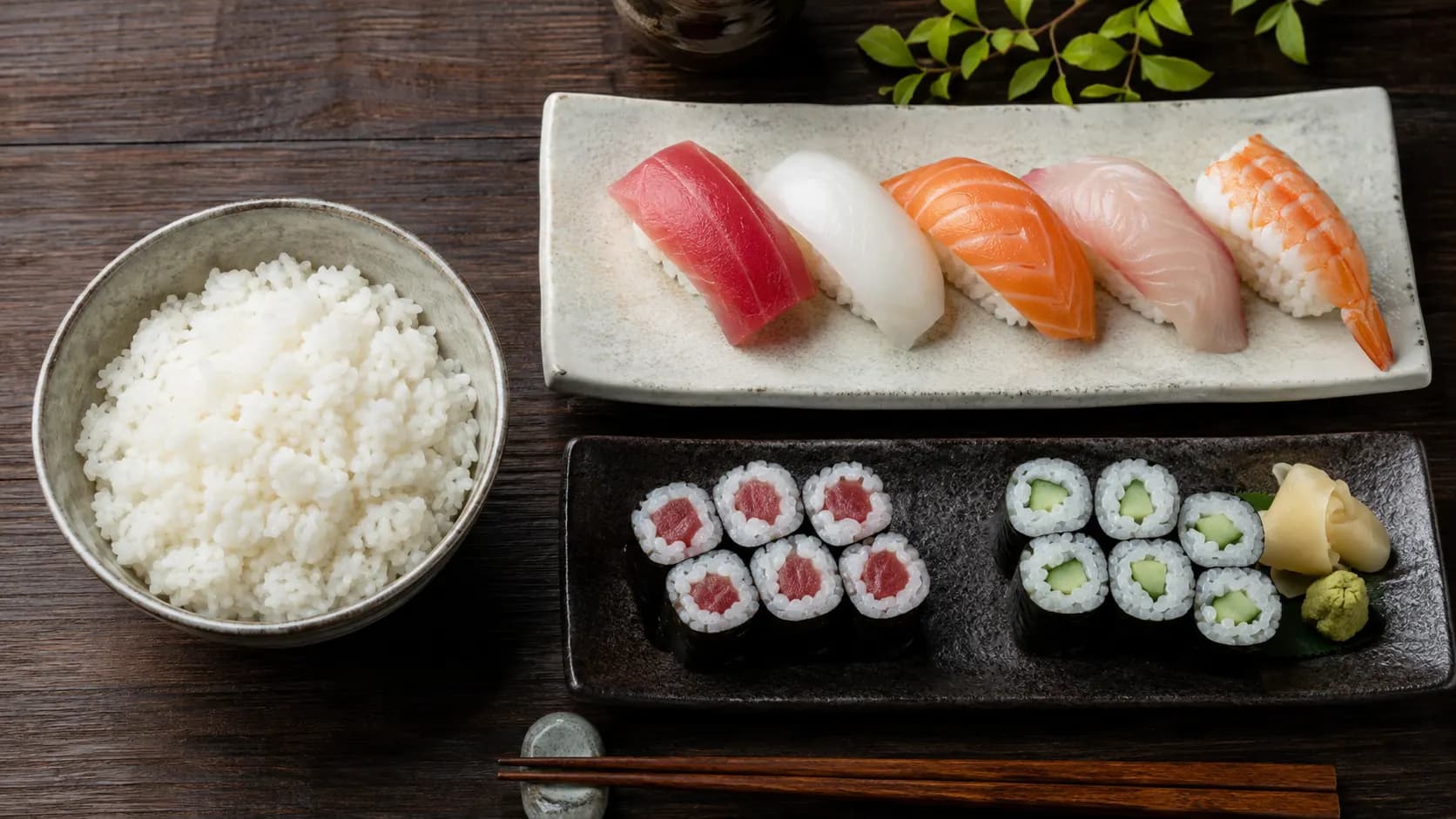
Sushi rice provides carbohydrate and is traditionally seasoned with vinegar along with some sugar and salt. There is no reason to treat the rice itself as a problem.
What can surprise people is the total portion. Each individual piece contains relatively little rice, but several large rolls can collectively contain far more than it appears when everything is divided into bite-sized pieces.
If you want a lighter rice portion, you do not need to avoid rice completely. Mixing nigiri or a simple roll with sashimi, vegetables or another side changes the balance without turning dinner into a restrictive exercise.
Why Some Sushi Becomes Much Heavier
Tempura fillings add oil through deep frying.
Mayonnaise-based toppings and creamy sauces can increase energy quickly.
Cream cheese changes both the calorie and saturated-fat profile of a roll.
Sweet eel, teriyaki-style and specialty sauces can contribute sugar and sodium.
Large specialty rolls may combine rice, fried seafood, avocado and several sauces in one order.
There is nothing wrong with enjoying an elaborate roll. The important point is simply that it is a different meal from plain sashimi, nigiri or a simple fish-and-vegetable roll.
Is Soy Sauce the Hidden Problem?
Sodium can accumulate faster than people expect. Sushi rice is seasoned, fillings and sauces may contain salt, and soy sauce adds another concentrated source.
A New Zealand dietary study found that sushi rice and sauces were major contributors to the sodium in the sushi eaten by participants. The exact amount varies enormously between recipes and restaurants, which is why one universal sodium figure for a sushi meal is not useful.
Is Raw Sushi Safe?
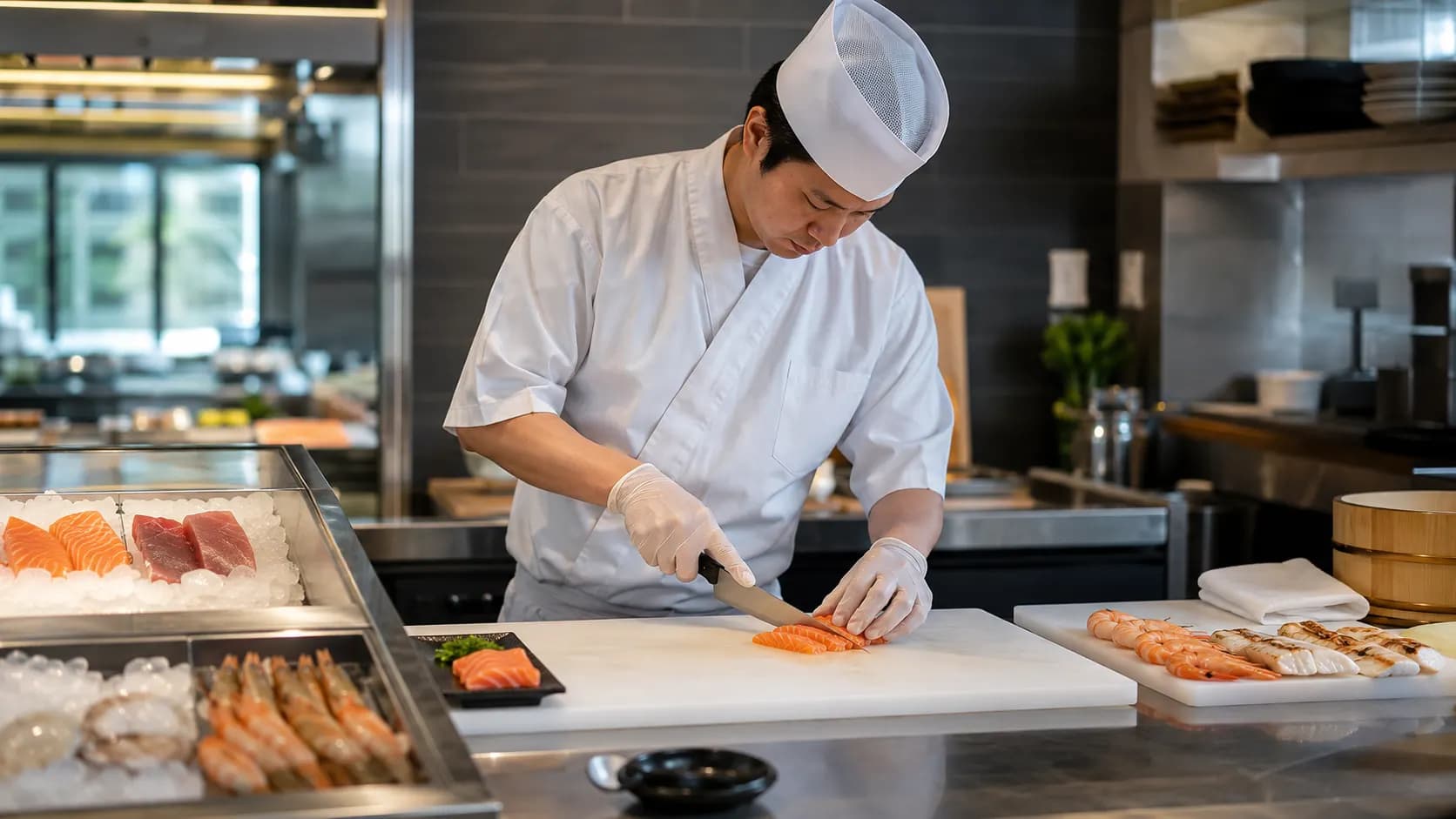
Proper handling can reduce risk, but raw fish is not completely risk-free. The CDC states that anyone who eats raw or undercooked fish or squid can acquire anisakiasis, an infection caused by parasitic worms.
Raw seafood can also carry harmful microorganisms if it is contaminated or handled improperly. Condiments such as wasabi should not be treated as a safety system.
Does Freezing Make Raw Fish Safe?
Keep reading
Iron Rich Foods That Actually Support Healthy Energy Levels
Appropriate freezing is an important control for parasites in fish intended to be eaten raw. FDA and CDC guidance includes specific temperature-and-time combinations designed to kill parasites.
Freezing does not eliminate every food-safety problem. The FDA specifically warns that freezing does not kill all harmful germs, which is why thoroughly cooked seafood remains the safer option.
Who Should Be More Careful With Raw Sushi?
Some people have a greater chance of becoming seriously ill from foodborne infections. FDA guidance identifies pregnant people, young children, older adults and people with weakened immune systems among groups who should avoid raw or undercooked seafood.
Pregnancy guidance does not mean avoiding seafood altogether. FDA and EPA continue to recommend appropriately selected cooked fish during pregnancy because fish supplies important nutrients. The emphasis is on cooked, lower-mercury choices rather than raw sushi.
What About Mercury?
Mercury is another reason that the type of fish matters, especially for people who eat sushi frequently.
Nearly all fish contain at least traces of methylmercury, but levels differ substantially. Larger, longer-lived predatory species tend to accumulate more because mercury builds up through the food chain.
FDA and EPA therefore recommend eating a variety of fish and choosing lower-mercury species more often. Bigeye tuna, for example, appears in the FDA's highest-mercury category for people who are pregnant, breastfeeding or feeding children.
Cooking does not remove mercury from the fish. Choosing the species and varying what you eat are useful controls.
Sashimi vs. Nigiri vs. Rolls: Which Is Healthier?
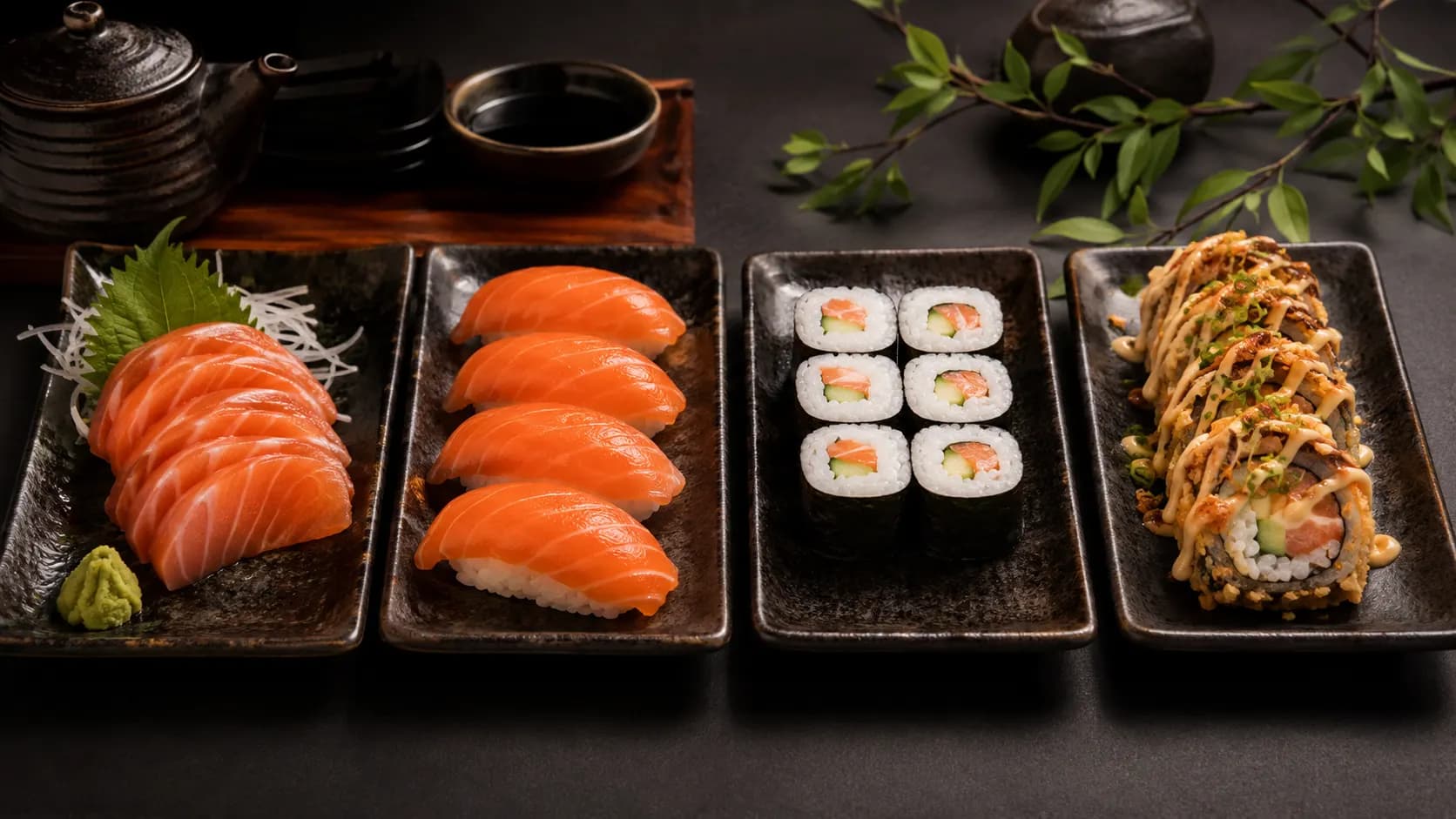
Sashimi
Mostly fish without sushi rice. It can provide protein without a large rice portion, but the same raw-seafood precautions still apply.
Nigiri
A slice of fish or another topping over a small amount of seasoned rice. It offers an easy way to see roughly how much fish and rice you are eating.
Simple Maki
Basic rolls containing fish, vegetables and rice can be a practical middle ground, although the balance varies with how much rice and filling are used.
Fried and Specialty Rolls
These can contain more oil, sauce and energy because several rich ingredients may be combined. They are not forbidden foods; they are simply different from plain fish-and-rice sushi.
What Might a Balanced Sushi Meal Look Like?
There is no perfect order, but a meal might combine a simple salmon, tuna or cooked-seafood roll with several pieces of nigiri, edamame or a vegetable side and a modest amount of soy sauce.
Water or unsweetened tea keeps the drink simple. Someone avoiding raw seafood can choose cooked salmon, shrimp, crab, eel, egg, tofu or vegetable options depending on the restaurant and individual dietary needs.
The point is not to optimise every bite. It is to recognise that you can change the balance of a sushi meal without giving up the foods you enjoy.
Is Supermarket Sushi Different?
Prepared supermarket sushi can be convenient, but refrigeration and storage instructions matter, particularly when seafood is raw.
Choose products kept properly refrigerated, check use-by information and follow the storage instructions on the package. Do not leave perishable sushi sitting at room temperature for prolonged periods.
The Bottom Line
Sushi is neither automatically healthy nor automatically unhealthy.
A simple plate built around fish, rice and vegetables can provide protein and useful nutrients. A large order of fried rolls, creamy toppings and generous soy sauce is a very different meal despite carrying the same sushi label.
Reference notes
Sources and further reading
- FDA (opens in a new tab)https://www.fda.gov/food/consumers/advice-about-eating-fish
- FDA (opens in a new tab)https://www.fda.gov/food/consumers/questions-answers-fdaepa-advice-about-eating-fish-those-who-might-become-or-are-pregnant-or
- FDA (opens in a new tab)https://www.fda.gov/food/buy-store-serve-safe-food/selecting-and-serving-fresh-and-frozen-seafood-safely
Show all 8 sources
- CDC (opens in a new tab)https://www.cdc.gov/anisakiasis/about/index.html
- FDA (opens in a new tab)https://www.fda.gov/food/seafood-guidance-documents-regulatory-information/fish-and-fishery-products-hazards-and-controls
- FDA (opens in a new tab)https://www.fda.gov/food/people-risk-foodborne-illness/meat-poultry-seafood-food-safety-moms-be
- FDA (opens in a new tab)https://www.fda.gov/food/environmental-contaminants-food/mercury-food-and-dietary-supplements
- NIH (opens in a new tab)https://pmc.ncbi.nlm.nih.gov/articles/PMC9893271/
Our editorial promise
Prepared with clarity and care.
This guide completed our editorial review before publishing. If something needs attention, report a correction or contact the publisher.
About this article
- Published:
- Last updated:
- Author:
- Ceyora Editorial Team
- Review status:
- Editorially reviewed
- Sources:
- 8
- Corrections:
- Report an issue