
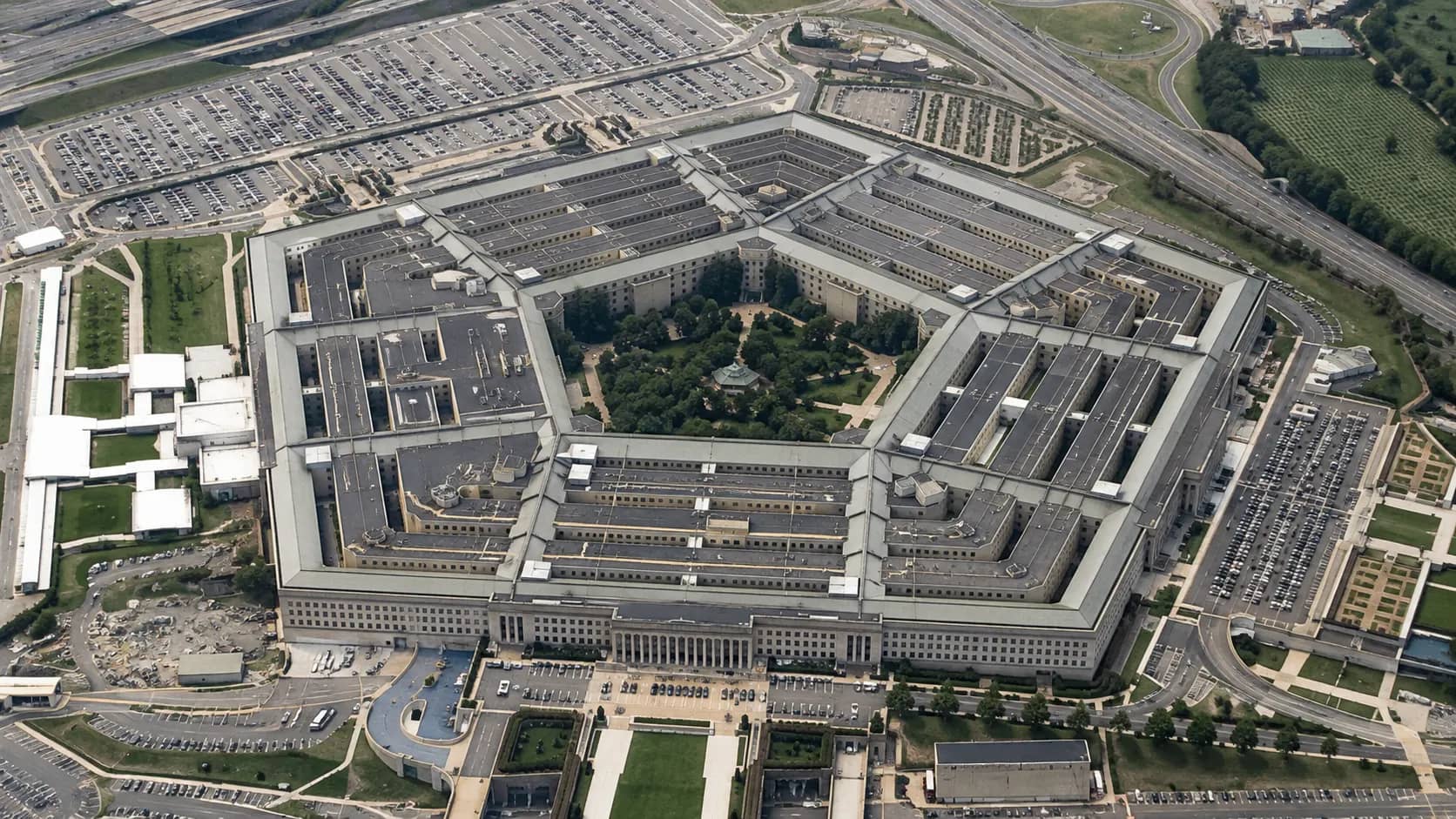
The Pentagon's shape looks so deliberate that it is easy to invent a symbolic explanation for it.
Perhaps five sides represented five military branches. Perhaps planners wanted a dramatic geometric headquarters from the beginning.
The real explanation is much more accidental. The building was first designed for a different site whose surrounding roads pushed architects toward a five-sided plan. President Franklin D. Roosevelt then moved the project to another location, but the pentagonal design came with it.
Why Was the Pentagon Built?
By the summer of 1941, the U.S. War Department was expanding rapidly as the country prepared for the possibility of entering the Second World War.
More than 24,000 military and civilian employees in the Washington area were scattered across 17 buildings, and that number was expected to keep rising.
Brigadier General Brehon B. Somervell wanted one enormous headquarters that could bring much of that workforce together. In July 1941, he gave his team only a few days to produce a basic design for millions of square feet of office space.
Why Exactly Does It Have Five Sides?
The answer begins at Arlington Farms, the first proposed location.
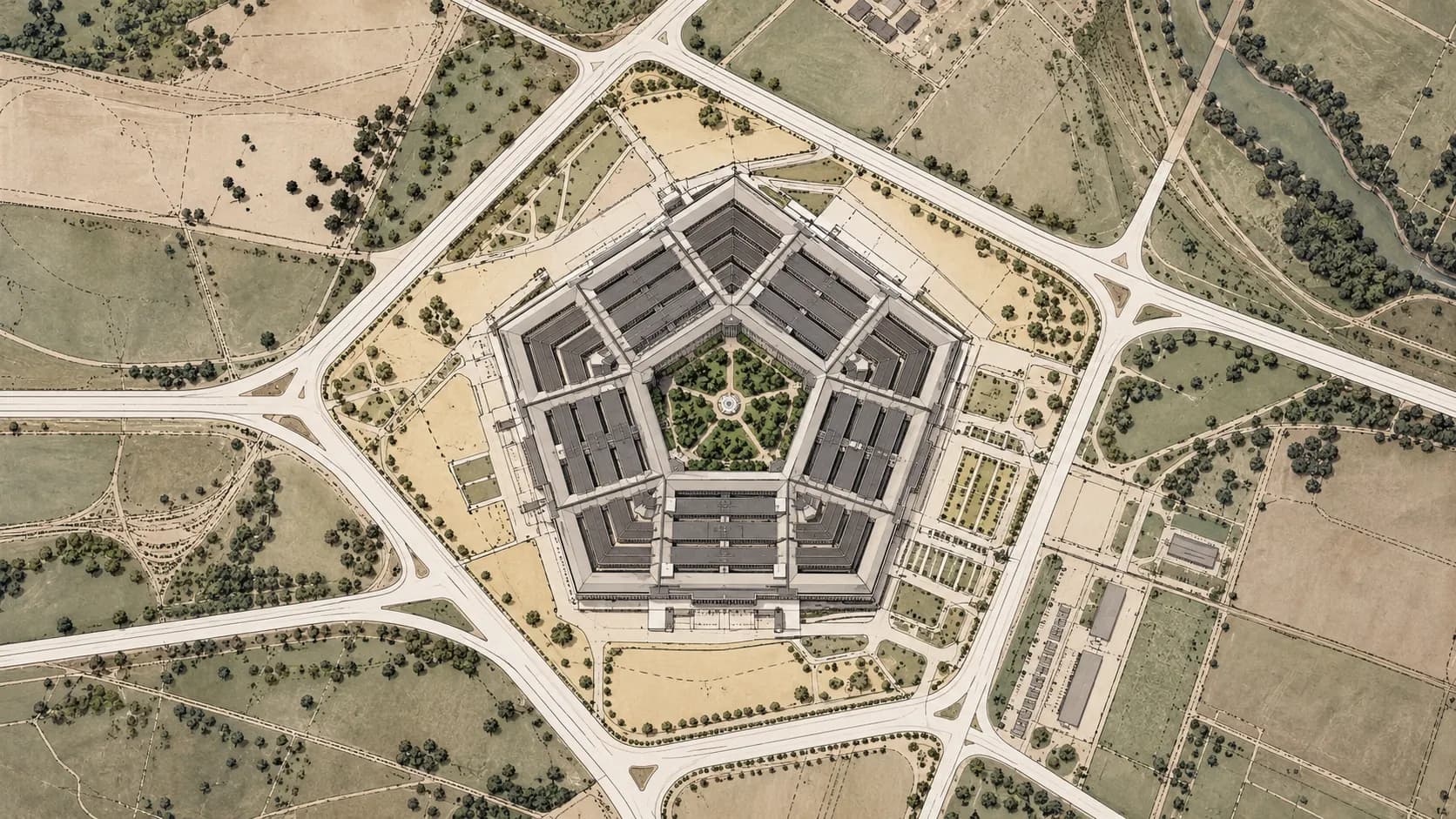
Army historical material explains that the site was bordered by five roadways. Instead of forcing a conventional rectangle into the awkward parcel, planners created a building that followed the site's rough pentagonal geometry.
An early War Department plot plan still shows the five-sided building fitted into that original road network.
That is why the popular explanation that the five sides were designed to symbolize five branches of the military does not fit the historical record. Geography came first.
The Pentagon Was Supposed to Be Somewhere Else
The first location did not last.
Officials and local critics worried that such an enormous building near Arlington National Cemetery would interfere with important views between the cemetery and Washington.
In August 1941, Roosevelt ordered the project shifted roughly three-quarters of a mile to the site where the Pentagon stands today.
The new parcel did not require a pentagon-shaped building. Architects could have started again.
They did not.
Why Did They Keep the Five-Sided Shape?
Speed was one reason. The United States was mobilizing rapidly, and planning had already moved forward.
But the unusual plan also turned out to have useful architectural advantages.
For an office building spread horizontally across millions of square feet, long walking distances could become a serious problem. A shape approaching a circle provides a large amount of floor area without pushing every office far from the centre.
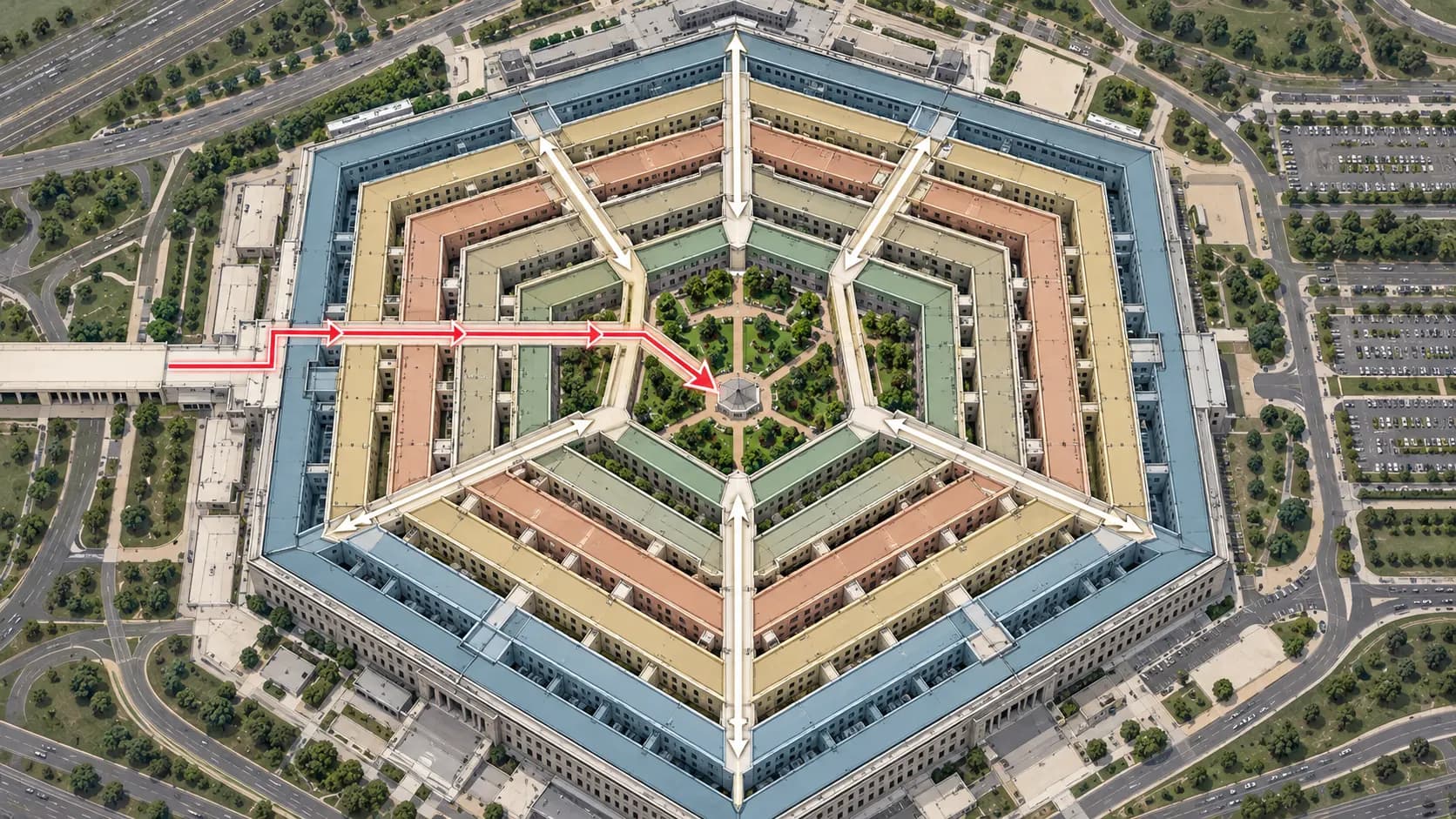
The designers developed that idea into five concentric pentagonal rings linked by corridors radiating between them. What began as a response to an awkward site became an efficient circulation system.
What Is Actually Inside the Pentagon?
The building is not one enormous five-sided hallway.
It contains five concentric rings, traditionally labelled A through E from the innermost to the outermost ring. Light wells separate much of the rings and help bring daylight into offices.

Keep reading
Can SpaceX’s Starship Reach Orbit on Flight 14?
Ten major radial corridors cut across the rings like spokes. Someone moving from one part of the building to another can therefore cross inward, move around a ring and cross outward again instead of walking around the entire perimeter.
Army material has described the layout as allowing many journeys from one part of the building to another in roughly seven minutes or less if the person knows the route.
Why Is the Pentagon So Low?
For such a huge headquarters, the Pentagon is surprisingly horizontal.
Somervell's original brief called for a building only a few stories high and initially avoided passenger elevators. The final structure rose to five main stories above ground.
A low-rise design spread offices across an enormous footprint rather than stacking them into a skyscraper. It also fit the wartime effort to minimize scarce materials: designers used concrete ramps instead of relying heavily on passenger elevators and avoided unnecessary metal and ornament.
How Was Something This Huge Built in Only 16 Months?
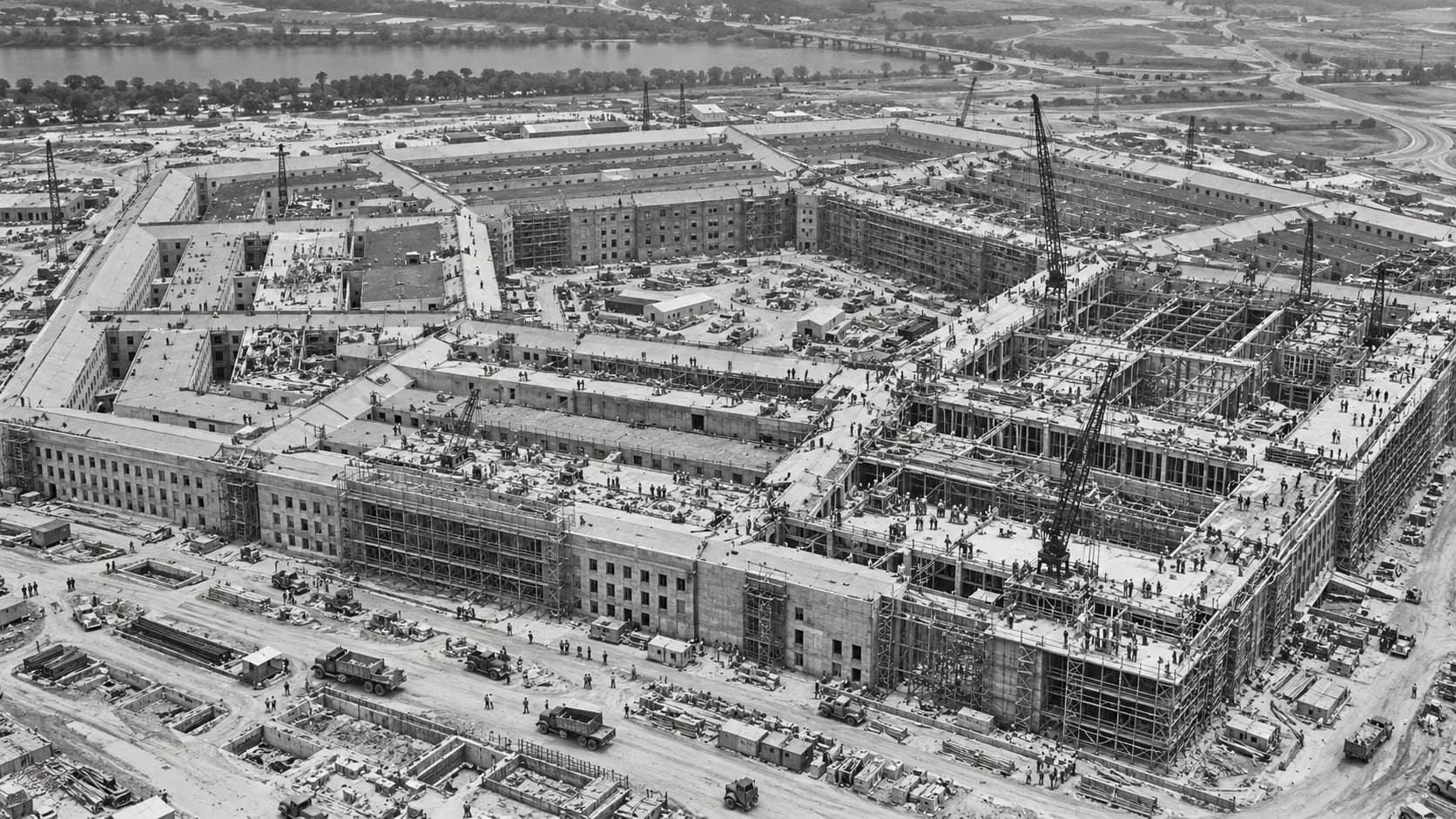
Construction began on September 11, 1941.
The schedule was so aggressive that construction sometimes moved faster than the architects could finish their drawings. By December 1941, about 4,000 workers were operating in three shifts, and completed sections began receiving employees before the rest of the building was finished.
The first tenants moved into a completed section in April 1942. The shell and roof were essentially finished within a year, and the building was completed on January 15, 1943.
A project that might normally have taken years was delivered in about 16 months during wartime mobilization.
How Big Is the Pentagon Really?
At the time it was completed, the Pentagon was the largest office building in the United States.
The building covers about 29 acres and contains roughly 17.5 miles of corridors. Its internal courtyard alone covers several acres.
Those figures make the original design problem easier to appreciate. The architects were not simply choosing an interesting shape. They had to make an office building of extraordinary horizontal scale usable by tens of thousands of people.
Did the Pentagon Always House the Department of Defense?
No. It was built for the War Department.
The building began receiving War Department employees in 1942. After the Second World War, the U.S. military establishment was reorganized. The National Military Establishment was created in 1947 and renamed the Department of Defense in 1949.
The Pentagon remained the central headquarters through those changes, meaning the building itself predates the postwar organisation most people later associated with it.
A Shape Created by a Site Became the Symbol
That is what makes the Pentagon's architecture so unusual.
A five-sided building was designed to solve an awkward land problem. The government then moved the project somewhere that no longer required that shape.
Yet by then the pentagonal layout had become useful in its own right. Five rings, radial corridors and a low horizontal form helped turn millions of square feet into a workable headquarters.
The original site was abandoned. The shape survived. Eventually, that practical accident became so recognizable that the building's geometry became its name.
Reference notes
Sources and further reading
- History Defense (opens in a new tab)https://history.defense.gov/DOD-DOW-History/Pentagon/History/
- History Defense (opens in a new tab)https://history.defense.gov/Portals/70/Documents/pentagon/1st50years.pdf
- Usace Army Mil (opens in a new tab)https://www.usace.army.mil/Media/Fact-Sheets/Fact-Sheets-View/Article/4464599/034-the-corps-built-the-pentagon-in-16-months/
Our editorial promise
Prepared with clarity and care.
This guide completed our editorial review before publishing. If something needs attention, report a correction or contact the publisher.
About this article
- Published:
- Last updated:
- Author:
- Ceyora Editorial Team
- Review status:
- Editorially reviewed
- Sources:
- 5
- Corrections:
- Report an issue