If you visit the World Trade Center today, you will not find another skyscraper standing where either Twin Tower once stood.
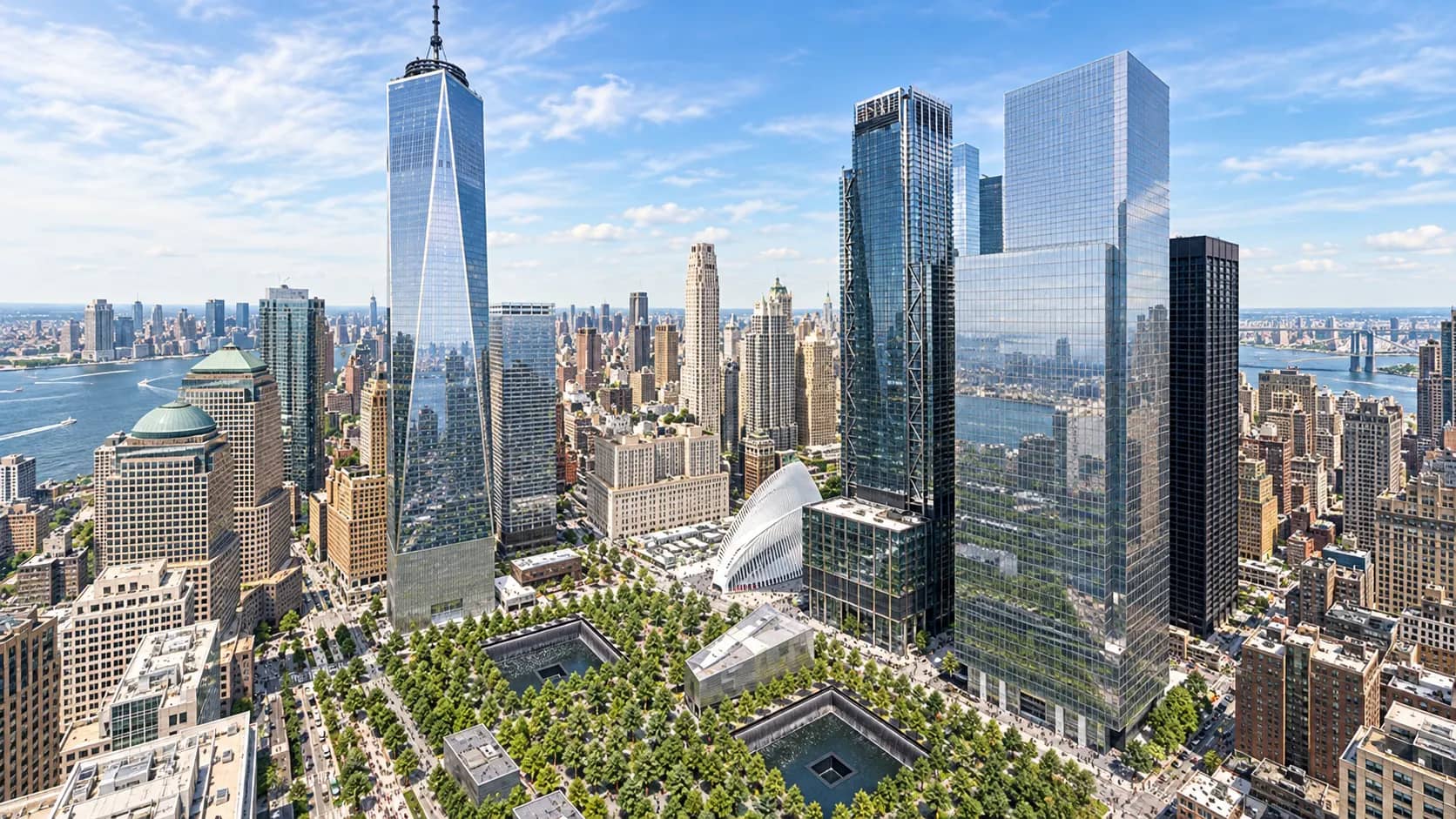
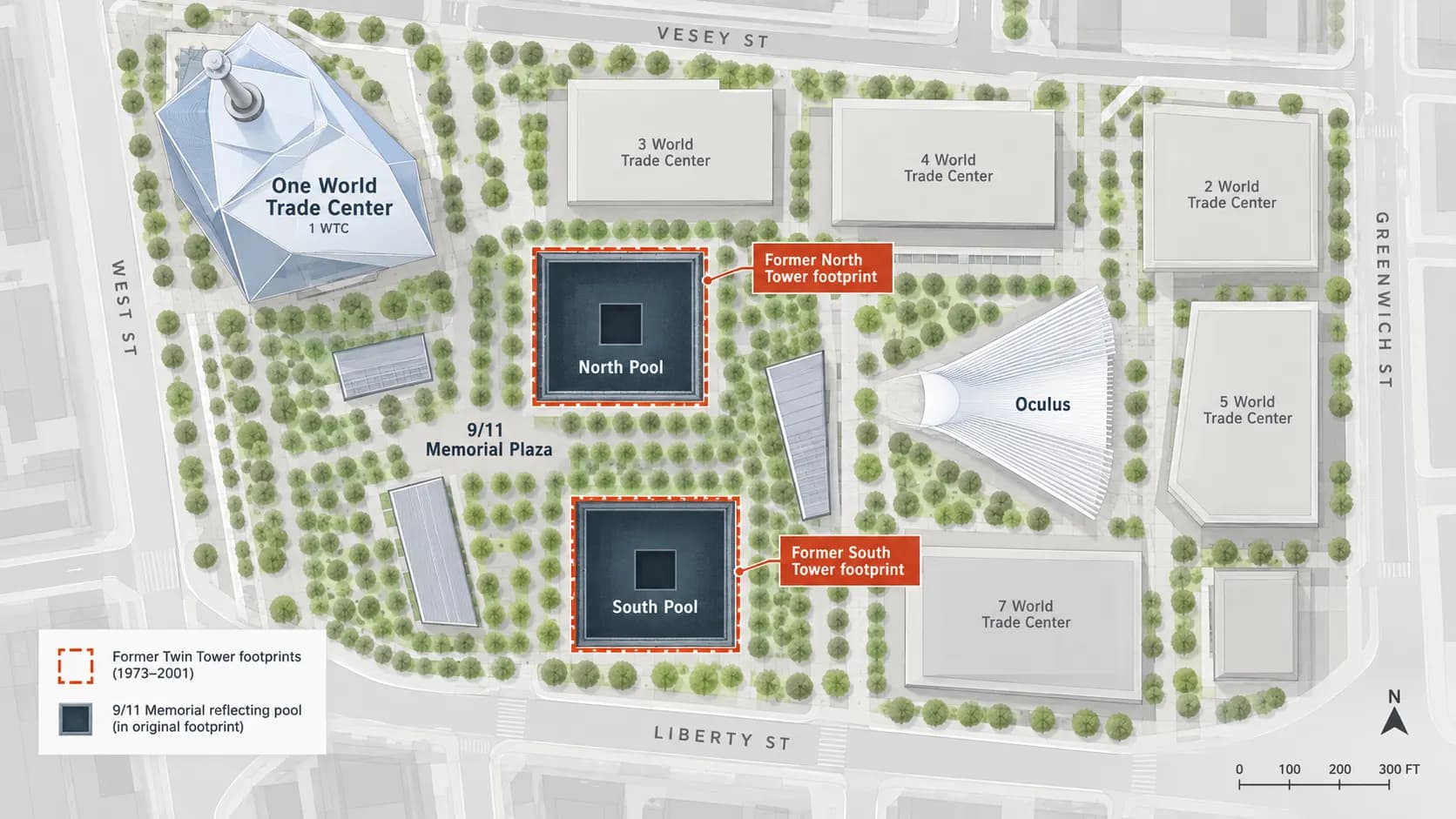
Those two footprints were deliberately preserved. In each one now sits an enormous reflecting pool, forming the heart of the 9/11 Memorial. One World Trade Center rises nearby, but on a different part of the 16-acre campus.
That layout is one of the most important things to understand about the rebuilt site. New York rebuilt the World Trade Center, but it did not build over the exact places where the Twin Towers stood.
Before 2001, the World Trade Center Was Much More Than Two Towers
The Twin Towers dominated the skyline, but the original World Trade Center was a 16-acre complex containing seven buildings, a large plaza and an underground shopping and transportation network.
Both towers had 110 floors. The North Tower rose 1,368 feet, while the South Tower reached 1,362 feet. About 35,000 people worked in the towers, and roughly 70,000 commuters and visitors passed through the site on a typical day.
That scale matters because the modern World Trade Center is also not a single building. The name still refers to a wider campus rather than just One World Trade Center.
Where Exactly Did the Twin Towers Stand?
The towers occupied two enormous square footprints near the centre of the original complex. Each footprint covered roughly an acre.
Today, those positions can still be identified precisely because the rebuilt site preserves them through the Memorial's North Pool and South Pool. The pools are not simply symbolic structures placed somewhere nearby. They sit within the footprints of the former towers.
What Is on the Twin Tower Footprints Today?
Two large waterfall pools form the centre of the National September 11 Memorial.
Each pool is nearly an acre in size. Water descends about 30 feet into a square basin, then drops into a smaller central void. Bronze parapets surrounding the pools carry the names of the 2,977 people killed in the September 11, 2001 attacks and the six people killed in the 1993 World Trade Center bombing.
The design, called Reflecting Absence, was created by architect Michael Arad with landscape architect Peter Walker. The Memorial opened in 2011.
The result is unusual in one of the world's most valuable urban districts: the exact centres of the former towers remain open rather than being occupied by new commercial buildings.
Why Was Nothing Rebuilt Directly on the Footprints?
The open centre was intentional.
The World Trade Center's current site planning places major office towers around the perimeter while the central Memorial area remains unbuilt by design. The preserved footprints anchor the site as places of remembrance rather than becoming foundations for new skyscrapers.
That choice changes how the whole campus feels. The tallest buildings frame the Memorial instead of occupying its centre.
Then Where Is One World Trade Center?
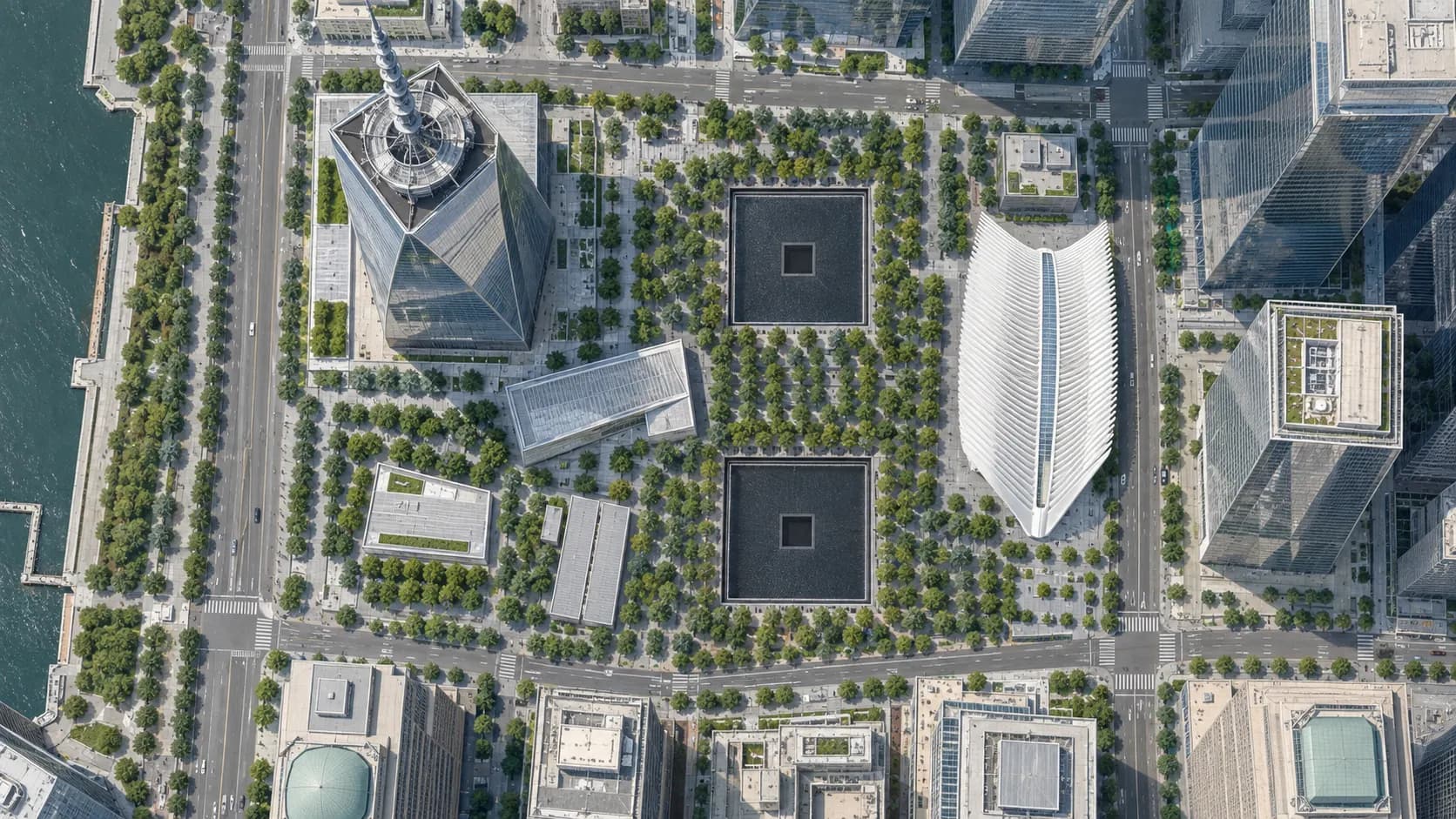
One World Trade Center stands northwest of the Memorial pools, close to West Street and Vesey Street.
It opened in 2014 and has become the defining skyscraper of the rebuilt campus, which is probably why people sometimes assume it directly replaced one of the Twin Towers.
Architecturally and geographically, however, it is a new building on a different footprint. The former tower locations remain visible beside it through the Memorial.
Why Is One World Trade Center 1,776 Feet Tall?
The height was chosen deliberately.
One World Trade Center reaches a symbolic architectural height of 1,776 feet, referencing 1776, the year of the United States Declaration of Independence.
That figure includes the tower's architectural spire. The symbolism is part of the building's design rather than an attempt to reproduce the height or appearance of either original Twin Tower.
Keep reading
Most Beautiful Islands in the World You Need to See
What Is the Oculus?
The large white structure east of the Memorial is the Oculus, the centrepiece of the World Trade Center Transportation Hub.
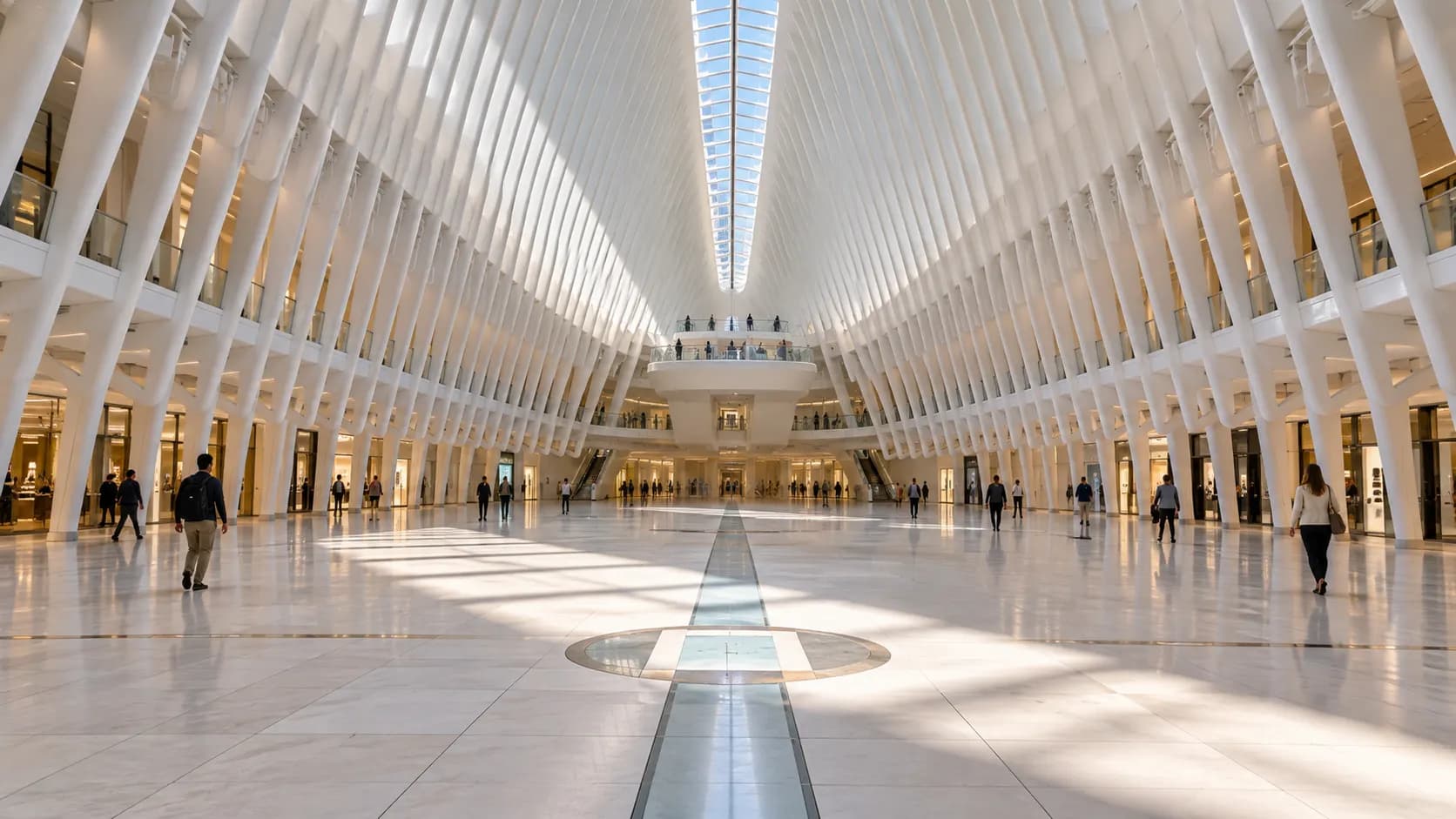
Designed by Santiago Calatrava, it connects PATH trains, subway access, shops and pedestrian routes through Lower Manhattan. Its ribbed white structure is one of the most visually distinctive parts of the rebuilt campus.
The Oculus is therefore not another memorial pool or skyscraper. It is a functioning transportation and public space woven into the same campus.
Did Anything From the Original World Trade Center Survive?
Yes. Some surviving or preserved elements remain visible within the site.
Inside the 9/11 Memorial Museum, visitors can see massive steel tridents that formed part of the Twin Towers' façades, remnant foundations, original column bases, the Survivors' Stairs and part of the slurry wall that was built during the original World Trade Center construction to hold back water from the Hudson River.
There is also an E-train corridor where original World Trade Center materials and design elements were preserved, including portions of flooring, signage and fixtures.
The rebuilt campus is therefore not entirely separated from what stood there before. Some of the physical history remains embedded within it.
The World Trade Center Is Still Being Built
Even 25 years after the September 11 attacks, the site's redevelopment is not finished.
In 2026, vertical development began on 2 World Trade Center at 200 Greenwich Street. The planned 55-story tower is being developed as the future global headquarters of American Express, with completion currently anticipated in 2031.
The official World Trade Center site describes it as the final commercial tower in the campus redevelopment. Its construction means the skyline around the Memorial is still evolving.
A Detail Many Visitors Never Notice
One of the newest additions is not another tower.
On September 9, 2026, the Port Authority announced permanent floor inlays inside the Oculus marking Daniel Libeskind's Wedge of Light concept.
The Oculus and wider master plan were aligned with the sun's position on September 11. Each anniversary, sunlight can trace a path associated with the period from 8:46 a.m., when the first plane struck the North Tower, to 10:28 a.m., when the North Tower collapsed.
The new inlays make that architectural idea physically visible on the floor even when a visitor does not know to look for it.
World Trade Center, Ground Zero and the 9/11 Memorial Are Not the Same Thing
The terms are often used interchangeably, but they describe different things.
World Trade Center refers to the wider 16-acre campus and its buildings, memorial spaces, transportation facilities and public areas.
One World Trade Center is the specific 1,776-foot skyscraper on that campus.
The 9/11 Memorial refers to the memorial plaza and its two reflecting pools at the former Twin Tower footprints.
The 9/11 Memorial Museum is a separate institution located largely below ground at the historic site.
Ground Zero became a widely used name for the World Trade Center site after the attacks, but it is not the formal name of the modern campus.
The Centre of the Site Was Left Open on Purpose
The rebuilt World Trade Center contains some of the most valuable real estate and ambitious architecture in New York.
Yet its most important spaces are the two places where nothing was rebuilt.
The Twin Tower footprints became voids filled with moving water. New skyscrapers rise around them. Trains run beneath them. Offices, shops, performances and daily city life have returned to the surrounding campus.
But the centre remains open by design, preserving the locations of the towers as places of remembrance rather than replacing them.
Reference notes
Sources and further reading
- 911memorial (opens in a new tab)https://www.911memorial.org/visit/memorial/about-memorial
- 911memorial (opens in a new tab)https://www.911memorial.org/911-faqs
- 911memorial (opens in a new tab)https://www.911memorial.org/learn/resources/digital-exhibitions/world-trade-center-history/world-trade-center-facts-and-figures
Our editorial promise
Prepared with clarity and care.
This guide completed our editorial review before publishing. If something needs attention, report a correction or contact the publisher.
About this article
- Published:
- Last updated:
- Author:
- Ceyora Editorial Team
- Review status:
- Editorially reviewed
- Sources:
- 6
- Corrections:
- Report an issue