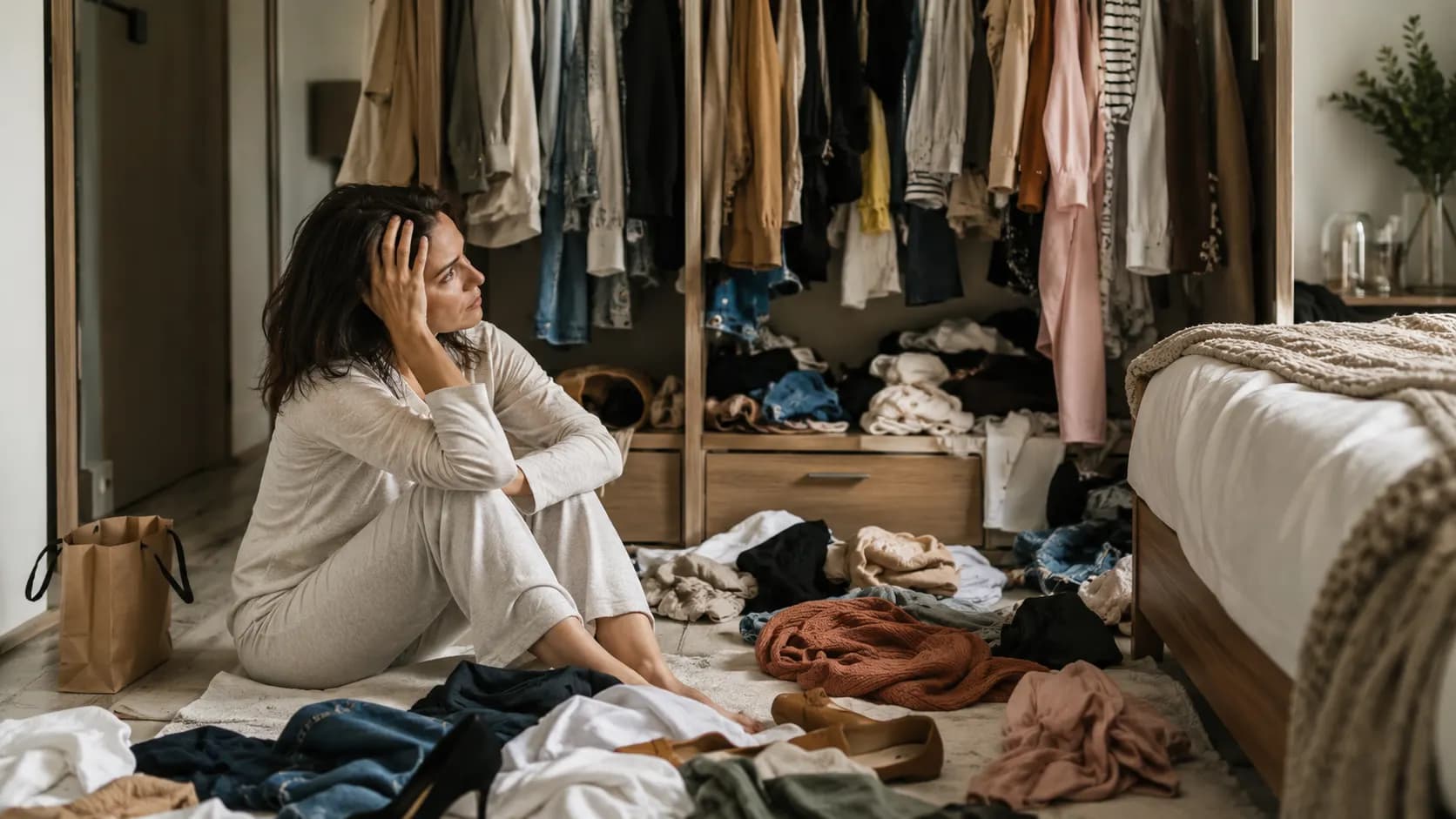
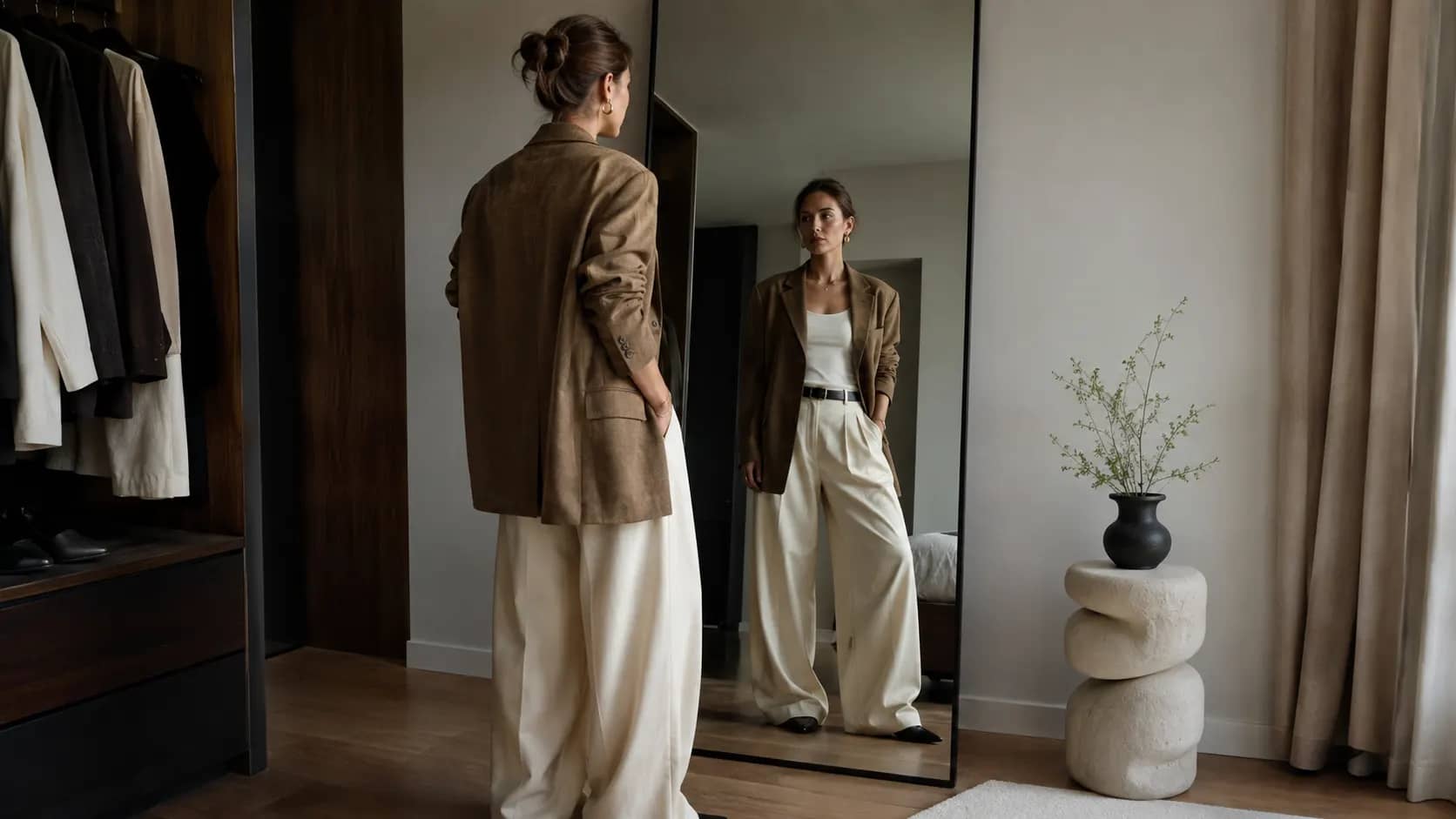
You can like the shirt. You can like the trousers. The shoes may look great on their own, the jacket fits and none of the colours seems obviously wrong.
And yet, when everything comes together, something feels off.
That does not necessarily mean you bought the wrong clothes. An outfit is more than a collection of individually attractive pieces. Proportion, shape, colour, texture, visual weight and small styling decisions determine whether those pieces make sense together.
Good Clothes Do Not Automatically Make a Good Outfit
Imagine an oversized blazer, wide-leg trousers and chunky trainers. Each piece might look excellent on its own.
Together, however, they create a lot of visual volume. That may be exactly the relaxed oversized silhouette you want. If it was not intentional, though, the outfit can feel heavier than expected.
Now change only the layer underneath to a more fitted top. Suddenly there is contrast between the wide trousers, structured jacket and narrower centre of the outfit.
Nothing became more expensive and no major item changed. The proportions simply started communicating more clearly.
Proportion Is Often the Missing Piece
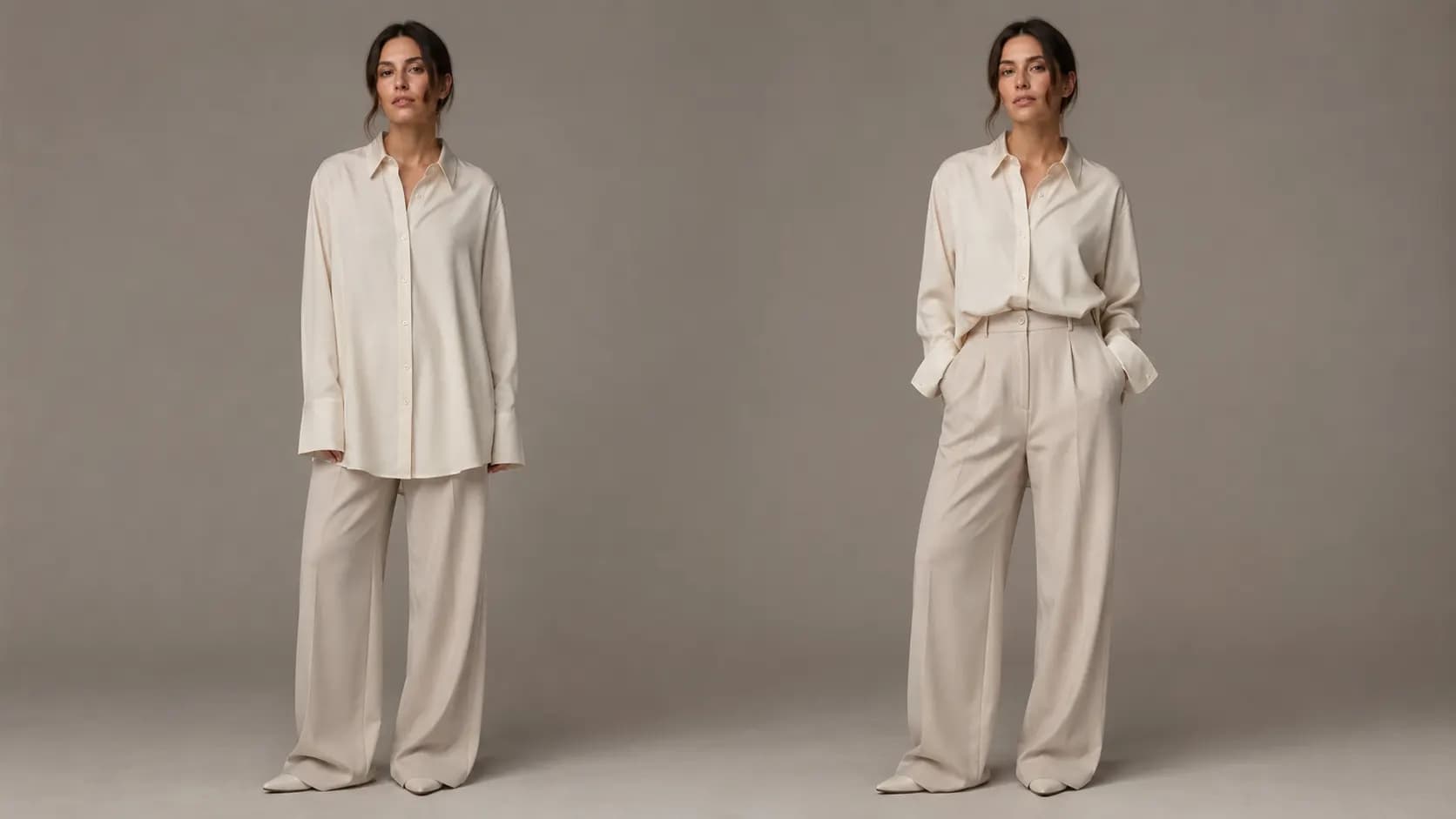
Proportion describes how garment lengths, widths and shapes relate to one another. It is not a rigid rule about body type.
Two oversized pieces can work beautifully. So can two fitted pieces. The important question is whether the silhouette appears deliberate.
Wide trousers paired with a long loose shirt create one continuous shape. Tucking part of that same shirt changes where the eye sees the outfit divide. The result may immediately feel more structured.
Neither version is objectively better. Styling becomes useful when you understand that you can change the relationship between garments without changing the garments themselves.
Where Your Clothes End Matters
Hemlines quietly create some of the strongest visual lines in an outfit.
Where a jacket ends against the trousers
Where a shirt meets the waistband
Where trousers meet the shoes
Where a coat falls against the leg
Where a skirt or dress ends
Where sleeves finish at the wrist or hand
There is no universally perfect length. The issue is how several stopping points work together.
If a jacket, shirt, trousers and shoes all create strong horizontal breaks in awkward places, the outfit can feel fragmented. Changing only one of those lines can restore balance.
Your Shoes May Be the Real Problem
Shoes are often treated as the final detail, but visually they can change the entire lower half of an outfit.
Take the same pair of wide trousers. Chunky trainers create a heavier base. A slimmer loafer lets the trouser shape dominate. Boots may visually continue the line of the trousers and create a completely different silhouette.
That is why changing only the shoes can sometimes make an outfit suddenly work.
Too Many Pieces May Be Asking for Attention
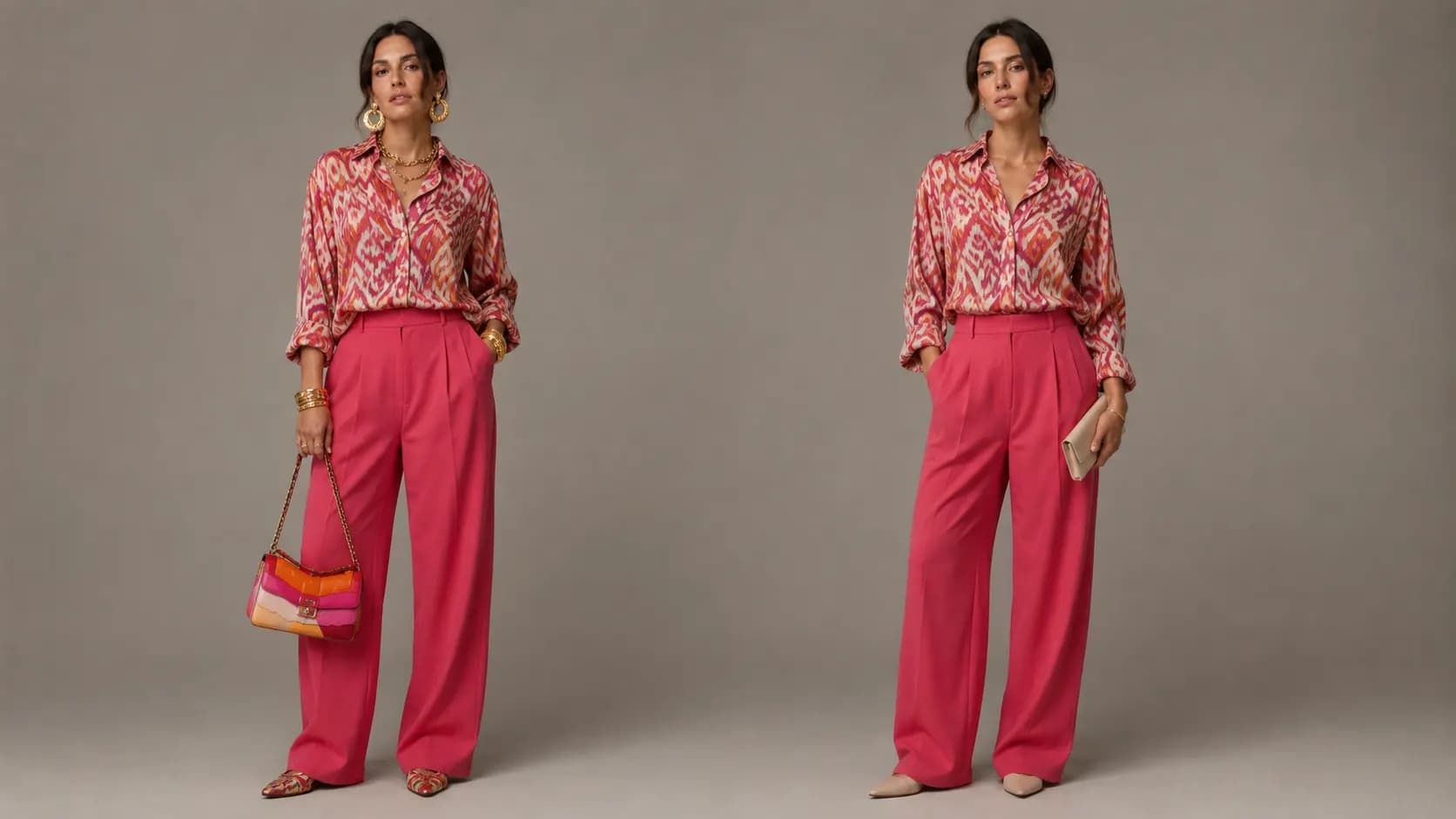
Sometimes proportion is fine. There is simply too much information.
A patterned shirt, bright trousers, statement earrings, a large necklace, colourful bag and detailed shoes may all be attractive separately. Together, every element asks for attention.
Strong outfits usually have some kind of visual hierarchy. One or two elements lead while the others support them.
This does not mean everyone needs to dress minimally. Maximalist style can be highly intentional. The difference is whether the colours, patterns and accessories feel connected or merely competitive.
Colour Does Not Need to Match Perfectly
Trying to match every colour exactly can make dressing harder than it needs to be. Shoes do not always need to match the bag, and a belt does not automatically need to match the shoes.
A better question is whether the colours belong in the same visual story.
A navy jacket, pale blue shirt and brown trousers can feel cohesive without any exact colour matching. A bright red bag can work with a neutral outfit because it clearly becomes the focal point.
Colour becomes more difficult when several strong shades appear without any obvious relationship. Sometimes repeating one colour in a smaller detail helps. Sometimes removing one colour works better.
The Tuck Can Change More Than You Think
Leaving a shirt completely untucked creates a longer uninterrupted upper-body shape. A full tuck makes the waistband more visible. A partial tuck creates an asymmetrical break.
None of those choices is universally correct. They simply create different proportions.
Before deciding that a top does not work with certain trousers or a skirt, experiment with where the fabric ends visually. The problem may be the styling rather than the shirt.
Keep reading
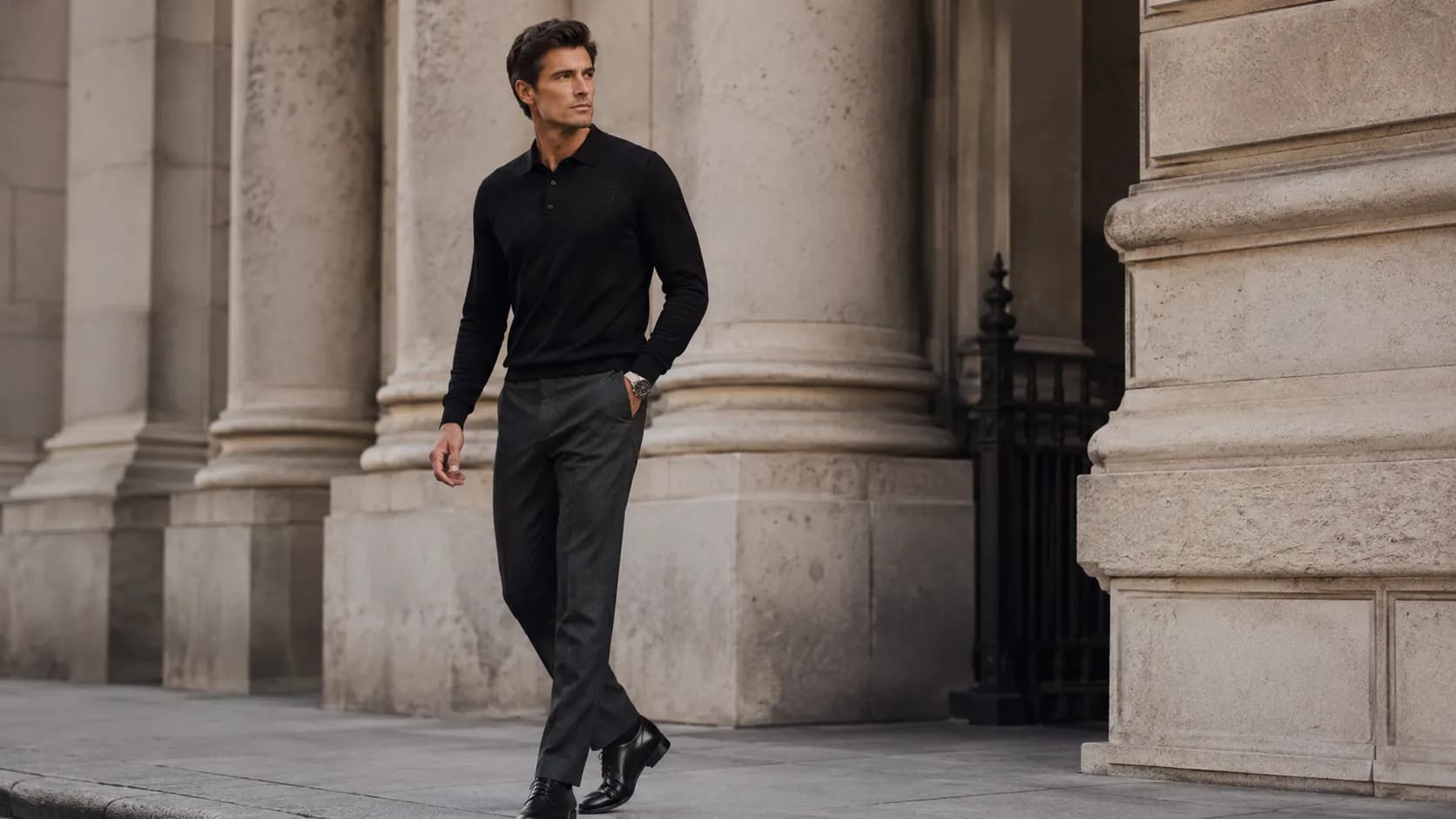
Why Some Outfits Look Expensive even When They Aren’t
Sleeves Can Change the Mood Too
A blazer with its sleeves down may feel formal and structured. Push them slightly upward and the same jacket becomes more relaxed.
Rolling the sleeves of an oversized shirt exposes more of the arm and reduces some of the fabric's visual weight. This can be especially useful when several pieces in the outfit are loose.
You are not changing your body. You are changing the relationship between fabric and visible space.
Your Jacket May Be Fighting the Rest of the Outfit
Outerwear is often the largest garment in an outfit, so it can dominate everything underneath.
A cropped jacket creates a different division between the upper and lower body than a long coat. An oversized blazer adds width and structure. A soft cardigan does something else again.
If an outfit looks good until the jacket goes on, that is useful information. Try another outer layer before changing everything underneath.
Texture Can Make a Neutral Outfit Feel Busy
An outfit can use only black, grey and beige and still feel visually complicated.
Distressed denim, chunky knitwear, pleated trousers, patent shoes and a heavily textured bag all add visual information even when the colours are restrained.
Texture functions much like pattern. When everything has a strong surface treatment, a smoother piece can provide the quiet space the outfit needs.
Sometimes the Outfit Needs More Contrast, Not Less
The opposite problem can happen too. Everything matches, everything fits and every piece has roughly the same visual weight, yet the outfit feels flat.
A small amount of contrast can give the eye somewhere to go.
Structured with soft
Fitted with loose
Dark with light
Matte with subtle shine
Simple clothing with one stronger accessory
Accessories Should Complete the Outfit, Not Rescue It
When an outfit feels unfinished, adding things can become an automatic response: a necklace, then a belt, then a scarf, then different earrings.
Sometimes that works. Often it hides the real issue.
If the basic silhouette does not feel right, accessories rarely solve it. Start with the clothing and shoes. Once those relationships feel intentional, add accessories as finishing details.
Try the Remove-One-Thing Test
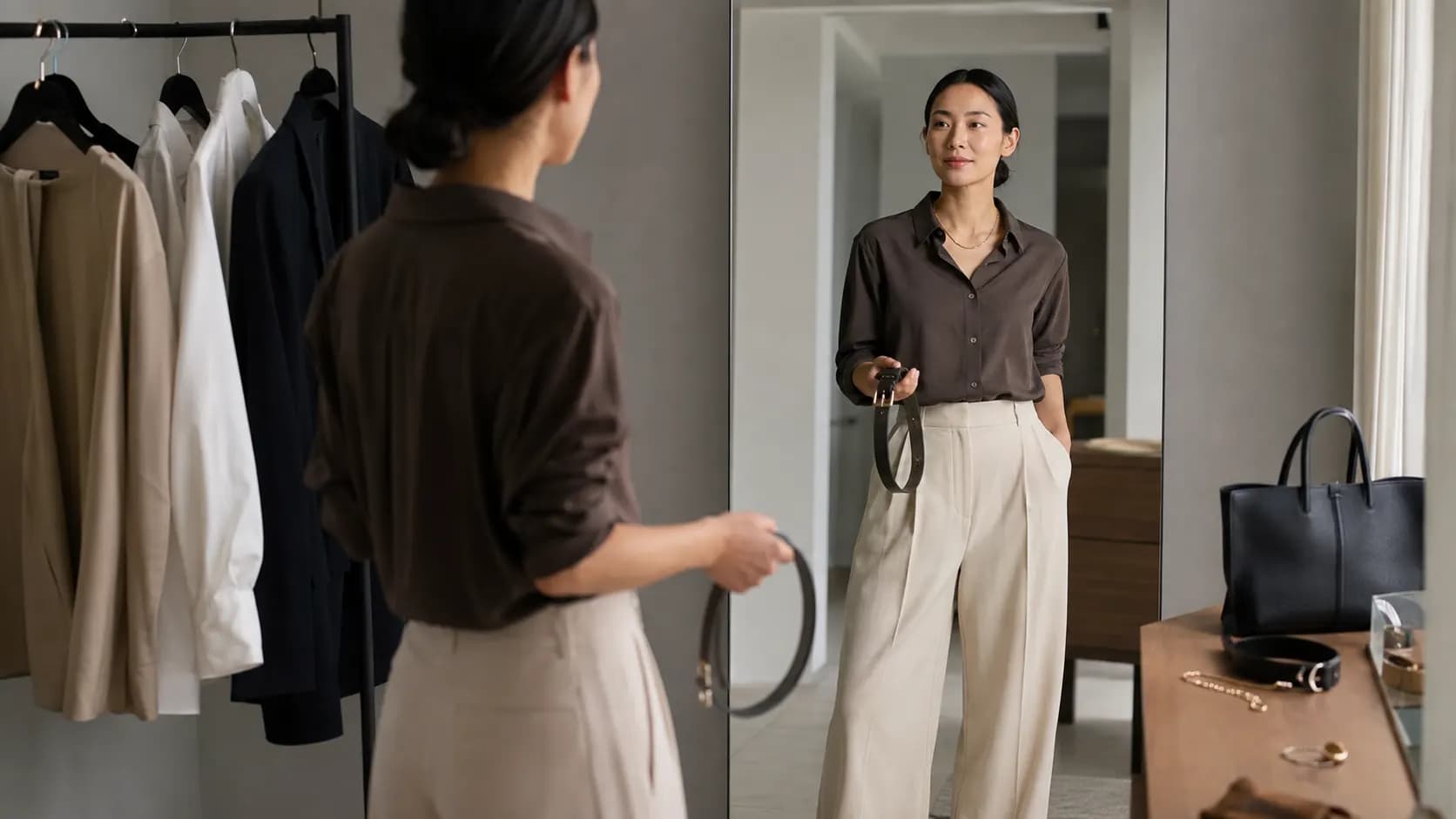
When something feels wrong, remove one element instead of adding another.
Take off one accessory.
Look again.
If the outfit feels calmer, you may have found the competing element.
If nothing changes, put it back and test another piece.
Try the jacket, bag, belt or shoes next.
Editing is often faster than trying to decorate your way out of a proportion problem.
Do Not Judge an Outfit From One Angle
Most people evaluate clothing while standing completely still in front of a mirror. Real clothes are worn while walking, sitting, reaching and carrying things.
Walk around. Turn sideways. Sit down. Put your bag over your shoulder. Open and close the jacket.
A proportion that looks unusual while standing still may work naturally in motion. The reverse can also happen: something that looks perfect from the front may bunch or pull once you start moving.
Your Body Is Not Automatically the Problem
When an outfit does not work, it is easy to turn the criticism inward: the legs are wrong for the trousers, the shoulders are wrong for the jacket or the body needs to change first.
Often the explanation is much simpler. The trouser length may not work with that shoe. The jacket may need a different layer underneath. The shirt may need a different tuck.
The relationship between the clothes can be the problem rather than the person wearing them. Adjusting the styling is a much more useful first experiment than criticising your body.
Before Buying Something New, Try These Seven Changes
Change the shoes.
Tuck or untuck the top.
Roll or push up the sleeves.
Remove one accessory.
Change the outer layer.
Adjust where the trousers sit or how they fall over the shoe.
Swap one colour or texture for something quieter.
Style Is Often Editing
Good style is often described as knowing what to buy. Knowing what to remove can be just as valuable.
The strongest version of an outfit might be the one where you stopped before adding the last accessory, changed the shoes, tucked the shirt or accepted that a beautiful jacket simply works better with another pair of trousers.
Not every good piece needs to work with every other good piece. That is normal.
Our editorial promise
Prepared with clarity and care.
This guide completed our editorial review before publishing. If something needs attention, report a correction or contact the publisher.
About this article
- Published:
- Last updated:
- Author:
- Ceyora Editorial Team
- Review status:
- Editorially reviewed
- Sources:
- 0
- Corrections:
- Report an issue