


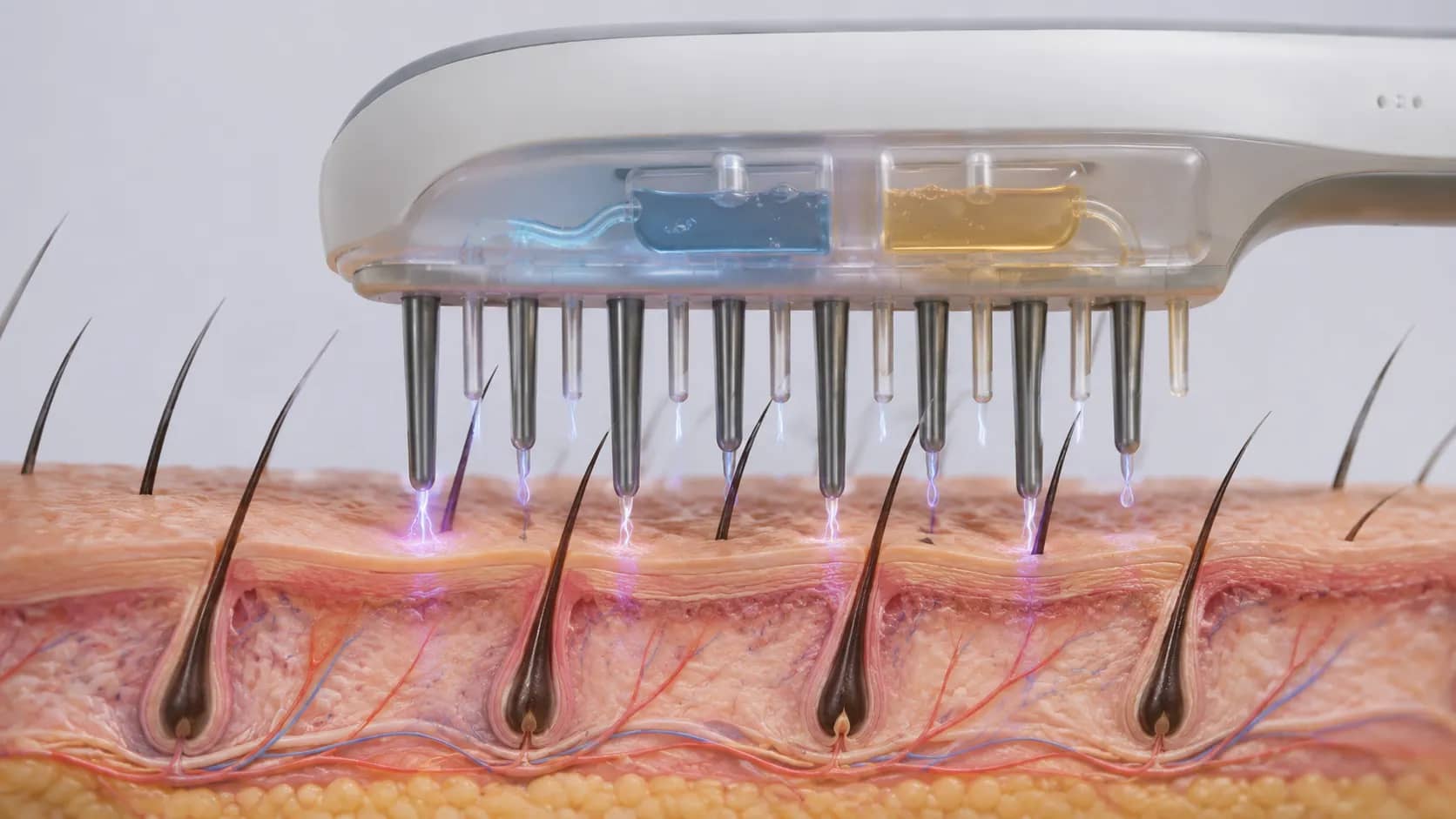
A newly published hair-loss study has produced an attention-grabbing result: an experimental comb-shaped device helped restore almost complete hair coverage in mice within 28 days.
The device, called Detangle, was described in Nature Communications on November 3, 2026. It is not a heated styling comb and it is not simply an electric scalp massager. It combines electrical stimulation with a system designed to deliver experimental therapeutic molecules deeper into hair-follicle regions while the device is moved across the skin.
The most important limitation comes first: the dramatic result was produced in a mouse model of androgenetic alopecia, commonly known as pattern hair loss. The researchers have not yet demonstrated that the same system can safely or effectively regrow human hair.
What Exactly Is Detangle?
Detangle is a comb-shaped bioelectronic system developed by researchers including teams at Beihang University and collaborating institutions in China and Hong Kong.
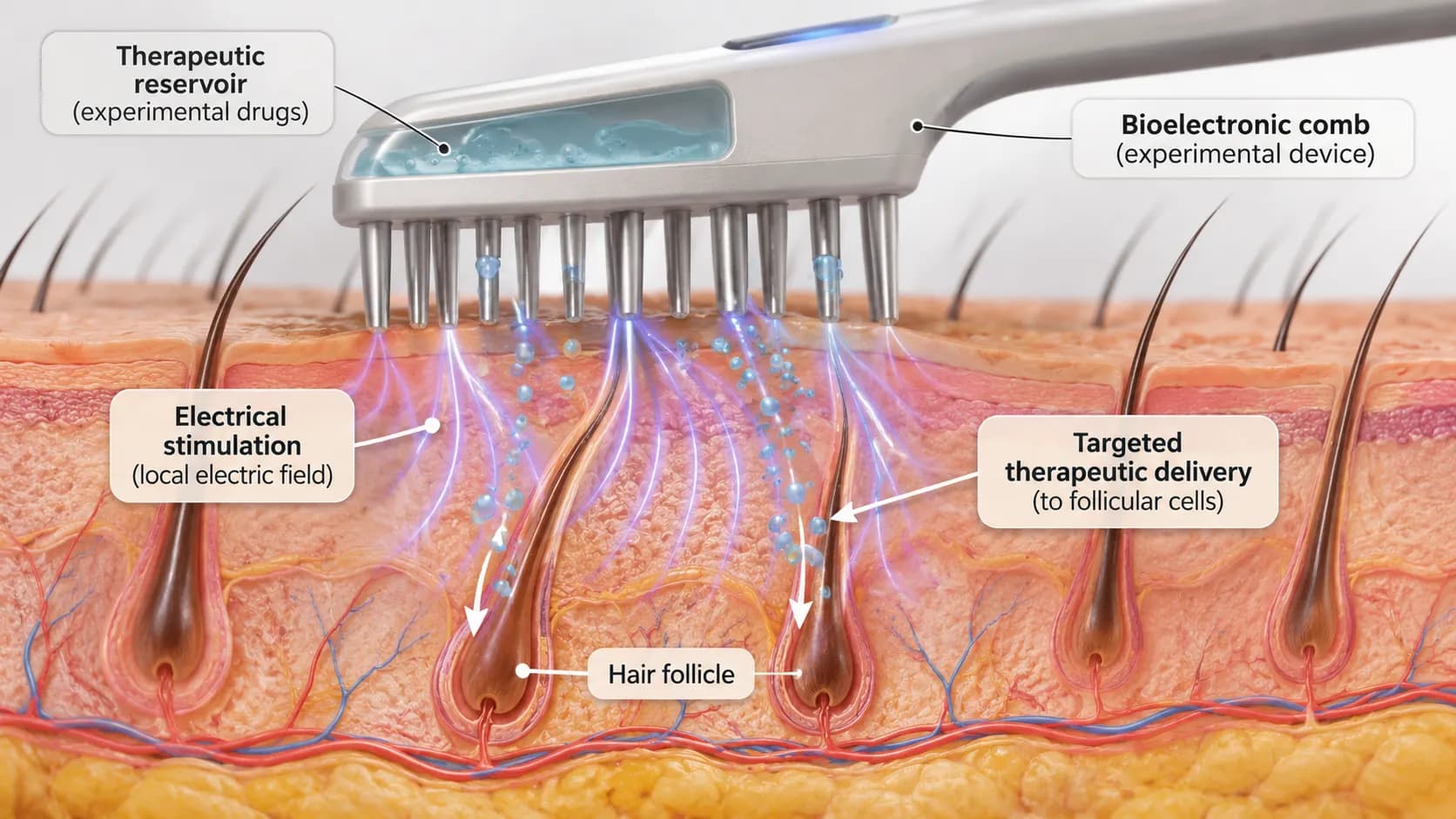
Its teeth contain electrodes positioned at different heights. The device also includes modules that hold therapeutic material. As the comb moves across the treatment area, it produces a local electric field while helping deliver the therapy toward follicular cells.
According to the researchers, the design produced an electric field that reached hair-follicle regions roughly nine times deeper than their conventional external-application comparison.
That matters because hair follicles extend below the surface of the skin. Simply placing a substance on the surface does not guarantee that enough of it will reach the biological structures researchers are trying to influence.
It Is Doing More Than Electrically Stimulating the Scalp
Headlines describing an 'electric comb' can make the experiment sound simpler than it really is. The strongest result did not come from electrical stimulation alone.
The full system combined the comb's local electrical stimulation with two experimental therapeutic approaches. One used a plasmid encoding vascular endothelial growth factor A, or VEGFA, which was intended to encourage processes associated with blood-vessel development around follicles. The other used siRNA targeting steroid 5-alpha-reductase 2, or SRD5A2, an enzyme involved in local androgen metabolism.
The researchers designed the combination to address more than one part of androgenetic alopecia biology: support the follicle environment while reducing an androgen-related pathway associated with follicle miniaturisation.
What Happened in the Mouse Experiment?
The researchers tested different treatment approaches in male mice with experimentally induced androgenetic alopecia.
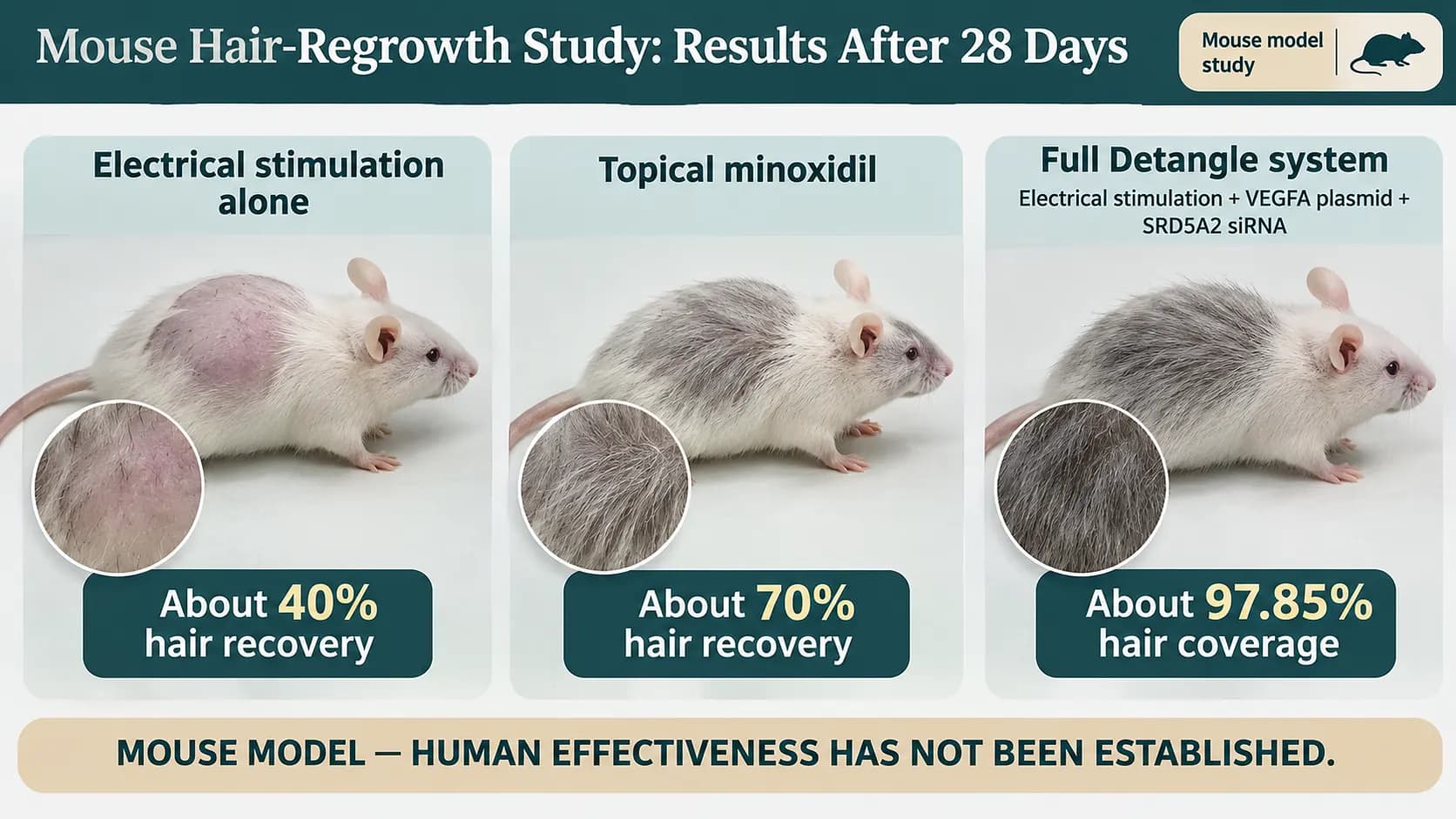
After 28 days, electrical stimulation from the device alone produced about 40% hair recovery in the treated area. Conventional topical minoxidil produced around 70% in the study's mouse model.
When the bioelectronic system delivered the two experimental therapeutic components separately, the reported recovery increased further. The strongest result came when electrical stimulation, VEGFA plasmid delivery and SRD5A2-targeting siRNA were combined.
That full combination produced approximately 97.85% hair coverage in the treated area after 28 days.
Those numbers are striking, but they describe hair coverage in an experimental mouse model. They should not be translated into a claim that a person with pattern hair loss would regrow 98% of their hair in a month.

Keep reading
Can Vitamin C Really Brighten Your Skin?
Why Mouse Hair-Regrowth Results Can Look More Dramatic Than Human Results
Mouse experiments are valuable because researchers can carefully control treatment, biology and timing. But mouse skin, hair cycles, follicle behaviour and immune responses are not identical to those of humans.
Researchers also induced the hair-loss model experimentally. Human androgenetic alopecia develops over years and involves genetics, hormones, age and gradual follicle miniaturisation.
A treatment that performs extremely well in mice can become less effective, require modification or fail during later human testing. That is why an animal result is normally considered an early step rather than clinical proof.
The Experimental Drugs Matter as Much as the Comb
Another reason to be cautious with headlines is that the device did not simply make existing over-the-counter hair products work better.
The full treatment used nucleic-acid-based experimental therapies: a VEGFA-encoding plasmid and an siRNA designed to reduce expression of SRD5A2. Delivering these types of molecules safely in humans involves questions about dose, duration, stability, unwanted effects and whether treatment remains local.
Those issues would have to be studied before a similar system could become an approved treatment.
Does This Mean Minoxidil Has Been Beaten?
Not in the clinical sense.
The researchers used topical minoxidil as one comparison in the mouse experiment, and the full Detangle system produced greater hair coverage in that model. But a controlled mouse comparison is not equivalent to a human clinical trial comparing effectiveness, side effects, convenience and long-term results.
Minoxidil already has extensive human clinical use. Detangle remains an experimental research platform. Comparing the percentages without that distinction would make the new device appear far closer to clinical use than it currently is.
Can You Buy the Detangle Comb?
The study describes a research prototype rather than a consumer hair-growth product. The published research does not establish a retail version, an approved human treatment protocol or a timeline for commercial availability.
That also means an ordinary electric comb, heated comb or scalp-stimulation device should not be assumed to reproduce the study. Detangle's result depended on a specific bioelectronic design and experimental therapeutic delivery system.
What Needs to Happen Next?
The biggest question is straightforward: can the approach work safely in humans?
Future research would need to examine human scalp biology, dosing, electrical stimulation levels, delivery efficiency, repeated treatment, long-term effects and possible adverse reactions. Researchers would also need to determine how durable any regrowth is after treatment stops.
If the system eventually moves into clinical trials and performs well, the broader idea could be important beyond one comb. It suggests that an everyday-looking device might combine physical stimulation with local delivery of therapies that otherwise struggle to reach deeper targets.
For now, the most accurate conclusion is promising but limited: researchers have demonstrated an unusually strong hair-regrowth result in mice using a sophisticated bioelectronic comb and experimental molecular therapies. Whether that can become a practical treatment for human pattern hair loss remains unanswered.
Reference notes
Sources and further reading
Our editorial promise
Prepared with clarity and care.
This guide completed our editorial review before publishing. If something needs attention, report a correction or contact the publisher.
About this article
- Published:
- Last updated:
- Author:
- Ceyora Insights
- Review status:
- Editorially reviewed
- Sources:
- 4
- Corrections:
- Report an issue