
Not Every Stress Needs the Same Response
Not all stress needs a coping technique. Some of it needs a decision. Here is how to tell the difference, and one recovery habit worth building either way.
Most stress advice jumps straight to coping techniques. Breathing exercises. Journaling. Meditation apps. Those can help, of course. But they often skip the more useful first question. Is this stressor something you can actually change?
When you sort stress into what you can act on and what you can only carry differently, the advice starts to feel more practical. It becomes less about forcing yourself to stay calm and more about choosing the right response.
Sort Your Stress into Two Piles

Stress You Can Act On
A difficult conversation you have been avoiding, an overloaded schedule, an unresolved bill, these usually need a decision or a concrete action. Sometimes an uncomfortable one.
Coping techniques may help you get through the day, but the stress often does not fully lift until the real issue is handled. That is the part many people try to delay. Very normal. Still, delay can make the stress feel heavier than the problem itself.
Stress You Can Only Carry Differently
A family member’s illness, a slow moving process out of your control, general uncertainty about the future, these do not get solved with a simple to do list.
This is where coping techniques genuinely matter. The goal is not to remove the stressor completely. The goal is to protect your mind and body while you move through it.
One Recovery Habit Worth Building Regardless

Keep reading
Why Do I Wake Up at 3 AM and Can’t Sleep Again?
Public health guidance often points to one simple recovery habit. Take a short, protected break away from the source of stress. Even ten to fifteen minutes can help when it is done daily instead of saved only for the weekend.
A short walk counts. Sitting outside counts. A few quiet minutes without a screen counts. It does not have to look perfect. It only needs to give your nervous system a little space to come down.
Small Daily Practices That Help
A short walk, ideally outside, even just around the block.
Talking to one person you trust about what is on your mind, instead of carrying it alone.
Limiting news and social media consumption to set times rather than checking all day.
Protecting sleep, because poor sleep makes almost every other stressor feel bigger.
What burnout looks like before it becomes a crisis
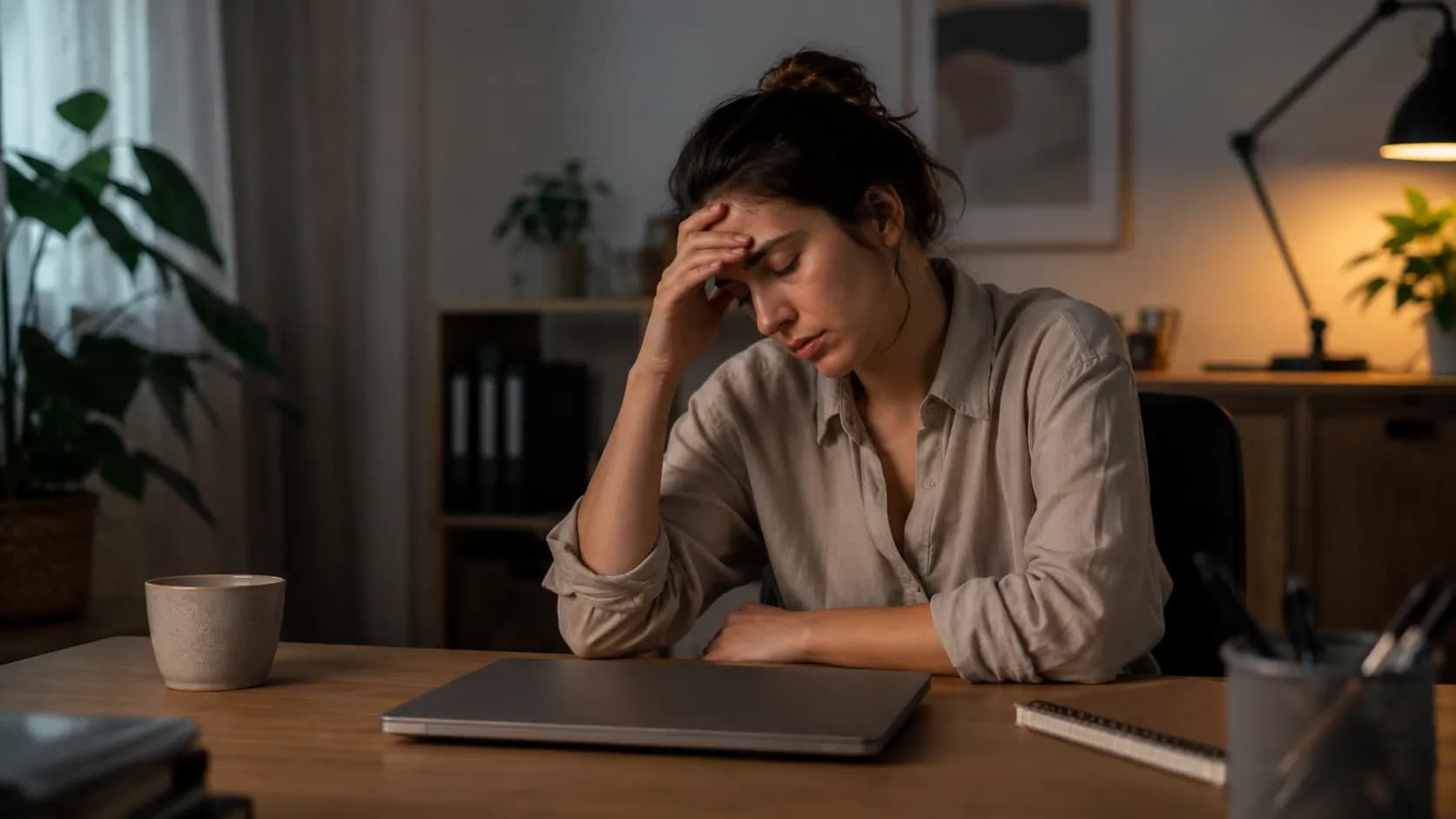
Burnout usually shows up slowly. Growing cynicism about work or responsibilities. Exhaustion that a normal night’s sleep no longer fixes. A feeling that you are not doing well, even when you are trying hard.
These signs are easy to ignore at first. Many people tell themselves they just need to be stronger or more disciplined. But recognizing burnout early gives you more choices. Waiting until everything breaks leaves fewer options.
When to Get Outside Help
If stress feels constant, overwhelming, or starts affecting sleep, relationships, or your ability to function day to day, it is reasonable to talk to a doctor or mental health professional. Self help habits can support you, but they do not have to be the whole plan.
This guide offers general wellbeing information, not medical diagnosis or treatment. Seek advice from a qualified healthcare professional if stress feels persistent, overwhelming, or is affecting daily functioning.
Reference notes
Sources and further reading
- WHO (opens in a new tab)https://www.who.int/news/item/28-05-2019-burn-out-an-occupational-phenomenon-international-classification-of-diseases
- Mayo Clinic (opens in a new tab)https://www.mayoclinic.org/tests-procedures/stress-management/about/pac-20384898
- National Institute of Mental Health (opens in a new tab)https://www.nimh.nih.gov/health/publications/so-stressed-out-fact-sheet
Our editorial promise
Prepared with clarity and care.
This guide completed our editorial review before publishing. If something needs attention, report a correction or contact the publisher.
About this article
- Published:
- Last updated:
- Author:
- Ceyora Editorial Team
- Review status:
- Editorially reviewed
- Sources:
- 3
- Corrections:
- Report an issue